AGROSTRATEG 2026 is the first call under the strategic programme for scientific research and development work in the agricultural sector launched by NCBR. The programme has been designed to support the implementation of new solutions that improve the efficiency of the Polish agricultural sector while taking into account the principles of sustainable development. For agri-tech companies, farms, research institutions, and consortia, it is one of the most important funding pathways for agricultural R&D projects in 2026.
If you are planning to prepare a project for AGROSTRATEG, also visit our support page: AGROSTRATEG – project preparation and delivery support with FarmPortal.
What is AGROSTRATEG 2026?
AGROSTRATEG is a new strategic NCBR programme dedicated to the agricultural sector. Its main objective is to implement new solutions that improve the efficiency of Polish agriculture while taking sustainable development into account. The programme covers four main research areas:
- T1. Sustainable crop production and soil fertility improvement
- T2. Sustainable animal production
- T3. Digital agriculture – the use of technology and data analysis to optimise crop and animal production
- T4. Innovative agricultural techniques – alternative farming methods

Who can apply?
The following entities may apply:
- consortia composed of at least one enterprise and at least one research organisation or another entity, with a maximum of 5 entities,
- consortia of enterprises composed of up to five enterprises,
- single enterprises implementing a project independently.
The consortium leader must be either an enterprise or a research organisation. A consortium may consist of a maximum of five entities, and the share of eligible costs borne by the enterprise or enterprises in the total eligible project costs must be at least 40%.
What can be funded?
Funding may be allocated to projects covering:
- basic research,
- industrial research,
- experimental development,
- pre-implementation activities,
- pre-implementation advisory services,
- pre-implementation activities under de minimis aid.
Important: a project that does not include experimental development will not receive funding.
Detailed AGROSTRATEG thematic scope according to NCBR
T1. Sustainable crop production and soil fertility improvement
Research topics covered under this thematic area:
- Improving soil quality (deacidification, increasing humus content, biogenic elements, and microelements) and sustainable soil management.
- Improving plant quality, including for organic cultivation, among others through the use of the latest methods in molecular biology and genetic engineering, including new genomic techniques (NGT), as well as traditional plant breeding techniques, in order to increase plant resistance to pests and pathogens, adapt crops to climate change, increase nutritional value, provide bioactive compounds, and obtain traits facilitating harvesting, storage, and processing.
- Activities aimed at significantly reducing the use of synthetic fertilisers and plant protection products, with particular emphasis on biological plant protection methods.
- Development of new, more effective formulations of controlled-release fertilisers that minimise environmental impact.
- Optimisation of high-protein crop production in order to prevent protein deficits and reduce dependence on imported high-protein feed.
- Valorisation of bio-waste through its use, including in the production of organic-mineral fertilisers.
- Increasing the yield-forming potential of plants while maintaining sustainable cultivation.
- Rational use of natural resources, taking into account the challenges of a changing climate, including cultivation technologies that reduce the impact of drought and water shortages.
- Improving the safety of plant-derived raw materials, including by increasing the identification, detection, and elimination of sources of chemical, physical, and microbiological contamination.
- Development and improvement of breeding and production techniques that take into account the microbiological biodiversity of soils and plants, including research related to the role of soil microorganisms in symbiosis with plants, as well as the development of plant breeding technologies enabling efficient cooperation with microorganisms that improve nutrient availability and technologies enhancing the soil microbiome.
T2. Sustainable animal production
Research topics covered under this thematic area:
- Implementation of modern methods of integrated livestock health management, with particular emphasis on limiting the use of veterinary medicines, including antibiotics, through the application of alternative solutions such as bacteriophages, phytobiotics, probiotics, or immunomodulators. The aim is to simultaneously improve animal resistance as well as the quality and efficiency of production.
- Optimisation of environmental and nutritional conditions in order to reduce greenhouse gas emissions (CH₄, N₂O, NH₃), reduce water consumption, and improve animal welfare through the use of precision feeding, ventilation, microclimate, and space management technologies.
- Development of technologies and procedures reducing losses and waste of animal-derived raw materials at every stage of the production chain, including recovery of valuable fractions. Application of technologies for the management of animal production waste, such as manure and slurry, for the production of biogas, organic fertilisers, or feed components. These activities are intended to close nutrient cycles and reduce environmental pressure.
- Improving the microbiological and physicochemical safety of feed and animal-derived raw materials through quality control, biosecurity, contamination detection, and standardisation of production and storage methods.
- Proposing solutions and measures to improve animal welfare and the bioethics of animal production, taking into account access to natural behaviours, stress reduction, elimination of controversial practices, and the use of sensor- and AI-based welfare monitoring systems.
- Improving the microbiological and physicochemical safety of animal-origin organic fertilisers, taking into account their agricultural use while limiting risks to public health and the environment.
T3. Digital agriculture – the use of technology and data analysis to optimise crop and animal production
Research topics covered under this thematic area:
- Real-time farm management software – platforms integrating data from sensors (soil, microclimate, animals), remote sensing, IoT, and image analysis to provide recommendations for precise agronomic and zootechnical interventions.
- Precision planting, sowing, and irrigation – advanced field navigation and planning systems, also controlling drip irrigation systems, enabling optimisation of plant placement and water consumption.
- Remote sensing and geolocation – the use of satellite constellations, drones, and GNSS to monitor crop condition, detect stress, diseases, and pests early, and respond quickly to weather events.
- Intelligent fertiliser and plant protection application – machines and solutions enabling variable-rate application of agrochemicals as well as non-chemical methods, such as mechanical weeding, in real time.
- Precision animal production – systems monitoring animal welfare, feeding, activity, and health (wearable sensors, 3D cameras, RFID), as well as AI algorithms supporting individual feed dosing and early disease diagnostics.
- Autonomous field robots and Agriculture 4.0 – integration of robotics, IoT, and 5G/6G connectivity to automate sowing, harvesting, spraying, weeding, and other operations with minimal resource and energy use.
- Advanced irrigation methods – systems controlled by soil moisture sensor data and weather conditions, dynamically adjusting water doses to current crop needs.
- Chemical product management and emission reduction – solutions optimising the use of fertilisers, plant protection products, energy, and fuel, while minimising greenhouse gas emissions.
- Soil and water monitoring – sensor networks combined with satellite data analysis supporting rational management of natural resources and prevention of environmental degradation.
- Integrated Big Data and AI platforms – yield modelling, farm digital twin simulations, supply chain optimisation, and decision support under climate risk.
- Data systems and interoperability – open communication standards enabling the combination of information from multiple sources (field, animals, weather) within precision agriculture.
- Traceability and value chain – blockchain systems and digital product passports for agricultural products ensuring transparency, food safety, and emissions management throughout the product life cycle.
T4. Innovative agricultural techniques – alternative farming methods
Research topics covered under this thematic area:
- Development of soilless cultivation systems such as vertical farming, hydroponics, and aquaponics.
- Development of plant cultivation technologies in controlled-climate conditions, for example the development of controlled environment cultivation systems such as greenhouses, as well as the use of artificial intelligence to optimise plant growth conditions in order to achieve optimal cultivation regardless of weather conditions.
- Optimisation of drainage and irrigation systems tailored to the specific needs of crops, reducing water use.
- Use of renewable energy in agriculture through the application of RES installations such as agrivoltaics, biogas plants, and wind turbines in agricultural systems.
Specific programme objectives
NCBR indicates four specific programme objectives:
- Increasing the use of modern and innovative technologies or techniques in agriculture, including digital technologies or precision agriculture.
- Adapting crop production to requirements related to climate change, sustainable production principles, or reduced use of agricultural chemicals.
- Adapting animal production to requirements concerning animal welfare, sustainable production, or reduced use of veterinary medicines.
- Increasing the efficiency of natural resource use, extending product life cycles, or minimising the amount of waste generated.
Budget and funding level
- Total competition budget: PLN 300 million
- Minimum project funding amount: PLN 1 million
- Maximum project funding amount: PLN 25 million
- Form of support: funding granted by NCBR
AGROSTRATEG 2026 deadlines
- Competition announcement date: March 31, 2026
- Application opening date: May 14, 2026
- Application closing date: August 28, 2026, 4:00 PM
- Results: decisions within 6 months from the closing date of the call
Applications must be submitted exclusively electronically through the LSI system.
How are applications evaluated?
The evaluation process consists of two stages:
- Initial assessment – conducted by NCBR staff on the basis of the application and any clarifications provided.
- Substantive assessment:
- stage 1 – evaluation of the project concept note by an expert panel without the applicant’s participation,
- stage 2 – evaluation of the full application and clarifications provided during the panel meeting.
How can FarmPortal help with AGROSTRATEG projects?
The scope of the competition strongly favours projects that combine technology, data, real-world implementation, and measurable impact on crop or animal production. This is exactly where FarmPortal can act as a practical implementation and operational layer.
1. Refining the project concept
We help translate a technology idea into a real R&D project with a clearly described problem, validation scope, implementation logic, and value for agriculture.
2. Digital and integration layer
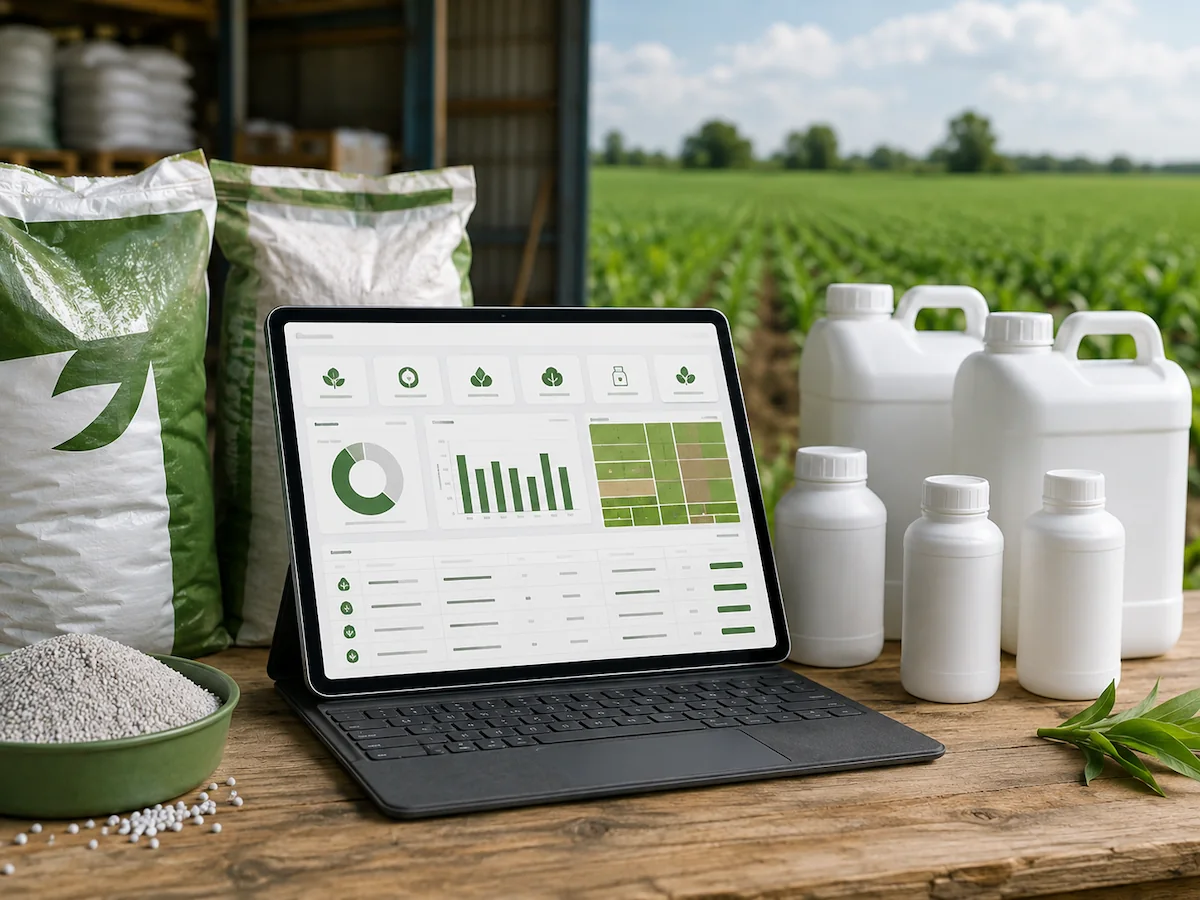
For projects in area T3, as well as selected parts of T1 and T2, we can support the development or demonstration of solutions involving the integration of machinery data, sensor data, weather data, satellite data, disease models, image analysis, and reporting systems.
3. Pilots and validation in operational conditions
FarmPortal can serve as an environment for testing functions such as treatment recommendations, operation records, crop monitoring, fertilisation management, traceability, or documenting the evidence trail of on-farm activities.
4. Support in the implementation part
In many projects, it is critical to demonstrate not only the technology itself, but also the pathway to implementation. We help describe practical application scenarios, system architecture, and the process of moving from prototype to product.
5. Areas particularly aligned with FarmPortal
- digital agriculture and data interoperability,
- crop monitoring, precision fertilisation, and irrigation,
- traceability, digital passports, and environmental reporting,
- data analytics and decision-support models,
- implementation platforms for farms, advisors, and supply chain partners.
AGROSTRATEG 2026 is a competition for projects that aim to genuinely transform the way agriculture operates. The earlier the project logic, partnership structure, research scope, and implementation plan are prepared, the greater the chance of submitting a strong application.
Follow us!
See what we're doing and be inspired by positive changes.