Missing or incomplete plant protection product (PPP) treatment records can result in reduced direct payments by ARiMR and a fine issued by PIORiN. In 2024, the State Plant Health and Seed Inspection Service (PIORiN) conducted more than 5,700 inspections of PPP trade, and the number of on-farm inspections is growing steadily. This article provides a complete inspection checklist, explains the logic behind inspectors' cross-checking of data, and shows how digital tools – such as FarmPortal – eliminate the risk of documentation gaps.
1. Context: why PPP records are more than a formality
Keeping plant protection product treatment records is a statutory obligation for every agricultural producer applying pesticides. The legal basis is Article 67 of Regulation (EC) No 1107/2009 of the European Parliament and of the Council, and the Polish Act of 8 March 2013 on plant protection products. The obligation applies to all professional PPP users – in practice, every farmer who grows crops and uses chemical plant protection.
Records are not merely a formal requirement. They are also a management tool: they allow the history of chemical protection on each field to be tracked, active substance rotation to be planned to prevent resistance, pre-harvest intervals (PHI) to be verified, and the justification for each treatment required under Integrated Pest Management (IPM) to be documented.
Regulatory changes are moving towards greater detail and automation. Regulation (EU) 2023/564 requires all professional PPP users across all Member States to keep electronic treatment records from 1 January 2026. For Polish farmers this means a digital tool must be implemented before that date.

2. Who inspects what – ARiMR, PIORiN and their powers
PPP treatment records are subject to inspection by three institutions, each with different powers and different sanctions. Understanding this distinction is key when preparing for an inspection.
Table 1. Institutions inspecting PPP treatment records and the scope of their powers
| Institution | Scope of inspection | Possible sanction | Record retention |
|---|---|---|---|
| PIORiN (State Plant Health and Seed Inspection Service) | Completeness of records, PPP market authorisation, label compliance, operator certification, equipment inspection | Fixed penalty PLN 50–500; order to remedy deficiencies | min. 3 years |
| ARiMR (Agency for Restructuring and Modernisation of Agriculture) | Cross-compliance verification as part of direct payment inspections | Percentage reduction of direct payments; in extreme cases up to 100% reduction | min. 3 years |
| State Labour Inspectorate | Operator certification, occupational health and safety during PPP application, worker exposure records | Fixed penalty; enforcement notice; court fine | min. 2 years (for worker exposure records) |
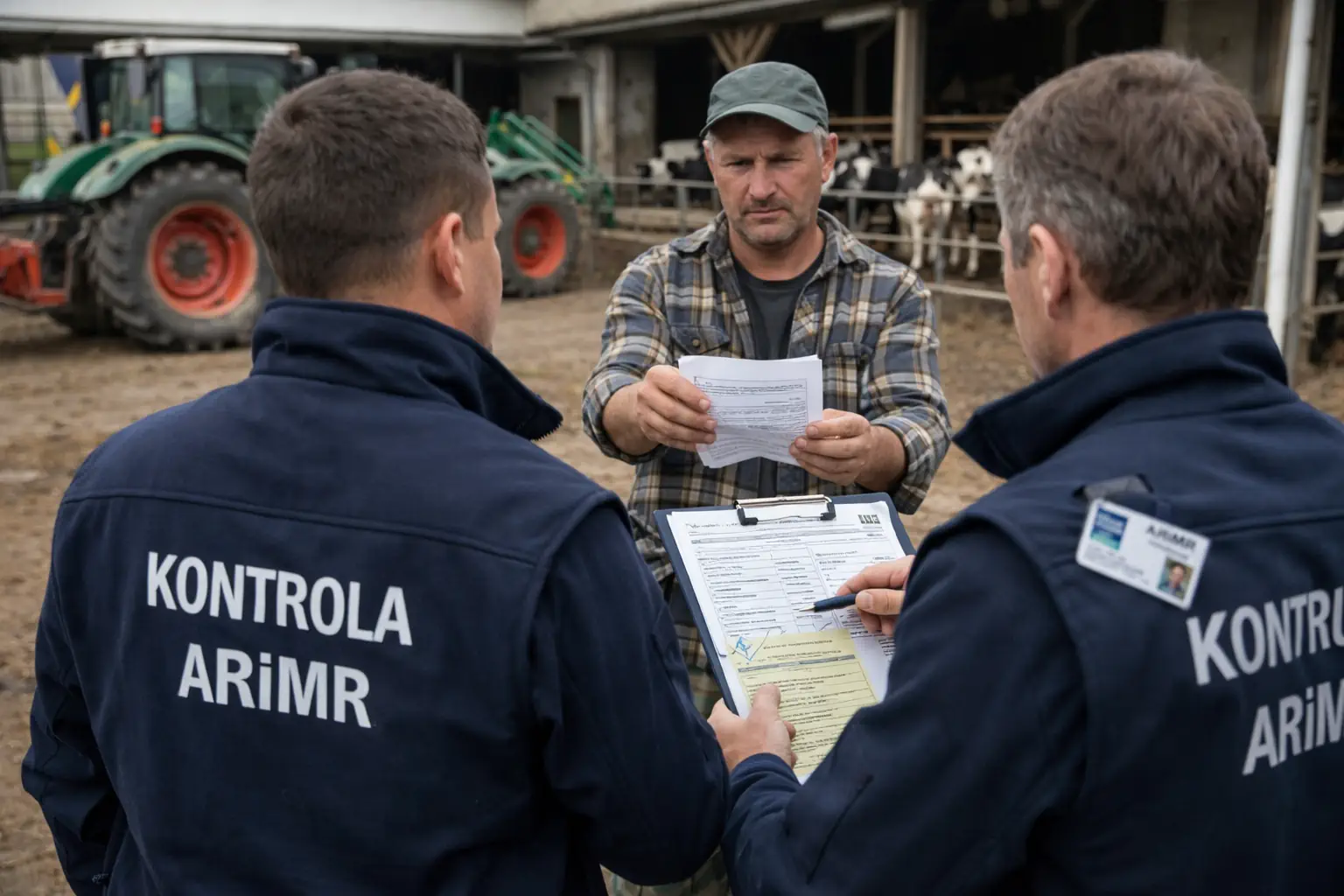
Through cross-compliance (conditionality), ARiMR cross-references treatment record data with other registers: PPP purchase invoices, field area data from the Land Register, and increasingly – remote satellite data on vegetation and weather conditions. This multi-dimensional analysis means inconsistencies can be detected even without an inspector visiting the farm in person.
For a broader overview of on-farm ARiMR inspections, see the dedicated article: ARiMR farm inspection: documentation and preparation.
3. Inspection statistics and scale of sanctions
According to PIORiN data, in 2024 a total of 5,729 PPP trade inspections were conducted, with 314 samples taken for laboratory testing. In routine inspections 249 samples received a positive certificate, and 3 a negative one. In targeted inspections, as many as 24 out of 62 samples showed irregularities (illegal products, foreign-language labels). These figures show that inspection pressure is high and growing.
At farm level the picture is similar. Missing records or incomplete entries are the most common reason for ARiMR cross-compliance sanctions. Payment reductions can range from 1% to several tens of percent of the total awarded amount – depending on the severity and scope of the infringement and whether it was intentional.
From 1 January 2026, EU Regulation 2023/564 introduces mandatory electronic PPP treatment records for professional users. Paper records alone will not satisfy the new requirements. Implementing a digital system before that date is strongly advisable to avoid a rushed transition mid-growing season.
4. Who this article is for?
Table 2. Target audiences, their challenges, and what this article offers
| Audience | Main challenge | What they gain from this article |
|---|---|---|
| Farmers | Risk of losing subsidies, lack of time for paperwork, unclear legal requirements | A ready-to-use checklist for the day of inspection; knowledge of what inspectors look for; guidance on digital systems |
| Agricultural advisors | Need to audit documentation at many clients simultaneously; need for practical working tools | A structured verification list for audits; arguments for FMS adoption; knowledge of cross-compliance |
| Fruit and vegetable processors | Certification requirements (GlobalG.A.P., BRC, IFS); responsibility for the pesticide trail of the product | Knowledge of which documents to request from suppliers; arguments for digital batch tracking; understanding of supplier audits |
| PPP distributors | Liability for products sold; need to advise customers | Understanding of the farmer-client's obligations; ability to offer added value through documentation advisory |
5. ARiMR checklist – 10 sections ready to verify
The checklist below reflects the scope of a standard ARiMR/PIORiN inspection of PPP treatment records. Each item is a potential area of verification by an inspector. We recommend going through this list before every growing season and before an expected inspection.
1. Treatment records – completeness of entries
The inspector checks whether every treatment performed is recorded and whether every entry contains all required fields. Records must be kept up to date – batch entries filled in after the fact are one of the key "red flags".
- Date of each treatment
- Name of the plant protection product (full name, as on the label)
- Dose applied (l/ha or kg/ha)
- Area treated (ha)
- Field location (cadastral parcel number / field identifier)
- Crop species and variety
- Reason/purpose of treatment (disease, pest, weed – name)
- Name of the person who performed the treatment
- Entries are current – not filled in retrospectively in bulk
- Data are consistent (quantity of product used matches area × dose)
2. Compliance of products used with the register
ARiMR and PIORiN verify whether every product applied held a valid authorisation from the Minister of Agriculture on the date of application. Withdrawn, unlicensed, or label-non-compliant products are among the most serious types of infringement.
- Product authorised for the market on the date of application (Ministry of Agriculture register)
- Use compliant with the label: crop, dose, growth stage
- No withdrawn products or products with suspended authorisations
- Transitional periods observed when regulations changed
3. Integrated Pest Management (IPM) – justification for each treatment
IPM (Integrated Pest Management) is a EU-wide obligation under Directive 2009/128/EC. Every chemical treatment must have an agronomic justification – the inspector may ask why and on what basis the decision to treat was made. Field scouting records and data from decision support systems (DSS) are the key evidence here.
- Treatment has documented agronomic justification
- Field scouting is being carried out (with notes or photographs)
- Action thresholds for the pest/pathogen concerned were considered
- Alternative methods (agronomic, biological) were considered
- Supporting evidence: scouting notes, photographs, weather data, disease models or DSS alerts
4. PPP purchases – consistency with treatment records
ARiMR and PIORiN cross-reference quantities of PPPs purchased (invoices) with quantities recorded in the treatment register. Surplus purchases without corresponding records, or apparent use exceeding purchases, are a warning sign.
- PPP purchase invoices retained and available
- Quantities purchased correlate with quantities shown in the treatment records
- No purchase surplus without corresponding treatment entries
- No use exceeding purchases (without an opening stock inventory)
5. Operator certification
PPP treatments may only be performed by a person holding a valid pesticide training certificate. The certificate is valid for 5 years from the date of completion of the training. An expired certificate automatically invalidates the treatment entry in the documentation.
- Pesticide training certificate – valid (5 years)
- All persons performing treatments hold a current certificate
- Documents retained and available on the day of inspection
6. Spraying equipment – technical inspections
A sprayer must hold a current technical test certificate. The inspector may request the document confirming that the equipment has been inspected by an authorised testing station.
- Current technical inspection of the sprayer (every 3 years; new equipment within 5 years of purchase)
- Technical test certificate/document available
- Equipment details match those used in the records (if multiple machines)
7. Storage of plant protection products
PPPs must be stored in a locked room or cabinet, with access restricted to trained persons. Empty PPP containers are hazardous waste and must be returned to a collection point with a documented waste transfer protocol.
- Products stored in a locked location (cabinet or storeroom)
- Access restricted to trained persons only
- Storage area correctly labelled
- No leaks, no damaged packaging
- Empty containers returned to a collection point (waste transfer note retained)
8. Pre-harvest interval and re-entry intervals
The pre-harvest interval (PHI) is the minimum time between the last PPP application and harvest of the crop intended for consumption or processing, as stated on each product's label. The re-entry interval is the time during which people and animals must remain away from the treated area. Breaching the PHI not only triggers ARiMR sanctions but may also result in a product lot being rejected by the buyer.
- Harvest dates not earlier than end of PHI for each PPP applied
- Re-entry intervals observed (noted in the record)
- PHI checked for each treatment against the current label
9. Data consistency – cross-checking by ARiMR
This is the most critical section from a risk perspective. ARiMR increasingly automates cross-referencing of different data sources. Any inconsistency in any of the areas below can generate a request for explanation or trigger a sanctions procedure.
- Records ↔ PPP purchase invoices: quantities match
- Records ↔ field area (LPIS/GIS): hectares match
- Records ↔ harvest data: pre-harvest interval observed
- Records ↔ weather conditions: treatments not applied in unsuitable conditions (e.g. wind >4 m/s)
- Records ↔ pesticide residue test results (if a sample was taken)
10. Retention and accessibility of documentation
Documentation must be retained for at least 3 years and made available to the inspector on request. Failure to physically produce records on the day of inspection – even if they exist – may be treated as a breach.
- Records retained for at least 3 years
- Available to the inspector on request (paper or digital)
- Records cover all fields and parcels of the holding
- Documentation from previous seasons compiled and archived
6. Table of required data in treatment records
The table below sets out the minimum data required by law, extended by recommended elements (IPM, evidence trail). Green indicates a mandatory requirement; grey indicates recommended.
Table 3. Required and recommended data in PPP treatment records
| Data field | Status | Notes |
|---|---|---|
| Date of treatment | Mandatory | Exact date, not a range |
| Name of PPP | Mandatory | Full trade name as on the label |
| Dose (l/ha or kg/ha) | Mandatory | Dose actually applied |
| Area (ha) | Mandatory | Broken down by cadastral parcel |
| Location / field identifier | Mandatory | Cadastral parcel number or own ID |
| Crop (species, variety) | Mandatory | Growth stage – recommended |
| Target / pest or disease | Mandatory | Name of pathogen/pest/weed |
| Treatment operator | Mandatory | Full name (and certification reference) |
| IPM justification | Required (IPM) | Field scouting notes, action threshold |
| Weather conditions during treatment | Recommended | Temp., wind, humidity, rainfall |
| LPIS/GIS parcel number | Recommended | Facilitates ARiMR cross-compliance checks |
| Field scouting photograph | Recommended | IPM evidence, decision trail |
| Disease model/DSS alert result | Recommended | Documents a data-based decision |
| Product batch/lot number | Recommended | May become mandatory from 2026 |
7. Red flags – the most common errors leading to sanctions
Based on PIORiN inspection data and the experience of agricultural advisors, sanctions most frequently relate to a handful of recurring categories of error. Their occurrence almost automatically triggers an explanation procedure or a penalty.
- No records at all or records kept solely in memory – the most serious infringement
- Incomplete entries – missing required fields (e.g. no dose, no location)
- Bulk retrospective entries – all entries made on the same day, filled in at the end of the season
- Product used contrary to the label – wrong crop, dose exceeding maximum, wrong timing
- Withdrawn product or no valid authorisation on the date of application
- No operator pesticide training certificate or expired certificate
- No valid sprayer technical inspection
- No IPM justification – treatments recorded without any documented scouting
- Inconsistency with purchase invoices – more product used than purchased
- Pre-harvest interval breached – harvest before the PHI stated on the label
8. Case study: horticultural farm in Silesia
How implementing FarmPortal eliminated the risk of ARiMR sanctions on a fruit and vegetable holding
Background: A family fruit and vegetable holding of 68 ha located in the Silesia region. Crops: apple orchard (22 ha), strawberries (18 ha), white cabbage and broccoli (28 ha). Two permanent employees carrying out spray treatments, four seasonal workers. GlobalG.A.P. certification required since 2021 by the holding's main buyer – a retail chain.
Situation before implementation (2022–2023): Records kept in paper notebooks by three different operators. During an ARiMR inspection in October 2023, the inspector found 17 incomplete entries (missing dose or location) and no IPM documentation for 8 fungicide treatments in the apple orchard. Outcome: a formal explanation procedure was opened, direct payments were reduced by 3%, and GlobalG.A.P. certification was suspended for 6 months.
FarmPortal implementation (January 2024): Field maps were digitalised through the GeoPortal integration, the crop protection module was configured with the PPP database, a Metos weather station was connected, and disease models were activated for apples (apple scab, powdery mildew, monilinia) and strawberries (grey mould). Operators began recording treatments via the mobile app immediately after spraying.
Conclusions: The key change was linking treatments to weather data and disease model alerts – each entry automatically contained the date, weather conditions, and the DSS alert as IPM evidence. During the ARiMR inspection in October 2024 the inspector reviewed the full season's documentation in 15 minutes from a generated PDF report. Outcome: no deficiencies found, direct payments paid in full.
KPI data: FarmPortal internal analysis based on production account data (anonymised, with user consent).
9. FarmPortal user testimonials
"Before FarmPortal we had three notebooks kept by three different operators – and each one wrote different things. During the PIORiN inspection it turned out that the dose was missing for fourteen rapeseed treatments. Now we enter everything on the phone straight after spraying. The inspection report generates itself. I didn't have to explain anything – the inspector said it was one of the best-kept records in the region."
KPI: 0 deficiencies during the 2024 ARiMR inspection; 18% reduction in fungicide use thanks to disease models
"As an agricultural advisor I work with 40 farms in the district. Before FarmPortal I could audit PPP documentation for maybe 6–8 clients before the end of the season. Now I have a live view of every client's record from my phone and can see straight away whether entries are complete. I can step in before the inspector arrives. It's a completely different quality of work."
KPI: documentation audit time reduced from 3 hours to 35 minutes per holding
10. How FarmPortal supports documentation and ARiMR inspection readiness
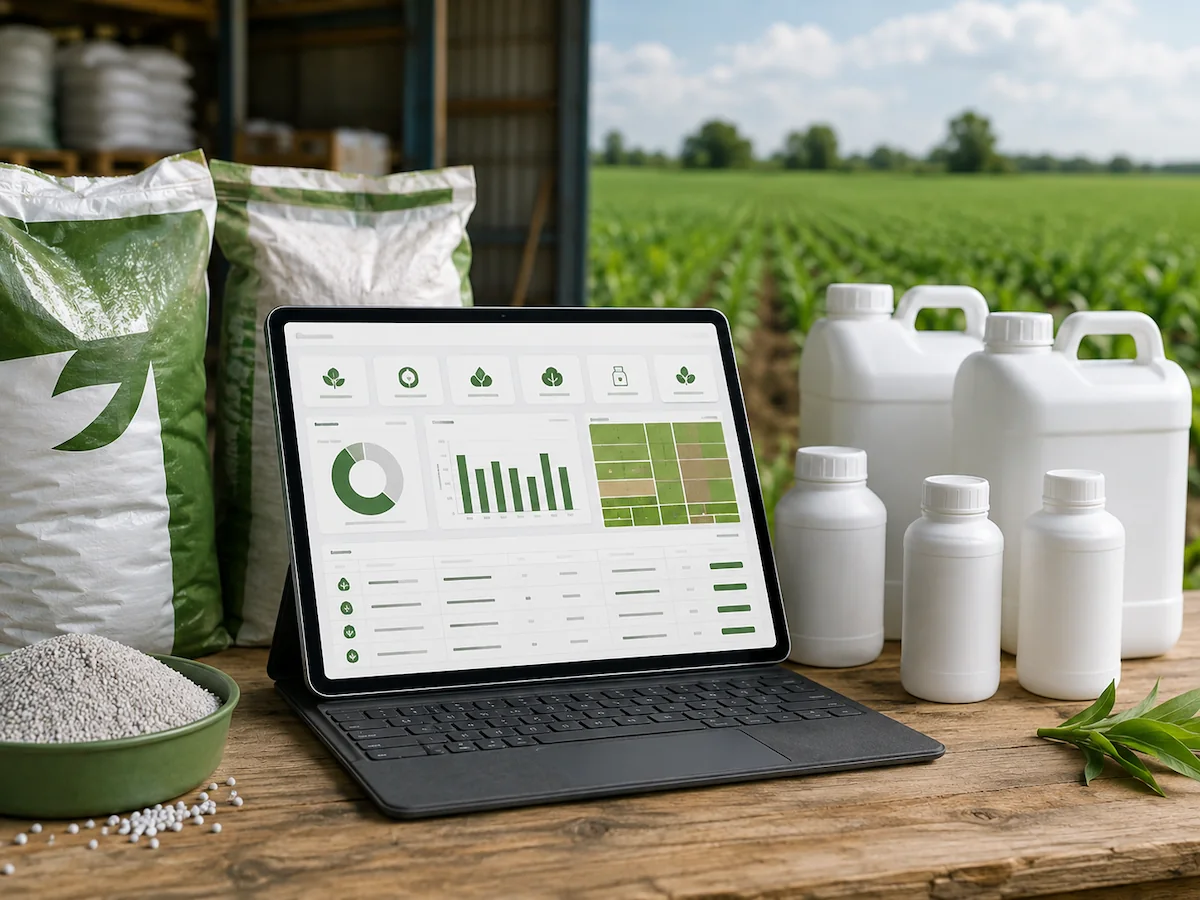
FarmPortal is a comprehensive farm management system (FMS) that automates the keeping of PPP treatment records and builds a complete evidence trail required by both ARiMR and quality certification schemes.
FarmPortal – features supporting ARiMR inspection readiness
The system works on computers, tablets, and smartphones. The basic account is free and includes full access to the crop protection module.
- PPP treatment register – complete, chronological entry of every treatment with all required fields; the mobile app enables recording directly in the field immediately after spraying
- Plant protection product database and browser – an up-to-date database of authorised PPPs with verification against the Ministry of Agriculture register; the system alerts the user if a product has been withdrawn or is being used contrary to its label
- GeoPortal integration – fields defined by selecting cadastral parcels on a map with automatic assignment of TERYT numbers; area and location data are automatically linked to every treatment record entry
- Disease models and DSS – automatic documentation of alerts (apple scab, potato blight, septoria leaf blotch, etc.) as IPM treatment justification evidence; weather data from physical or virtual weather stations attached to each entry
- Field observations – a field note module with photographs linked to each parcel and date; builds the scouting history required by IPM
- Inspection-ready reports – export of the complete treatment record to PDF, broken down by field, season, and crop; ready for an ARiMR or PIORiN inspector within minutes
- PPP inventory module – records PPP purchases and usage; automatically verifies consistency with invoices
You may also find it useful to read the article on the practical use of disease models: disease models in Agriculture 4.0 – how DSS reduces spray treatments by up to 40%, and the article on variable-rate fertilisation which complements agronomic documentation: variable-rate fertilisation (VRA) – how to save 15–25% of your fertiliser budget.
11. Electronic PPP records from 2026 – what changes
Regulation (EU) 2023/564, entering into force on 1 January 2026, establishes the obligation for professional users to keep exclusively electronic PPP treatment records. In Poland, PIORiN will oversee the system and integrate record data with the eDWIN system and ARiMR registers.
Table 4. Changes to PPP records – regulations 2025 vs 2026+
| Criterion | Until end of 2025 | From 1 January 2026 |
|---|---|---|
| Form of records | Paper or electronic (either) | Electronic only |
| System integration | No requirement | Integration with eDWIN (PIORiN), ultimately with ARiMR |
| Data scope | Minimum per Regulation (EC) 1107/2009 | Extended (Regulation (EU) 2023/564) |
| Entry deadline | No specific deadline | Entry within 3 days of treatment |
| Remote inspection | Only during inspector's on-site visit | Remote data verification possible by PIORiN/ARiMR |
FarmPortal keeps electronic treatment records in a format compliant with the requirements of EU Regulation 2023/564. FarmPortal users do not need to change tools after 1 January 2026 – they simply need to ensure the crop protection module is active and that field configurations are up to date.
12. Paper vs. digital system – comparison
Table 5. Paper vs. digital PPP treatment records – comparison
| Criterion | Paper records | Digital system (FarmPortal) |
|---|---|---|
| Completeness of entries | Depends on operator discipline; often incomplete | Required-field validation; entry impossible without complete data |
| Timeliness of data | Risk of filling in from memory after the fact | Mobile recording in the field immediately after treatment |
| Compliance with PPP register | Farmer must verify independently | Automatic verification against the authorised product database |
| IPM evidence | Separate notes – easy to lose or forget | DSS alerts and field observations linked to each entry |
| Cross-compliance with invoices | Manual cross-referencing – time-consuming | Automatic verification in the inventory module |
| Inspector report | Manual compilation; risk of missing documents | PDF export within minutes |
| Readiness for 2026 regulations | Non-compliant with Regulation (EU) 2023/564 from 2026 | Compliant; eDWIN integration planned |
| Implementation cost | A notebook (a few PLN) | Free FarmPortal account |
13. Summary
Plant protection product treatment records are one of the core elements verified during ARiMR and PIORiN inspections. Missing or inconsistent documentation can result in reduced direct payments, a fine, and – in the case of processors – loss of certification. From 1 January 2026, an exclusively electronic form becomes a statutory requirement.
Complete documentation should include: a full treatment register with all required data, PPP purchase evidence consistent with the records, IPM documentation (scouting notes, weather data, disease models), current operator certifications, and a valid sprayer inspection certificate. ARiMR's cross-referencing of these data sources means that any inconsistency – however minor – can generate questions from the inspecting authority.
Records + invoices + operator certification + equipment inspection
Goal: pass the inspection
+ IPM documentation + field scouting evidence
Goal: no questions from the inspector
+ full evidence trail from DSS models + automated data + report export
Goal: certification, 2026 compliance, ESG
14. FAQ – frequently asked questions
How long must I keep plant protection product treatment records?
PPP treatment records must be kept for a minimum of 3 years from the date of the treatment. During this period they must be available to inspecting bodies: ARiMR, PIORiN, and the State Labour Inspectorate. Worker exposure records (occupational) must be kept for at least 2 years.
What penalties can a farmer face for missing PPP treatment records?
PIORiN can impose a fixed penalty of PLN 50–500. ARiMR may reduce direct payments – depending on the severity of the infringement, from 1% to several tens of percent of the total awarded amount. For intentional or repeated infringements the sanction may be higher.
Can treatment records be kept in electronic form?
Yes. Records may be kept in any form – paper or electronic – provided they are made available to inspectors on request. From 1 January 2026, Regulation (EU) 2023/564 makes exclusively electronic records mandatory for professional PPP users.
Who is authorised to apply plant protection products?
PPP treatments may only be performed by persons holding a valid pesticide training certificate for professional users. The certificate is valid for 5 years from the date of completion of the training. An expired certificate on the operator of record is a breach detected during inspections.
As a fruit and vegetable processor, should I verify my supplier's treatment records?
Yes. Under certification schemes (GlobalG.A.P., BRC, IFS) processors are required to audit suppliers on PPP use and pesticide residues. Access to the supplier's treatment records is a standard element of supplier audits for agricultural raw materials. Missing documentation on the farmer's side may result in suspended deliveries or loss of the supply contract.
How does FarmPortal help farmers prepare for an ARiMR inspection?
FarmPortal automatically records every treatment – date, product, dose, area, location, and operator – and generates inspection-ready reports. The system contains a plant protection product database of authorised products, disease models as IPM evidence, and a complete history of every field. A full documentation PDF export takes only a few minutes.
Can a PPP distributor be held liable for a farmer's incorrect use of a product?
The distributor is responsible for the correctness of the products sold: market authorisation, valid labels, expiry dates. Responsibility for label-compliant use of PPPs rests with the farmer as the professional user. However, the distributor may be held liable if they sold a product without a valid authorisation or with an incorrect label.
What is Integrated Pest Management (IPM) and is it mandatory?
Integrated Pest Management (IPM) is an approach that requires non-chemical methods (agronomic, biological, plant breeding) to be considered and applied first, with chemical protection as a last resort. IPM is mandatory for all professional PPP users in the EU under Directive 2009/128/EC. Lack of IPM documentation is one of the most frequently identified deficiencies during inspections.
15. Glossary
- ARiMR
- Agency for Restructuring and Modernisation of Agriculture (Polish: Agencja Restrukturyzacji i Modernizacji Rolnictwa) – the institution responsible for implementing EU and national agricultural support programmes, including direct payments. It carries out cross-compliance inspections as a condition for payment.
- PIORiN
- State Plant Health and Seed Inspection Service (Polish: Państwowa Inspekcja Ochrony Roślin i Nasiennictwa) – the institution supervising the use of PPPs, their trade, and the keeping of treatment records by farmers.
- Cross-compliance (conditionality)
- An EU mechanism linking the payment of direct subsidies to compliance with defined standards on the environment, public health, and animal welfare. Breaching these standards (e.g. no PPP treatment records) results in a payment reduction.
- PPP (Plant Protection Products)
- Pesticides authorised for use in the protection of cultivated crops: fungicides, insecticides, herbicides, growth regulators, repellents. Their use, storage, and documentation are subject to legal regulation.
- IPM (Integrated Pest Management)
- A crop protection management system based on a hierarchy of methods: agronomic → biological → chemical. Mandatory for all professional PPP users in the EU (Directive 2009/128/EC). Requires documentation of the treatment decision.
- Pre-harvest interval (PHI)
- The minimum time between the last PPP application and the harvest of crop intended for consumption or processing. Stated on each product's label. Breaching the PHI is a serious legal infringement and a food safety risk.
- DSS (Decision Support System)
- Software combining weather, epidemiological, and agronomic data to guide the farmer on optimal timing and methods of crop protection. DSS outputs serve as documented evidence for the treatment decision within the IPM framework.
- FMS (Farm Management System)
- IT software for farm management, covering field records, treatment records, stock management, machinery management, and economic analysis. FarmPortal is an example of an FMS.
- VRA (Variable Rate Application)
- A precision agriculture technique involving differentiation of the application rate of a product (fertiliser, pesticide) according to location within a field, based on soil maps or satellite imagery. Reduces input use and production costs.
- LPIS (Land Parcel Identification System)
- An agricultural parcel identification system – a georeference database used by ARiMR to identify agricultural land and verify direct payment applications.
16. Sources
- Regulation (EC) No 1107/2009 of the European Parliament and of the Council of 21 October 2009 concerning the placing of plant protection products on the market. Official Journal of the EU.
- Regulation (EU) 2023/564 of the European Parliament and of the Council of 8 March 2023 amending Regulation (EC) No 1107/2009 as regards the criteria for the approval of active substances. EUR-Lex
- State Plant Health and Seed Inspection Service (PIORiN): Results of plant protection product trade inspections in 2024. PIORiN communiqué, 2025. piorin.gov.pl
© 2026 FarmPortal – Agri Solutions. The content of this article is for informational purposes only and does not constitute legal advice. For interpretation of regulations please consult the relevant ARiMR or PIORiN authority.
Follow us!
See what we're doing and be inspired by positive changes.