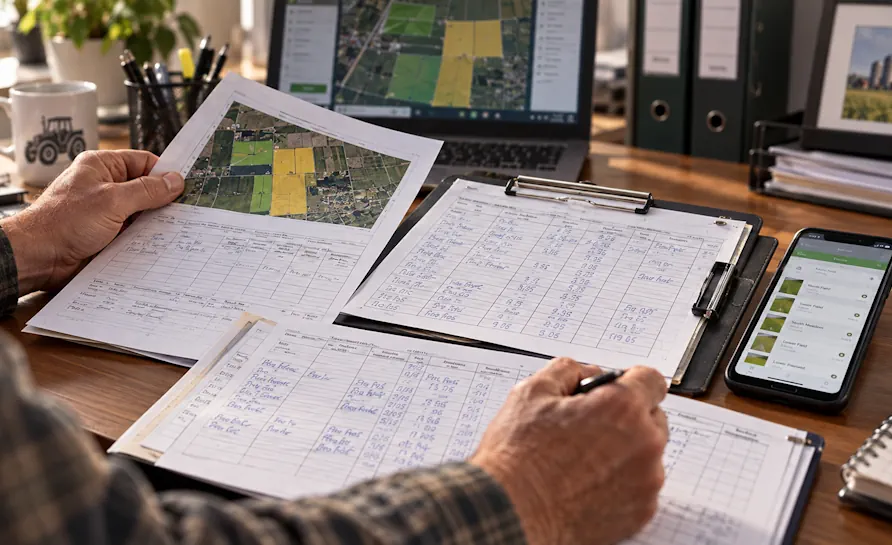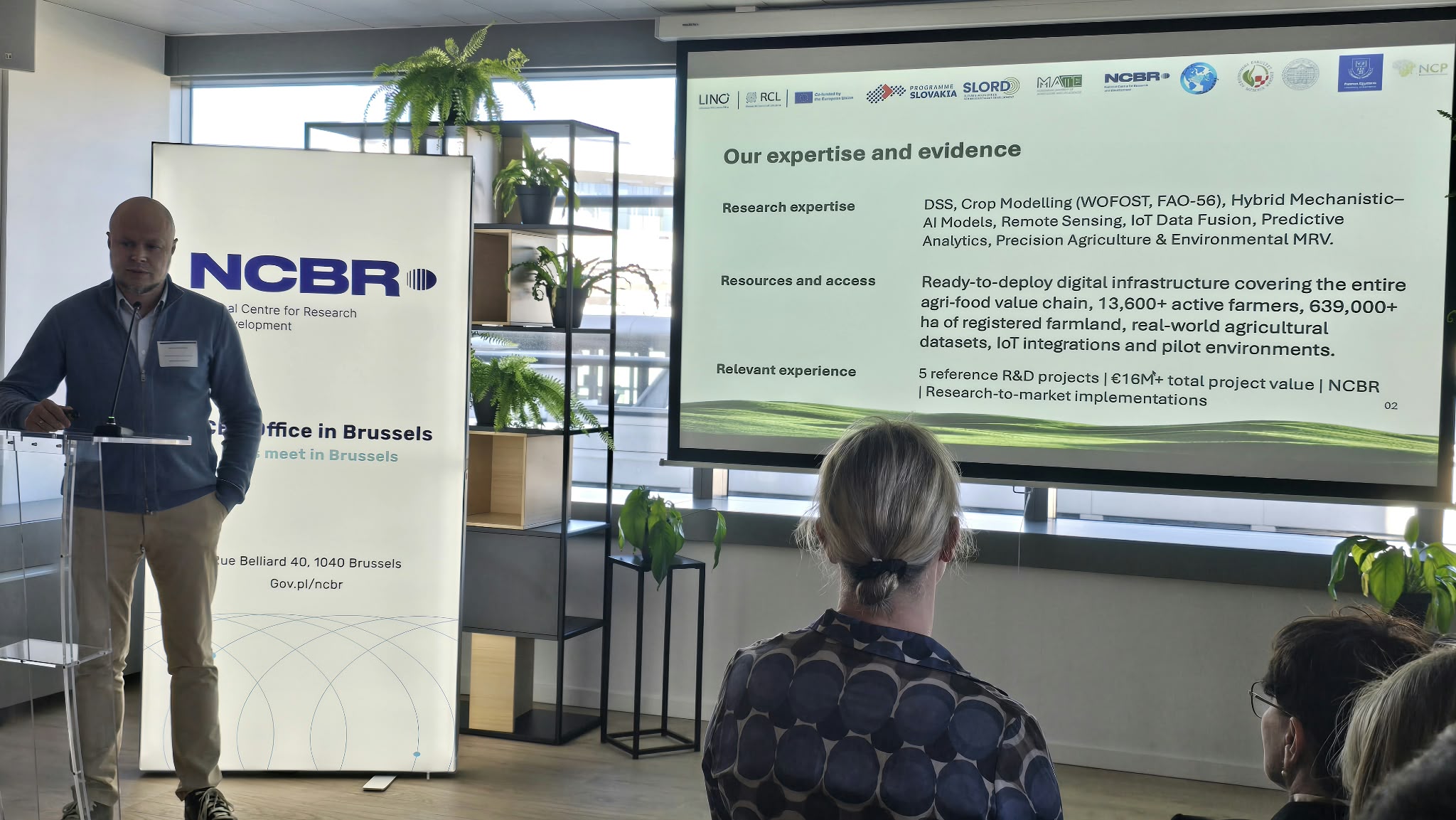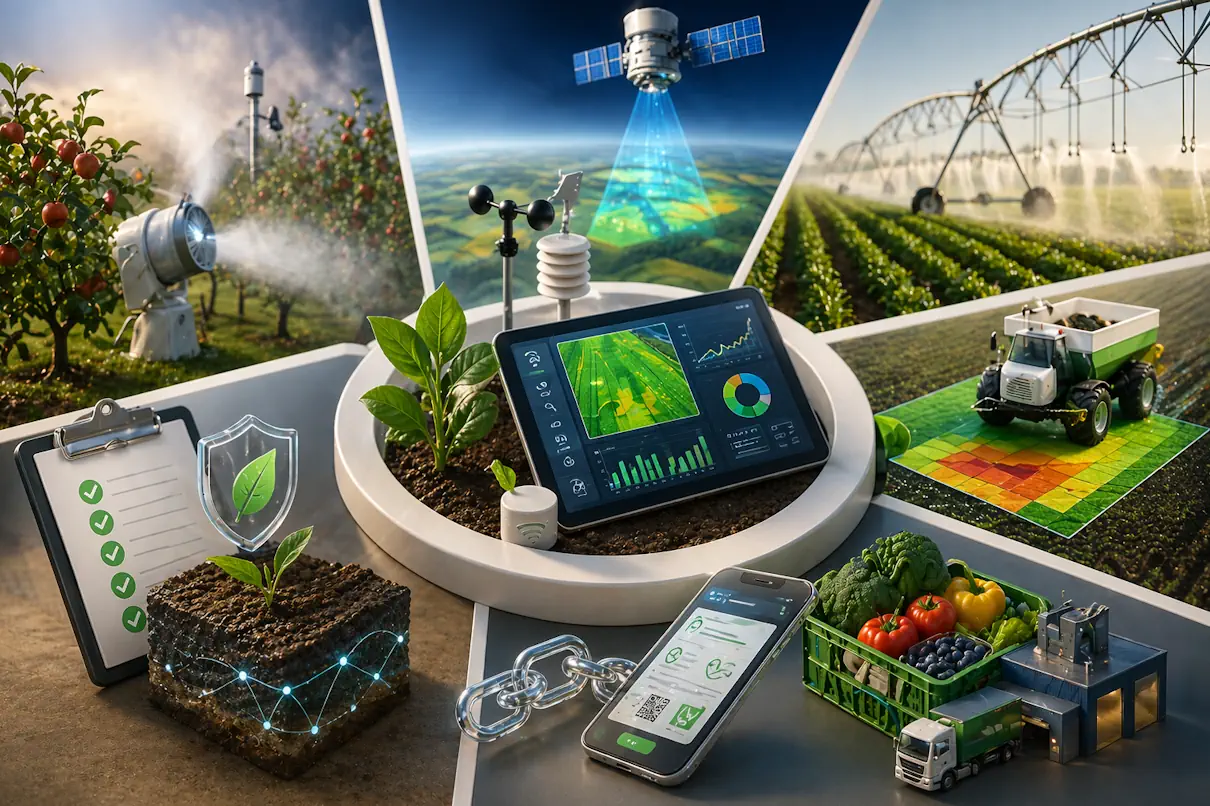
The AGROSTRATEG programme by NCBR, with a budget of PLN 300 million in its 1st call, opens the door to funding R&D projects in digital agriculture and crop production. Simply proposing to "build an app" is not enough – NCBR requires experimental development work with a demonstrator operating under near-real conditions. In this article, we present 7 specific project inspirations aligned with the programme's T1 and T3 thematic areas, show how to distinguish an implementation-ready topic from an overly vague concept, and explain how to build a consortium with real delivery potential.
Author: Kamil Korne, Digital Product Owner · Publisher: FarmPortal by Agri Solutions Sp. z o.o. – agricultural software provider, FMS systems, and IoT solutions for the agri-food sector · Publication date: 21 April 2026

1. Benefits for audiences – who gains what from AGROSTRATEG projects
The AGROSTRATEG programme is not an initiative exclusively for universities. Its structure assumes consortia combining science with practice, which means that each of the four target audiences of this article can find specific value in it – from co-funding of development work to access to tools before they become commercially available.
Agricultural advisors and agronomists
An advisor participating in an R&D project gains direct access to new decision support systems – before these tools reach the commercial market. The projects described in this article address the challenges advisors face daily: how to precisely match fertiliser rates to field zones, how to document treatment compliance with buyer requirements, how to react to frost faster than after the fact. Participation in a consortium allows the advisor to serve as a solution validator and to build competencies in digital agriculture.
Fruit and vegetable processors
A processor dealing with unstable raw material quality and a lack of full batch traceability can find funding in AGROSTRATEG to address these problems. Projects involving traceability, yield and quality prediction, and digital supply chains directly translate into reduced raw material losses, better contracting, and compliance with regulatory requirements (EC Regulation 178/2002, IFS/BRC standards, GlobalGAP).
Fruit and vegetable distributors
A distributor who plans deliveries based on phone estimates loses money on underestimated supply and excessive logistics costs. Projects in yield prediction, quality monitoring, and digital product passports give the distributor near-real-time visibility into production data – enabling better logistics planning, stock rotation management, and product provenance documentation for retail chains.
Agricultural equipment manufacturers
A machinery or IoT device manufacturer has in AGROSTRATEG an opportunity to co-fund the integration of their hardware with data and software layers. Projects combining sensors, weather stations, irrigation systems, or ISO-BUS terminals with digital platforms have higher implementation potential – and therefore a greater chance of a positive application review.
2. Why just an "AI in agriculture" idea is not enough
In the first half of 2026, there is a growing number of project declarations along the lines of "we will develop an AI system to optimise agricultural production." Such a statement is too broad to pass the merit evaluation in the AGROSTRATEG programme. NCBR does not fund general concepts – it funds projects with a precisely defined research problem, measurable outcomes, and a mandatory component of experimental development work.
Data from Polish agriculture shows why precision matters. According to Statistics Poland (GUS), tree fruit harvests in 2024 fell by approximately 17% year-on-year, while berry and bush fruit production dropped by over 11%. The main cause was late-April frosts (locally below –9°C) that damaged blooming trees and fruit bushes (GUS, Preliminary estimate of main agricultural crops 2024). Meanwhile, the EU agricultural sector loses over EUR 28 billion annually due to extreme weather events, with drought accounting for more than half of these losses (Potato News Today, 2025). These are not abstract figures – they are specific problems around which an AGROSTRATEG project with real production impact can be built.
The difference between an "idea" and a "project" lies in three elements: a defined research hypothesis (what we want to verify), an experimental methodology (how we will verify it under field conditions), and a measurable impact indicator (how much we will specifically reduce in losses, costs, or emissions). A good project is not "we will build an app" but "we will develop, verify, test, and demonstrate the effect on farms or within the supply chain."
3. What AGROSTRATEG rewards in practice
The AGROSTRATEG programme was approved by the Minister of Science and Higher Education on 14 January 2026, with a total budget of PLN 500 million. The 1st call (announced on 31 March 2026) has a funding pool of PLN 300 million. The application period runs from 14 May to 28 August 2026. Project funding ranges from PLN 1 million to PLN 25 million.
The programme's four thematic areas cover a wide range of agricultural sector challenges. However, for projects combining crop production with digital technologies, three of them are most relevant:
- T1. Sustainable crop production and soil fertility improvement – includes climate change adaptation, reduction of agricultural chemicals, soil monitoring, biologisation, and water resource management.
- T3. Digital agriculture – includes real-time farm management software (FMS), platforms integrating sensor and remote sensing data, precision planting and irrigation, Big Data and AI systems in the value chain, traceability, and system interoperability.
- T4. Innovative agricultural techniques – includes alternative production methods, including advanced irrigation and agrotechnical techniques.
The key condition to remember: a project that does not include experimental development work will not receive funding. This means that each of the seven examples below must assume not only the development of a solution, but also its testing under near-real conditions – in fields, orchards, or supply chains.
4. Seven example R&D project topics for the AGROSTRATEG programme
The proposals below are not ready-made applications to copy. They are inspirations based on real challenges facing the Polish agri-food sector, mapped to the programme's thematic areas. Each requires further development of the research hypothesis, methodology, and budget within a specific consortium.
4.1. Digital system for reducing frost and drought losses in orchards and berry plantations
Thematic areas: T1 (climate change adaptation) + T3 (digital agriculture, monitoring, FMS)
Spring frosts remain one of the greatest threats to orchard production in Poland. In 2024, temperature drops below –9°C in the second half of April caused damage to blooming trees and fruit bushes in many regions. In some locations – particularly in blueberry, strawberry, and cherry crops – losses reached 100% of the harvest (Tridge, 2024). The problem is not only the scale of losses but also response time: most orchard growers learn about the extent of damage only after the fact.
An R&D project in this area could involve developing an integrated system combining data from weather stations (temperature, humidity, dew point), satellite indices (NDVI, NDRE), crop protection treatment history, and frost risk models – with automatic generation of operational alerts and recommendations for preventive actions (e.g. activating anti-frost fans, delaying spraying).
Research hypothesis: can combining microclimate data with predictive models reduce frost losses in orchards by at least 20% compared with decisions based solely on synoptic forecasts?
Experimental component: a system demonstrator in 3–5 orchards with a minimum area of 10 ha each, covering two full growing seasons, with reference loss measurement on control plots.
"We have 28 ha of apple trees and 6 ha of blueberries near Grójec. In 2024 we lost about 35% of the blueberry crop due to a single frost event in the third week of April. If we had received an alert 6 hours earlier, we would have had time to activate the sprinklers – that would have meant tens of thousands of zlotys difference on the blueberries alone."
— Marek Wiśniewski, orchard grower, 34 ha, Grójec district
4.2. Variable rate application and irrigation platform based on management zones
Thematic areas: T1 (soil fertility, reduction of synthetic fertilisers) + T3 (FMS, interoperability, Big Data)
Variable rate application technology (VRA – adjusting input rates according to field zone requirements) is one of the best-documented precision agriculture tools. Research published by Elsevier (2025) indicates that VRA can reduce nitrogen use in European arable farming by 30–40% without yield losses (Fabiani et al., 2020; Argento et al., 2022). At the same time, adoption of this technology in Europe remains below 10% – significantly lower than in the USA or Australia.
A project could involve developing a platform integrating soil fertility maps, remote sensing vegetation indices, soil sensor data (moisture, EC, temperature), and rate recommendation algorithms – with export of application maps directly to machine terminals (ISO-XML, ISOBUS formats). The irrigation component could include drip system control based on water balance and tensiometer data.
Research hypothesis: can a platform combining multi-source soil and vegetation data with a rate recommendation algorithm achieve a reduction in nitrogen fertiliser use of ≥25% while maintaining yield within ±5% compared to uniform application?
Experimental component: deployment on a minimum of 500 ha across at least 3 soil types, with a full fertilisation cycle (3 seasons), zone-level comparison with reference plots, and cost analysis.
| Parameter | Uniform application | Variable rate application (VRA) |
|---|---|---|
| N rate (kg/ha, average) | 180 | 120–145 |
| N use reduction | — | 20–35% |
| Yield variability between zones | High (CV > 18%) | Low (CV < 10%) |
| Implementation cost (PLN/ha/year) | — | 80–150 |
| Return on investment | — | From the 2nd season |
Table 1. Comparison of uniform and variable rate fertilisation – estimated parameters for arable crops under Polish conditions. Source: authors' compilation based on Fabiani et al. (2020), Argento et al. (2022).
More on how variable rate application works in practice with FarmPortal can be found in the article Vegetation indices and variable rate application in FarmPortal.
4.3. Raw material quality traceability from field to processor
Thematic areas: T3 (traceability, value chain, Big Data, interoperability)
Traceability – the ability to track a product through all stages of production, processing, and distribution, as defined by EC Regulation 178/2002 – is a regulatory requirement today. In practice, however, most Polish supply chains implement it on paper or in spreadsheets. There is no connection between what the advisor recommended, what the farmer carried out, which batch was harvested, what quality the processor measured – and how it all reached the end customer.
A project could involve developing a system that links data from the advisory level (agronomic recommendations), treatment records in the FMS, harvest logistics (batch, date, field, variety), and quality control at the processor (physicochemical parameters, laboratory results) – into a single continuous traceability record with a digital product passport accessible via QR code.
Research hypothesis: can a digital traceability system based on integrated production and processing data reduce the time to identify the source of a quality deviation from days (typical in paper-based systems) to under 2 hours?
Experimental component: a pilot in a supply chain comprising a minimum of 20 raw material suppliers (fruit or vegetables), 1 processor, and 2 buyers, with measurement of response time to simulated quality deviations and comparison with the existing process.
The topic of traceability in the context of fruit and vegetable production is discussed in detail in the FarmPortal blog article: What is traceability in agriculture.
4.4. Yield and quality prediction system for fruit and vegetable plantations
Thematic areas: T3 (AI, Big Data, production optimisation) + partially T1 (crop production efficiency)
Fruit and vegetable contracting in Poland is largely based on expert estimates and agronomist experience. The lack of precise quantitative and qualitative forecasts leads to underestimation or overestimation of supply, which in turn generates logistics losses, excess storage costs, and problems with processing line scheduling.
A project could involve developing a predictive model combining data from multiple sources: satellite and drone imagery (vegetation indices at various BBCH stages), historical and forecast weather data, soil parameters, crop history (variety, fertilisation, protection, irrigation), and – optionally – field-based computer vision data (fruit size, colour, maturity assessment). The model would generate yield forecasts at field-zone and harvest-week resolution, and quality forecasts at commercial grade accuracy.
Research hypothesis: can a multi-source model achieve apple yield forecast accuracy of ≥85% (MAPE ≤15%) at 4 weeks before harvest, compared to approximately 60–70% accuracy typical of expert estimates?
"We contract approximately 12,000 tonnes of apples per year from 40 suppliers. Every 5% error in the yield forecast means 600 tonnes of underestimation or surplus – and that directly impacts sorting line scheduling and retail contracts. A tool that delivers a forecast 4 weeks before harvest with an error below 15% changes the way we plan the season."
— Anna Kowalczyk, Raw Material Department Manager, fruit processing plant, Lublin region
4.5. Soil health and organic matter regeneration monitoring
Thematic areas: T1 (soil fertility, biologisation, monitoring) + T3 (dashboard, data, sensors)
Organic matter (humus) content in Polish soils is systematically declining – according to IUNG-PIB data, the average organic carbon content in Polish arable soils is approximately 1.2%, while the functional threshold for good soil structure is about 2%. This is not an abstract problem: low humus content directly reduces water retention capacity, which under increasingly severe drought conditions translates into faster yield losses.
A project could involve developing a soil monitoring system combining laboratory analyses (humus, pH, macro- and micronutrients, biological activity), in-situ sensor data (moisture, temperature, electrical conductivity), and remote sensing indicators (soil indices, spatial variability). The system would present data as a change-over-time dashboard, enabling the farmer and advisor to assess the effectiveness of regenerative practices (e.g. cover crops, compost, reduced tillage).
Experimental component: monitoring on a minimum of 15 farms with diverse soil types, covering at least 3 seasons, with comparison of regenerative pathways (biologisation vs. conventional) and validation of digital indicators against laboratory analyses.
Ideal consortium composition: an agricultural university or IUNG-PIB (research methodology) + a fertiliser company or biological product manufacturer (products for validation) + a technology partner – an agricultural software provider with FMS and IoT competencies + 5–10 demonstration farms.
4.6. Farm digital twin for agronomic and cost decisions
Thematic areas: T3 (FMS, Big Data, AI, interoperability)
A digital twin – a virtual replica of a physical object updated with near-real-time data – is a concept well known in industry but still at an early stage of deployment in agriculture. In the context of a farm, a digital twin is not just a field map – it is an integrated model combining the agrotechnical layer (crops, treatments, varieties, crop rotation), the weather layer (historical data and forecasts), the operational layer (machinery, workers, working hours, fuel), and the financial layer (costs per hectare, crop profitability, break-even threshold).
A project could involve developing a digital twin model that, based on data from the FMS, weather stations, IoT sensors, and financial data, generates decision scenarios: "what happens to rapeseed profitability if I delay the second nitrogen application by 10 days?" or "what is the opportunity cost of replacing wheat with peas in this rotation?"
Research hypothesis: can a digital twin based on multi-source operational and agronomic data predict the unit cost of cultivation (PLN/tonne) with an accuracy of ≥90% compared to the final settlement?
| Data layer | Source | Update frequency |
|---|---|---|
| Agrotechnics (treatments, varieties, rates) | FMS (e.g. FarmPortal) | Every treatment |
| Weather (temp., precipitation, wind) | Weather station, IMGW API | Every 15–60 min |
| Crop status (NDVI, NDRE, biomass) | Satellite/drone remote sensing | Every 5–10 days |
| Soil (moisture, temp., EC) | In-situ sensors, lab analyses | Every 30–60 min / seasonally |
| Machinery (routes, fuel, work) | CAN-BUS / ISO-BUS telemetry | Continuous |
| Costs (materials, services, labour) | FMS cost module | Every operation |
Table 2. Farm digital twin data layers – sources and update frequency. Source: authors' compilation.
4.7. Intelligent compliance documentation and chemical reduction system
Thematic areas: T1 (PPP reduction, raw material safety) + T3 (FMS, real-time data, plant protection product database)
Growing buyer requirements (retail chains, exporters, processors) regarding plant protection treatment documentation and residue limits (MRL – Maximum Residue Level, the highest permitted level of pesticide residue in a food product) create pressure that many producers are unprepared for. At the same time, the European Commission's "Farm to Fork" strategy targets a 50% reduction in chemical pesticide use by 2030.
A project could involve developing a system that links treatment records in the FMS with a database of approved plant protection products, alerts for rate exceedances (exceeding the maximum rate), weather conditions (treatment in wind >4 m/s, rainfall within 2 hours of treatment), pre-harvest and re-entry intervals, and specific buyer requirements (e.g. lists of substances banned by a retail chain).
Research hypothesis: can a system of automatic alerts and recommendations reduce the number of non-conformities in PPP treatment documentation by ≥50% and contribute to a reduction in the number of chemical PPP applications by ≥15% through better timing and condition selection?
Experimental component: deployment on a minimum of 30 farms (fruit and vegetables) with comparison of a season with the system vs. a season without the system, measuring the number of non-conformities, number of treatments, and residue levels in the raw material.
5. Comparative overview of projects
| No. | Project topic | T area | Key impact indicator | Main implementation partner type |
|---|---|---|---|---|
| 1 | Frost loss reduction | T1+T3 | Loss reduction ≥20% | Orchard grower, weather station manufacturer |
| 2 | Variable rate application and irrigation | T1+T3 | N reduction ≥25% | Farm >100 ha, spreader manufacturer |
| 3 | Traceability from field to processor | T3 | Identification time <2 h | Processor, distributor |
| 4 | Yield and quality prediction | T3+T1 | Forecast MAPE ≤15% | Processor, contractor |
| 5 | Soil health monitoring | T1+T3 | Indicator validation vs. laboratory | University, fertiliser company |
| 6 | Farm digital twin | T3 | Cost accuracy ≥90% | Multi-crop farm |
| 7 | Compliance documentation and chemical reduction | T1+T3 | Non-conformity reduction ≥50% | Orchard/vegetable farm, advisor |
Table 3. Comparative overview of 7 example AGROSTRATEG projects – thematic areas, key indicators, and implementation partners. Source: authors' compilation.
6. How to distinguish an implementation topic from an overly vague concept
One of the most common reasons for application rejection in R&D programmes is a lack of precision: the application describes a goal ("improving efficiency") but does not define what exactly will be developed, how it will be tested, and what effect can be measured. Below are five criteria that help assess whether a topic has implementation potential.
Step by step: 5 questions to verify your project topic
- Is the problem measurable? – "Frost losses account for 17% of tree fruit harvest in 2024" is a measurable problem. "Agriculture should be more digital" is a general thesis.
- Is there a hypothesis that can be disproved? – "The alert system will shorten response time by X hours" is a verifiable hypothesis. "AI will improve agriculture" is an expectation.
- Can you define a demonstrator? – A demonstrator is a working solution tested under near-real conditions (e.g. on 5 fields, at 3 processors). If you cannot describe where and how the solution will be tested, the topic is premature.
- Will the result differ from existing commercial tools? – NCBR funds research novelty. If the solution already exists on the market and only needs implementation – that is not an R&D project, it is a purchase.
- Does the outcome have a beneficiary? – Who specifically will benefit from the results: a farmer, advisor, processor, distributor? Projects without a clearly defined end user have low implementation potential.
| Feature | Implementation project | Overly vague concept |
|---|---|---|
| Problem | Specific, measurable, data-based | General, belief-based |
| Hypothesis | Verifiable, with a numerical threshold | Absent or unfalsifiable |
| Demonstrator | Defined location, scale, and test duration | "We plan to test" |
| Novelty | Described relative to the state of the art | "It is innovative" |
| Beneficiary | Named, with a described usage model | "The agricultural sector" |
Table 4. Comparison of implementation project and overly vague concept features in the AGROSTRATEG context. Source: authors' compilation.
7. How to build a consortium around a digital project – step-by-step guide
An AGROSTRATEG consortium does not need to be large – it needs to be functional. Each partner should bring a competency that no other member possesses. Below is a 6-step framework for building a consortium.
- Define the problem and scope of work. Before you look for partners, you need to know what you want to research and implement. Define the hypothesis, key indicators, and demonstrator scale.
- Identify the required competencies. A typical consortium for a digital agriculture project includes: a scientific institution (methodology, statistical validation), a technology partner – an agricultural software provider (platform, integration, FMS), a hardware partner (sensors, stations, machinery), and demonstration farms or processors.
- Find a scientific partner. Agricultural universities (SGGW, UP Lublin, UP Poznań, UP Wrocław) and sector institutes (IUNG-PIB, IO Skierniewice, IERiGŻ) have experience with NCBR programmes. Key: the scientific partner must have a team capable of committing for 2–4 years of the project.
- Select a technology partner with sector experience. An agricultural software provider with a working FMS solution, IoT competencies, data integration, and remote sensing capabilities is a stronger partner than a generic IT company without agri experience. The technology partner is responsible for system architecture, integration, and demonstrator maintenance.
- Secure demonstrators. A minimum of 3–5 farms or processing plants that commit to participation in tests for the entire project duration. Regional and production type diversity increases the credibility of results.
- Divide work into packages. A typical breakdown: WP1 – project management, WP2 – research (methodology, models), WP3 – software development, WP4 – hardware integration, WP5 – demonstration and field validation, WP6 – results analysis and commercialisation.
8. Case study: variable rate application in an orchard – from pilot to measurable results
The following example shows how implementing variable rate fertilisation based on satellite and soil data translated into specific operational indicators at a Polish orchard farm.
Context
"Sad Nadwiślański" farm (name changed), with 62 ha of apple orchards (varieties: Gala, Golden Delicious, Idared) in the Sandomierz district, Świętokrzyskie region. Before implementation: uniform fertilisation based on average soil test results from 2021, no field zoning, manual treatment records in a paper notebook.
Implementation
In the 2025 season, the farm began a pilot with FarmPortal as the FMS platform. The scope included: soil sampling on a 1-ha grid (62 points), importing results into FarmPortal, generating fertility maps (P, K, Mg, pH), overlaying vegetation indices (NDVI, NDRE) from the Sentinel-2 satellite, and creating variable rate application (VRA) maps with export to the fertiliser spreader.
Results after the first season
| Indicator | Before implementation (2024) | After implementation (2025) | Change |
|---|---|---|---|
| Potassium fertiliser use (kg K₂O/ha) | 120 | 92 | –23% |
| Nitrogen fertiliser use (kg N/ha) | 95 | 78 | –18% |
| Fruit calibre variability (CV) | 22% | 14% | –36% (improved uniformity) |
| Marketable yield (t/ha, Class I+Extra) | 38.2 | 40.1 | +5% |
| Fertilisation cost (PLN/ha) | 1,840 | 1,510 | –18% |
| VRA map preparation time | — (none) | ~45 min/field | — |
Table 5. Operational indicators before and after variable rate application implementation at a 62-ha orchard – first pilot season. Source: own data, "Sad Nadwiślański" farm.
Conclusions
An 18% reduction in fertilisation costs combined with a 5% increase in marketable yield confirmed that even in the first season the system delivers a return. The key factor was zoning – the 62 ha turned out to contain 4 distinct zones with different potassium fertility levels, which the averaged soil sample had not revealed. The owner plans to extend the implementation to include a tensiometer-controlled drip irrigation module in the 2026 season.
"I was sceptical about satellite maps – I thought it was a toy. After the first season, I see real savings: PLN 330 per hectare less on fertilisers, and more uniform apples. The biggest surprise? Two blocks that I had been treating the same way for years have completely different potassium levels. Without zoning, I would never have caught that."
— Tomasz Jabłoński, orchard grower, 62 ha, Sandomierz district
9. Where FarmPortal and FarmCloud add value in AGROSTRATEG projects
FarmPortal – farm management software developed by Agri Solutions – is not a ready-made competition solution, but a technology platform on which the digital component of an R&D project can be built. In the context of the AGROSTRATEG programme, FarmPortal as an agricultural software provider can serve as the consortium's technology partner, responsible for system architecture, data integration, and demonstrator maintenance.
FarmPortal features relevant to AGROSTRATEG projects
FarmPortal as an FMS system offers competencies that directly correspond to the research topics in the T3 area of the AGROSTRATEG programme:
- Precision fertilisation and VRA maps – generating variable rate application maps based on soil tests and vegetation indices, export to spreaders in ISO-XML formats. Directly supports project types 2 (variable rate application) and 6 (digital twin).
- Treatment records with weather context – every treatment is recorded with atmospheric condition context, which is essential for project types 7 (compliance documentation) and 1 (frost loss reduction).
- Plant protection product database – an integrated, regularly updated PPP database approved by the Ministry of Agriculture, with information on rates, pre-harvest intervals, and application conditions. Critical for project type 7.
- IoT sensor and weather station integration – data from soil sensors, weather stations, and storage sensors in a single panel. Supports project types 1, 2, and 5.
- Traceability and digital product passport (FoodPass) – linking harvest batches with treatment history, field, variety, and quality parameters. Directly supports project type 3.
- Cost analytics – treatment costs broken down by crop, hectare, and cost components (fertilisation, protection, fuel, services). Supports project type 6 (digital twin).
A full overview of FarmPortal features, including telemetry, fertilisation calculation, and machinery fleet management modules, is available at farmportal.eu/functions.
FarmPortal as a technology partner – what it brings to a consortium
| Competency | What it means for an R&D project |
|---|---|
| Working FMS platform (TRL 8) | No need to build infrastructure from scratch – the project builds on a proven foundation |
| IoT integration (CAN-BUS, ISO-BUS, MQTT) | Ability to connect sensors, machines, and stations to a single data ecosystem |
| Implementation experience in the agricultural sector | Understanding of farm realities – from 10 ha to 450 ha and beyond |
| Remote sensing (Sentinel-2, NDVI, NDRE) | Ready-made vegetation index algorithms, integration with VRA maps |
| Fully owned IP (Agri Solutions) | No licensing risk – flexibility in defining the scope of research work |
Table 6. FarmPortal competencies as a technology partner in an AGROSTRATEG consortium. Source: authors' compilation.
If you have an R&D project idea with a digital component and are looking for a technology partner with experience in the agri-food sector – we will help you shape it into a scope of work, work packages, and demonstrator architecture. Contact us via the AGROSTRATEG page on farmportal.eu.
10. AGROSTRATEG project readiness checklist
Before submitting your application, verify the following elements. This checklist is based on the requirements of the 1st call documentation and best practices from previous NCBR programmes.
- Research problem – defined, measurable, data-based (GUS statistics, scientific publications, industry data).
- Hypothesis – verifiable, with a numerical threshold (e.g. "reduction of ≥20%").
- Thematic area – the project fits within at least one of the four areas T1–T4.
- Experimental development work – planned, with a described demonstrator, scale, and test duration.
- Consortium – complete (scientific institution + implementation partner + technology partner + demonstrators).
- Budget – within the PLN 1–25 million range, with a realistic breakdown by work packages.
- Work packages (WP) – defined with milestones, indicators, and responsible partners.
- Research novelty – described relative to the state of the art (literature review, analysis of existing solutions).
- Commercialisation plan – a pathway from demonstrator to market product/service after project completion.
- Application in the LSI system – submitted electronically by 28 August 2026, 4:00 PM.
11. Conclusion
The AGROSTRATEG programme, with a budget of PLN 300 million in its 1st call, is a real opportunity to fund projects that combine science with agricultural practice. The seven examples described in this article show that project topics need not be abstract – they can stem from specific problems: frost losses in orchards, excessive fertilisation, lack of raw material traceability, inaccurate yield forecasts, soil degradation, fragmented operational data, or non-conformities in crop protection documentation.
Three principles to remember before starting your application:
- AGROSTRATEG is not a competition for software – it is an R&D programme requiring experimental development work with a demonstrator under near-real conditions.
- A good topic starts with a measurable problem – not with technology. First the problem and hypothesis, then the tool.
- The consortium must be functional – each partner brings a unique competency, and the project has a clearly defined beneficiary: a farmer, advisor, processor, or distributor.
The application period runs from 14 May to 28 August 2026. Preparing a solid application takes 8–16 weeks – which means consortium building and project scoping should begin now.
Have an R&D project idea in digital agriculture? We will help you shape it into architecture, work packages, and a demonstrator. Contact the Agri Solutions team via the AGROSTRATEG page on farmportal.eu.
12. Frequently asked questions
Can a 50-hectare farm submit an AGROSTRATEG application on its own?
Not on its own – AGROSTRATEG is a research and development programme, so a consortium with a scientific institution is required. However, a farm of any size can be an implementation partner within a consortium, for example as a solution demonstrator. The more diverse the farms in the project, the stronger the validation of results. A 50-hectare farm can serve as a testing ground for the developed solution.
What is the project funding level in the AGROSTRATEG programme and what is the minimum budget?
The minimum funding amount in the 1st AGROSTRATEG call is PLN 1 million, the maximum – PLN 25 million. The total budget of the 1st call is PLN 300 million. The project must include experimental development work – software alone without a research component will not receive funding.
Can a fruit and vegetable processor lead an AGROSTRATEG consortium?
Yes – a processing company can lead a consortium, provided the project includes research and development work. A processor has a natural advantage in projects involving traceability, raw material quality prediction, or digital supply chains, as it holds data on the receiving and processing side. The consortium leader is responsible for coordination, so it should have the organisational and financial capacity to fulfil this role.
What is the difference between an implementation project and a purely scientific project in the AGROSTRATEG context?
A purely scientific project ends with a publication and a laboratory prototype. An implementation project in AGROSTRATEG must include experimental development work – that is, a demonstrator operating under near-real conditions, e.g. on actual fields, in a supply chain, or at a processing facility. The call documentation explicitly requires this component: a project without experimental work will not receive funding.
As an agricultural advisor – what role can I play in an AGROSTRATEG project?
An agricultural advisor can bring agronomic expertise, access to a farm network, and competencies for field validation of the solution to the consortium. In projects involving decision support systems, traceability, or variable rate application, an advisor is a natural bridge between technology and field practice. They can serve as a validation partner or subject-matter expert within work packages.
Can an agricultural equipment manufacturer participate in an AGROSTRATEG project?
Yes – an equipment manufacturer is a valuable partner, especially in projects requiring machine integration (variable rate application, irrigation, ISO-BUS telemetry). The manufacturer can contribute hardware, communication protocols, and access to a field machinery fleet to the consortium. Projects combining software with machinery have stronger implementation potential.
How long does it take to prepare a good AGROSTRATEG application and where should I start?
A realistic timeframe for preparing a solid application is 8–16 weeks. The first steps are: defining the research problem and hypothesis, identifying consortium partners, developing the scope of work divided into work packages, and validating budget feasibility. The call is open from 14 May to 28 August 2026 – it is advisable to start preparations as soon as possible.
Can a fruit and vegetable distributor benefit from participating in an AGROSTRATEG project?
A distributor can serve as an implementation partner, especially in projects involving raw material quality traceability, yield prediction for contracting, and digital supply chains. Participation in an R&D project provides access to solutions that will improve logistics and quality management – before these tools become commercially available.
13. Glossary
- AGROSTRATEG
- A strategic research and development programme in the agricultural sector, managed by the National Centre for Research and Development (NCBR). Programme budget: PLN 500 million, 1st call: PLN 300 million.
- NCBR (National Centre for Research and Development)
- An executive agency of the Minister of Science and Higher Education, responsible for funding R&D programmes in Poland. Polish name: Narodowe Centrum Badań i Rozwoju (NCBiR).
- FMS (Farm Management System)
- An IT system for farm management – encompassing treatment records, production planning, cost analytics, and integration with sensors and satellite maps. FarmPortal is an example of such a system.
- VRA (Variable Rate Application)
- A technology enabling the adjustment of fertiliser, water, or plant protection product quantities to the needs of a specific field zone. Requires an application map and compatible spreader/sprayer.
- Traceability
- The ability to track a product through all stages of production, processing, and distribution. A regulatory requirement under EC Regulation 178/2002.
- NDVI (Normalized Difference Vegetation Index)
- A normalised difference vegetation index – measures chlorophyll content and plant biomass based on light reflectance in red and near-infrared bands.
- NDRE (Normalized Difference Red Edge)
- A vegetation index using the "red edge" band – more sensitive than NDVI in advanced vegetation stages and with high canopy density.
- ISO-BUS / ISOBUS
- A communication standard between tractor and implement (ISO 11783). Enables operational data exchange and machine control from a single terminal.
- Digital twin
- A virtual replica of a physical object (e.g. a farm) updated with near-real-time data, used for scenario simulation and decision support.
- MRL (Maximum Residue Level)
- The highest permitted level of pesticide residue in a food product, determined by EU regulations and buyer requirements.
- TRL (Technology Readiness Level)
- A technology readiness scale from 1 (basic research) to 9 (proven system under operational conditions). AGROSTRATEG projects should aim for TRL 6–7 upon completion.
- BBCH
- A phenological scale describing the growth stages of crop plants (from germination to maturation). Used in treatment records and agronomic models.
- Experimental development work
- Work involving the application of available knowledge and skills to design new or improved products, processes, or services – including testing under near-real conditions. A mandatory component of an AGROSTRATEG project.
14. Sources
- National Centre for Research and Development – 1st AGROSTRATEG call documentation: gov.pl/web/ncbr/agrostrateg-ikonkurs
- Statistics Poland (GUS) – Preliminary estimate of main agricultural and horticultural crops in 2024: stat.gov.pl
Follow us!
See what we're doing and be inspired by positive changes.