Telemetry, variable rate application (VRA), disease models, soil analytics, and integrations with processing generate data of high operational and strategic value. The EU treats the food sector as a critical domain (NIS2, CER), while new regulations (AI Act, Data Act, CRA, GDPR) increase the responsibilities of entities digitalizing production.
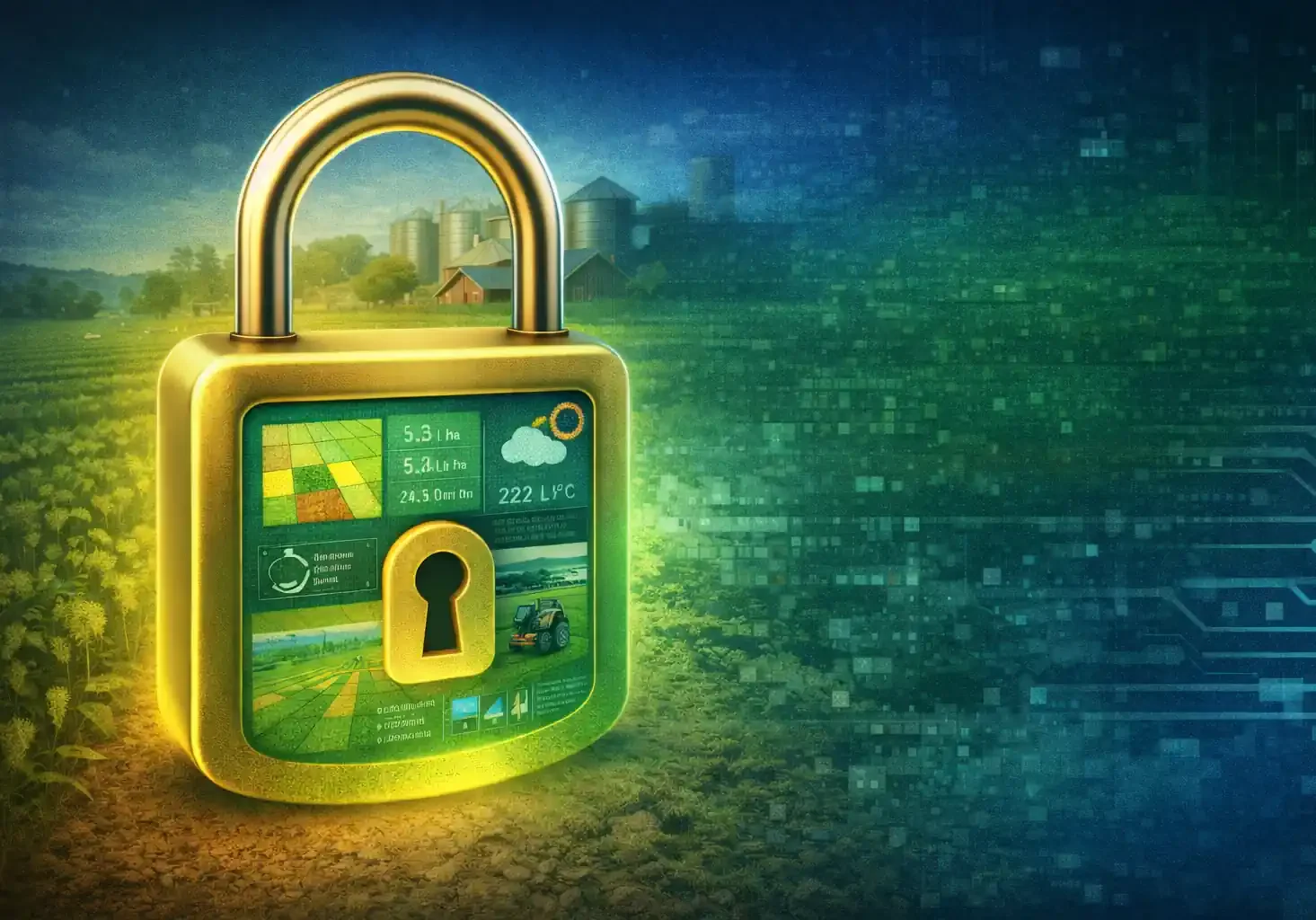
In FarmPortal, the data belongs to the user: we do not sell it, we process it internally, store it within the EU, encrypt it at rest and in transit, and data sharing is explicit and fully controlled by the farmer.
Key takeaways
The agri-food sector is covered by cybersecurity and critical infrastructure resilience regulations (NIS2, CER). The greatest risk is the loss of data availability and integrity, not just data leaks. Traceability required by EU food law means the need for auditable and reliable data. In FarmPortal, data is owned by the farmer, stored in the EU, and accessible only with their consent. The system supports documentation useful during inspections, including in the context of ARMA/agency audits and financial settlements.
Why data security in agri-food is critical (not just “IT”)
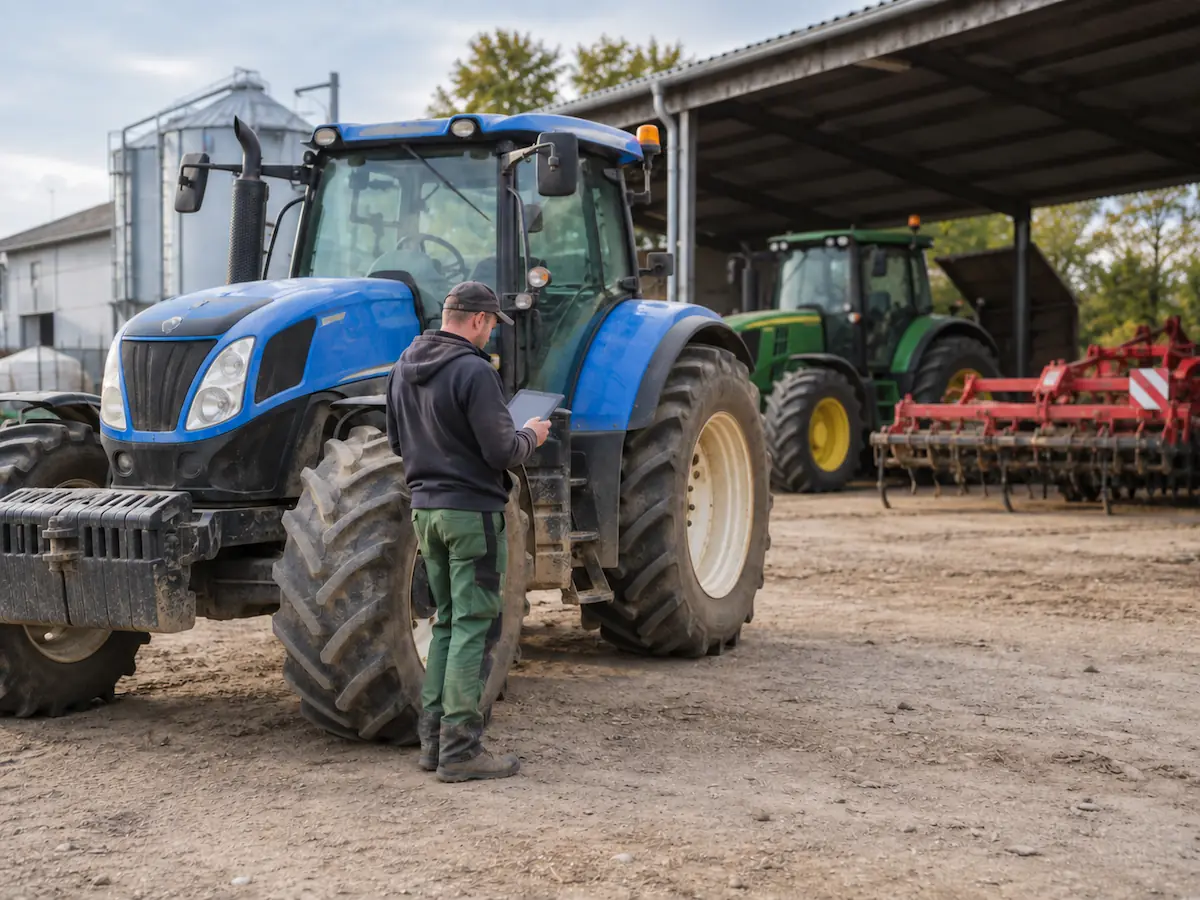
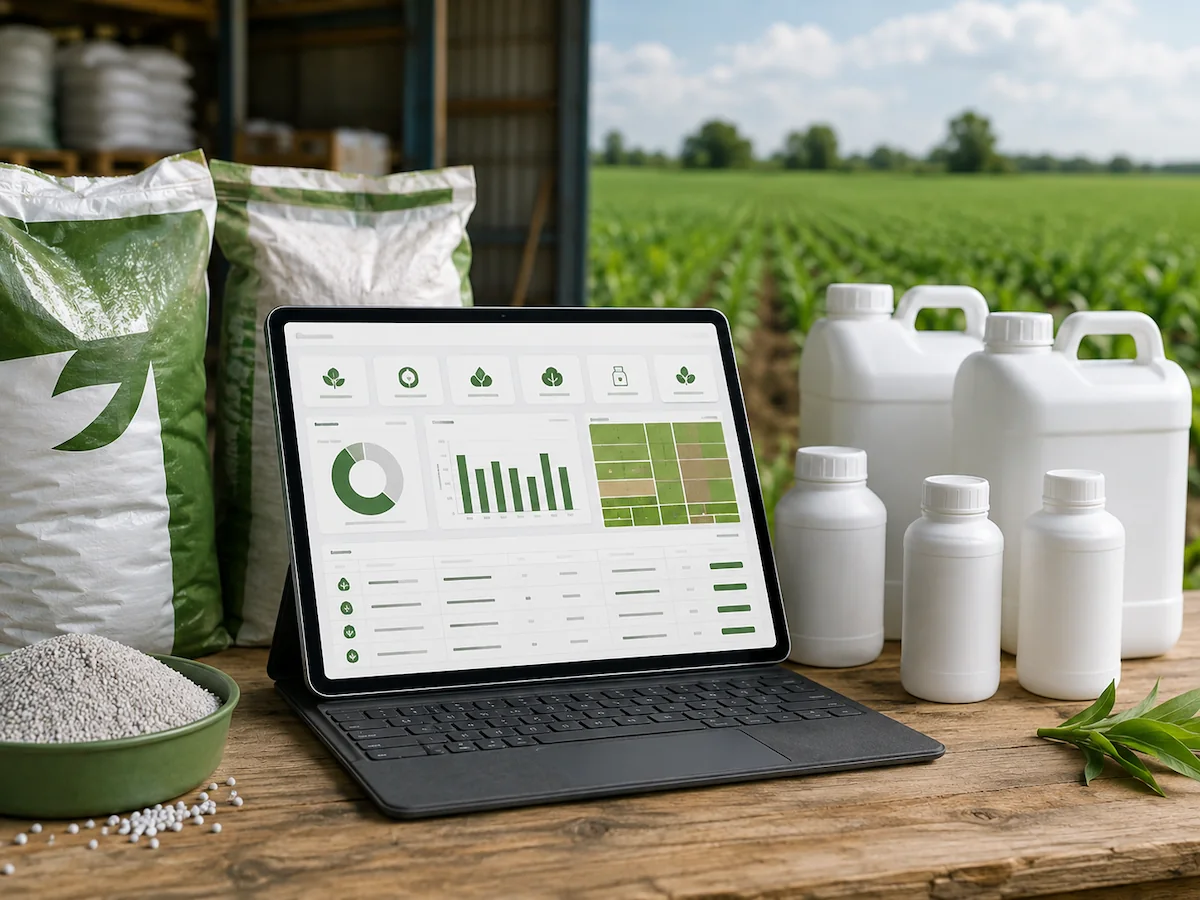
Agriculture 4.0 is data-driven. A farm management system integrates machine telemetry (GPS, CAN, ISOBUS), weather stations and IoT sensors, soil analysis and yield maps, variable rate application (VRA), treatment documentation and field records, as well as integrations with processors and ERP systems. This means that the digital system becomes part of the production infrastructure.
Evidence: threats are real
Industry reports indicate ransomware as a dominant threat, with risk increasing alongside digitalization and the convergence of IT and operational technology (OT). For agri-food, incidents occurring “in-season” are particularly dangerous, as disruptions in procurement, storage, or harvest operations immediately generate financial losses. Data integrity is also becoming increasingly critical: incorrect maps, falsified quality parameters, or lost treatment histories can be more costly than a data breach itself.
Operational conclusion: in agri-food, the biggest risk is not a file leak, but loss of availability (downtime), integrity (incorrect quality data), and trust (lack of auditability).
The importance of data security for EU food security
Data security in agriculture and food processing is an element of national security and the stability of the entire European Union. Digital systems managing production, logistics, and traceability have become part of critical infrastructure. In practice, this means that a failure or cyberattack can escalate from the company level to the market level: disrupting raw material intake, warehouse operations, cold storage, and processing, ultimately affecting product availability, prices, and recall risks.
Agri-food as a critical sector
The NIS2 Directive (2022/2555) covers, among others, entities involved in wholesale distribution and industrial food production and processing. In practice, this implies the obligation to implement a cybersecurity risk management program, incident handling and reporting, and securing the IT supply chain.
The CER Directive (2022/2557) extends the approach to operational resilience of critical entities – including those in the food sector – and strengthens requirements for risk assessment and business continuity planning.
Takeaway: the EU recognizes that disruptions to systems in the food sector can impact public health, the economy, and social stability.
Loss of data availability = systemic risk
If the system of a processing plant, warehouse, or telemetry platform stops working, the consequences are immediate: processors cannot accept raw materials, cold storage may lose parameter control, logistics cannot execute shipments, and exports may be halted. In a highly integrated supply chain, a cyber incident in one node can create a domino effect.
Data integrity and food law
Regulation 178/2002 (General Food Law of the EU) introduces the obligation of traceability – the ability to track food and feed throughout the supply chain. This requires maintaining reliable and auditable data on batches, origin, and processing. If data is lost or falsified, an entity may be unable to demonstrate compliance during inspections or product recalls.
Takeaway: data integrity is a core component of compliance with EU food law.
AI, IoT and new regulatory obligations
Digitalization increases the scope of regulatory responsibility in Agriculture 4.0 and food processing:
- AI Act (2024/1689): AI systems used in operational decisions (e.g. quality classification, disease models.) require a risk-based approach, data quality assurance, and human oversight.
- Cyber Resilience Act (2024/2847): introduces cybersecurity requirements for digital and IoT products used on farms and in processing.
- Data Act (2023/2854): regulates access to and use of data generated by connected devices, particularly relevant for agricultural machine telemetry.
- GDPR (2016/679): operator data, location data, and contractual data may qualify as personal data and require protection.
Takeaway: data security in agri-food is regulated on multiple levels – from cybersecurity and food law to personal data protection.
Context of the farmer: reporting and inspections
Farm data has evidentiary value. Documentation of treatments, fertilization, and operational records may be verified during inspections. A digital system facilitates structured documentation and preparation for audits and reporting. FarmPortal supports the generation of field records and operational reports that can be useful in inspection and compliance processes.
Takeaway: data security also means documentation security in relations with institutions and market partners.
How FarmPortal ensures data security
FarmPortal has been designed according to the security by design principle. This means that security is embedded in the platform architecture, not added as an afterthought.
The 3xT principle in FarmPortal:
- Your data – you remain the sole owner.
- Your control – you decide who can see your maps, telemetry, and field history, and for how long.
- Your security – data is encrypted and stored within the EU.
1. We do not share data with external companies
We do not sell user data or transfer it to third parties without explicit consent.
2. Processing within the FarmPortal environment
Data is processed within our infrastructure, without uncontrolled data brokers or unauthorized intermediary layers.
3. Restricted access
Server access is limited exclusively to authorized personnel, in accordance with the principle of least privilege.
4. Encryption
Data is encrypted both at rest and in transit, reducing the risk of interception and unauthorized access.
5. Transparent data sharing
The farmer initiates data sharing and can revoke access at any time. The scope of shared data is visible and fully controlled by the user.
FAQ – frequently asked questions
Who owns the data from my tractor/combine?
The farmer owns the operational data (yield maps, treatments, telemetry). FarmPortal does not claim ownership of the data, and the user retains full access and export capabilities.
If I cancel my subscription, will I lose my field history?
No. Data can be exported. We do not use vendor lock-in mechanisms that prevent recovery of field history.
Can my neighbour or competitors see my yields or fertilizer rates?
No. Farm data is logically segregated, and access requires explicit permission and appropriate authorization levels.
Will FarmPortal connect to my older spreader or sprayer?
The system supports ISOBUS as well as ISOXML and SHP formats. In many cases, integration is possible via file and map import/export.
Do I need internet coverage on every field for telemetry to work?
No. Data can be buffered locally and synchronized once the connection is restored, which is crucial in areas with uneven connectivity.
How can I upload soil fertility maps from an external laboratory?
Maps can be imported in common formats (e.g. SHP), assigned to fields, and used in variable rate application (VRA).
How much can I realistically save on fertilizers with VRA?
This depends on soil variability, input data quality, and fertilization strategy. In practice, savings of several to over a dozen percent are commonly observed, and even higher on highly heterogeneous fields.
Will the system automatically generate compliant field records?
Yes. FarmPortal enables the generation of structured documentation (field records and reports) that facilitate collaboration with advisors and preparation for inspections.
What happens if the server fails during harvest?
The platform is designed for high availability and redundancy. Additionally, part of the working data can be available locally, with synchronization occurring once connectivity is restored.
Can I grant an advisor read-only access so they cannot modify application rates?
Yes. The system supports role-based access control, including read-only permissions.
Summary
Data security in Agriculture 4.0 is a foundation of efficiency, compliance, and supply chain stability. EU regulations clearly indicate that the food sector is a critical domain. FarmPortal combines farm management, telemetry, and reporting functionalities within a secure environment where data belongs to the farmer and remains under their full control.
If you want to develop precision agriculture, telemetry, and agritech solutions without the risk of data loss – contact the FarmPortal team.
Related articles
Follow us!
See what we're doing and be inspired by positive changes.