Free Farm Management System — How Is That Possible? We Take a Look at FarmPortal.eu
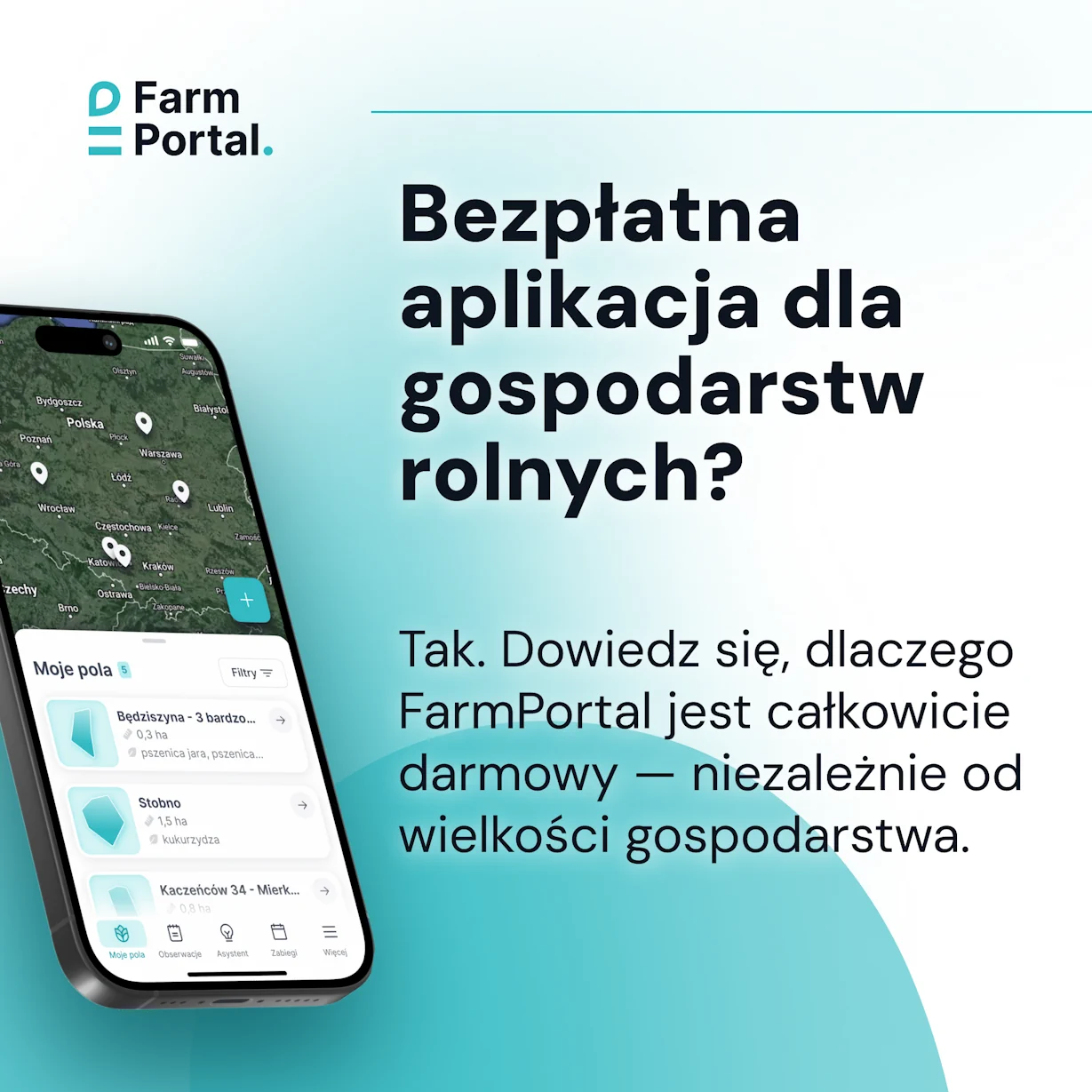
Many farmers assume that a good Farm Management System (FMS) must come with a per-hectare subscription, per-user licensing, or extra fees for every additional module. FarmPortal.eu works differently: the system is free for farms of any size, with no limits on acreage or number of employees. For key digital farming terminology (FMS, precision agriculture, AgriTech), see our Digital Agriculture Glossary 2026. Below we explain how this works, what is included at no cost, and what business model allows FarmPortal to keep the core platform free.
FarmPortal is already used by farms across Poland—from Greater Poland (Wielkopolska) to Lublin Voivodeship (Lubelszczyzna)—ranging from 0.5 ha up to 1,700 ha, as well as by users in Spain and Italy. This is a clear signal that the solution performs well under very different farming conditions.
Is FarmPortal.eu really free?
Yes. FarmPortal.eu is free for farms of any size and does not impose limits on:
- farm area (ha)
- number of fields and crops
- number of employees and users
- number of machines
- historical data and operational records
The only exception is satellite imagery: satellite imagery is paid for areas above 50 ha, because it generates real acquisition and processing costs on the data providers' side.
Why is the system free when competitors are usually paid?
Most FMS solutions earn directly from farmers through per-hectare subscriptions, per-user fees, paid modules, and functional limitations in entry-level plans. FarmPortal.eu uses a different approach: the farm operating system is free, while revenue comes from optional solutions (hardware + services) and corporate licenses for companies across the supply chain.
This is beneficial for farmers because they can start digitizing operations with no entry cost—and then add paid components only when they deliver a measurable return.
So how does FarmPortal make money?
FarmPortal generates revenue in three main areas.
1) Sales of IoT sensors and devices
FarmPortal integrates devices that a farmer may (but does not have to) deploy to reach a higher level of monitoring and automation. Example device categories include:
- soil moisture sensors / probes
- auto-steering guidance systems with wireless transfer of variable-rate fertilization maps in ISO-XML
- salinity / electrical conductivity (EC) sensors
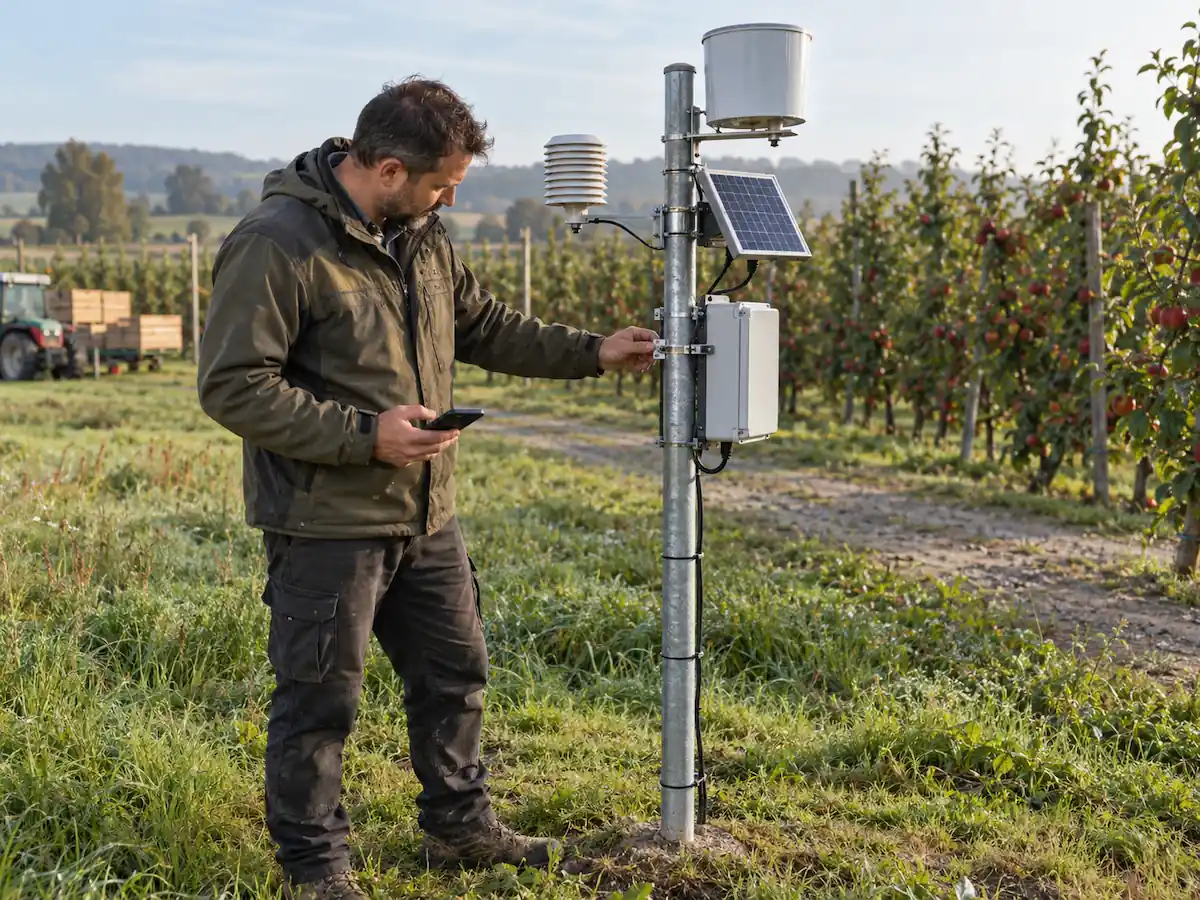
- agricultural weather stations
- GPS trackers with CAN
- leaf wetness sensors (leaf wetness) combined with weather stations
- wireless and automatic valves, water flow meters, and irrigation monitoring components
- cold-store microclimate monitoring sensors

2) Telemetry subscriptions
Paid telemetry services cover, among others, machine monitoring and field operations, such as:
- GPS location and route tracks, auto-steering guidance systems
- subscriptions for data transfer from measurement devices such as weather stations and wireless valves
Telemetry is optional. If you do not need it, you can still use FarmPortal in full scope at no cost.
In addition, disease models are also paid for farmers and orchard growers, because FarmPortal purchases them from third-party companies and distributes them as external vendor solutions.
3) Corporate licenses for processors and distributors
FarmPortal offers licenses for large fruit and vegetable companies (processors and distributors) that want to monitor and optimize the supply chain—from the farm, through the batch in a warehouse, packing house, or processing plant, all the way to the retail shelf ("from farm to fork").
In practice, FarmPortal's corporate modules are linked with FoodPass (a layer for traceability and product passports, quality control, remote advisory and monitoring, and delivery settlement), allowing organizations to connect "field data" with "delivery data" and "batch data," and then use it for reporting, quality control, and market communication (including ESG reporting and Scope 1 & 3).
Under corporate licenses, companies can, among other things:
- settle deliveries (quantities, batches, contract compliance, discrepancies, quality grading)
- perform quality control of raw material and batches (parameters, test results, rejects, complaints)
- plan works, inspections, and audits (schedules, tasks, assignments)
- run farm audits (checklists, results, photos, recommendations, corrective actions)
- create and complete production documentation (buyer requirements, standards, audit trail)
- provide remote advisory for farms (recommendations, communication, implementation status)
- enable product passports and agricultural product marketing (traceability, origin storytelling, label/QR data)
- report and analyze performance across the entire supplier network (risk, quality, timeliness, compliance)
- automate delivery notifications (automatic pre-advice)
- manage contract farming with field-level granularity (down to a specific parcel)
Corporate integrations
For organizations, integration with enterprise systems is essential. Therefore, FarmPortal and FoodPass in the corporate model can be integrated with:
- SAP
- Salesforce
- Microsoft Dynamics
- Comarch Optima (Optima)
In practice, this means FarmPortal can act as the operational layer "in the field" and in supplier collaboration, while data can flow seamlessly into the ERP/CRM/accounting systems used by the organization.
Does FarmPortal share farmers' data?
No. We do not share data security in FarmPortal with third parties and we do not sell farm data. FarmPortal is a management and production documentation tool, not a platform built on monetizing user data.
Adapted to regulations in Poland
FarmPortal is designed for the realities of Polish agriculture and typical documentation obligations. In practice, this means registers and documentation that support compliance with requirements applied in Poland (e.g., ARiMR and the Strategic Plan under the CAP). For many farms, a feature like a plant protection treatment register compliant with requirements is particularly important—because it reduces the risk of documentation errors and makes it easier to prepare for inspections.
What exactly is free in FarmPortal?
FarmPortal.eu in the free version includes the key modules and functions needed for real farm management.
Farm management and production planning
- field and crop records (field cards)
- crop planning and rotation planning
- field cards, field history and operations (crop digital twin)
- planning and logging treatments and field operations
- field observations (scouting, notes, events, photos)
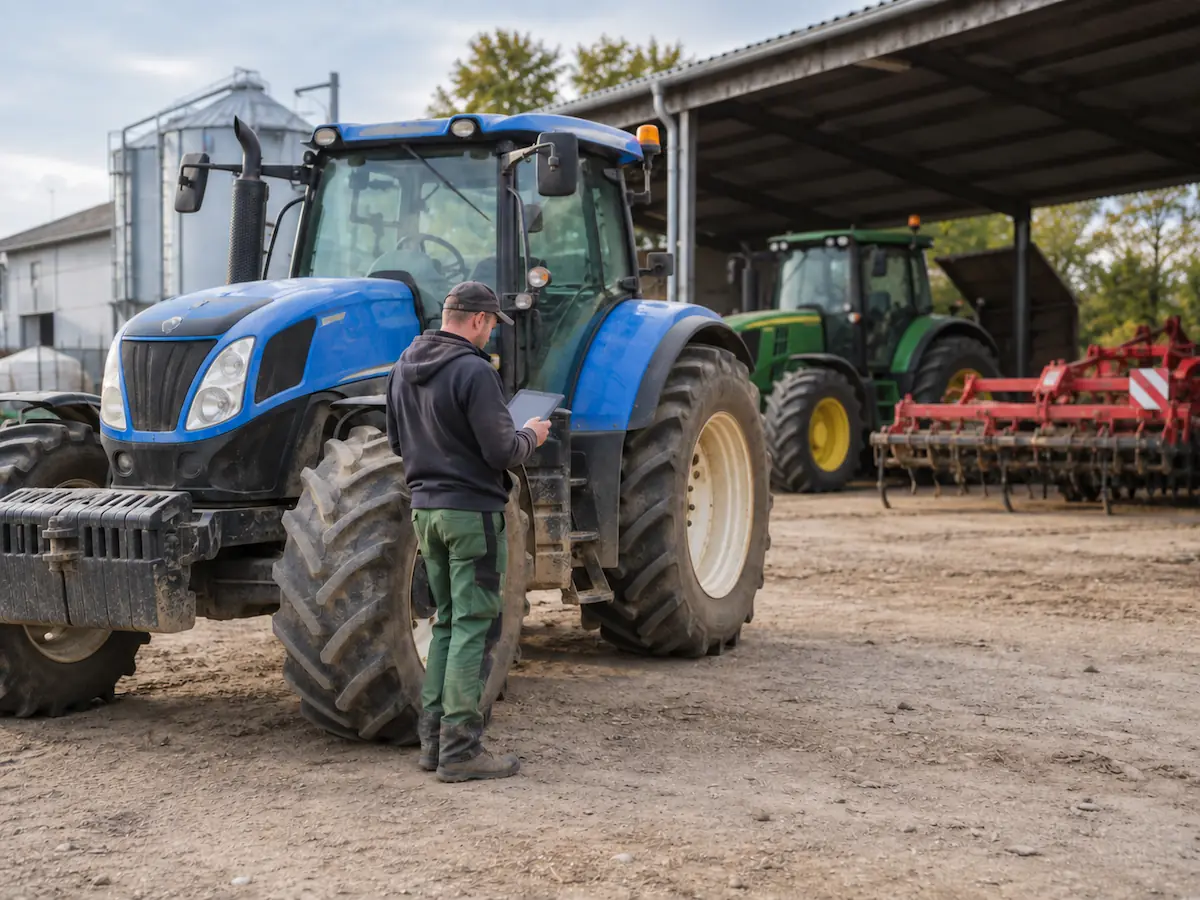
- machinery fleet management (technical parameters, service cards, notes, fueling history)
- employee records (employment type, origin, rates, permissions and qualifications, working time reports, identifiers)
- employee settlement and working time reporting
- worker record "in the field" (data, permissions, assignments, work history)
- collaboration with agricultural advisors (sharing fields, treatment history, and observations)
- marketing features, held certifications
- cost analysis
Fertilization and nutrient requirements
- fertilization calculations
- nutrient requirement generation (based on crops, yield targets, and field data)
- fertilization planning over time with execution logs
- collaboration with agricultural advisors on fertilization and recommendations
Weather and risk
- virtual weather stations
- weather alarms and risk alerts (e.g., frost)
Decision Support Systems (DSS)
- spray window determination (Delta-T)
- irrigation recommendations
- emission calculations
- fertilization calculations
Costs and farm analytics
- production cost analysis (summaries of treatments, inputs, labor)
- operational reports (work, input consumption, field performance)
Production documentation and compliance
- integrated production logbook
- soil sampling management system
- certificate and test management
- product passports / traceability and data for cooperation with buyers
Warehouses, yields, and post-harvest operations
- input inventory and stock levels
- yield warehouse (batches, quantities, locations)
- packing (packing and batch records)
- consumption logs and warehouse operation history
Comparison with typical FMS systems: pricing and limits
| Area | Typical FMS (commonly seen) | FarmPortal.eu |
|---|---|---|
| Monthly/annual fee | Yes | No |
| Per-hectare pricing | Often | No |
| Per-user pricing | Often | No |
| Paid modules (features) | Often | Premium covers satellite imagery >50 ha, telemetry, and B2B |
| Limitations in starter plan | Often | No limits (except satellite imagery >50 ha) |
| Monetization of user data | Sometimes unclear | No |
What benefits does a free, full FMS bring to farmers?
Lower barrier to digitization
A farmer can start immediately—without investment and without the risk that a trial ends after a month.
Less chaos during the season
In one place you have planning, operation logs, field observations, warehouses, weather, labor settlement, fertilization calculations, and reports. This reduces management time and prevents mistakes.
Better cost and fertilization control
Cost analysis and nutrient requirement generation help plan budgets and doses better—and quickly identify areas where savings are possible without reducing yield.
Readiness for market requirements and inspections
Logbooks, tests, certificates, and production history are organized and easy to share.
Freedom to scale without vendor lock-in
You can start with the free operational layer and add telemetry, sensors, or supply-chain functions only when there is a real business need.
Questions and answers (FAQ)
Does FarmPortal have a hectare limit?
No. FarmPortal is free regardless of area. The only charge applies to satellite imagery for areas above 50 ha.
Does FarmPortal have a limit on employees or users?
No. There is no limit on the number of employees or user accounts.
Do I need to buy sensors or telemetry to use the system?
No. IoT sensors and telemetry are add-ons. The FMS works without them.
How does FarmPortal fund development if it is free?
From sales of IoT sensors and devices, telemetry subscriptions, and corporate licenses for processors and distributors.
Will my farm data be shared with other companies?
No. Farmers' data is not shared or sold.
Summary
FarmPortal.eu is free because the foundation is a "farm operating system" available to farmers, while revenue comes from optional technologies (IoT, telemetry) and corporate supply-chain solutions (including FoodPass for monitoring the agri-food supply chain and collaborating with growers). This gives farmers a comprehensive tool adapted to Polish farming realities, with no entry barriers and no limits—while paid add-ons are adopted only when they deliver tangible economic and organizational value.
Follow us!
See what we're doing and be inspired by positive changes.