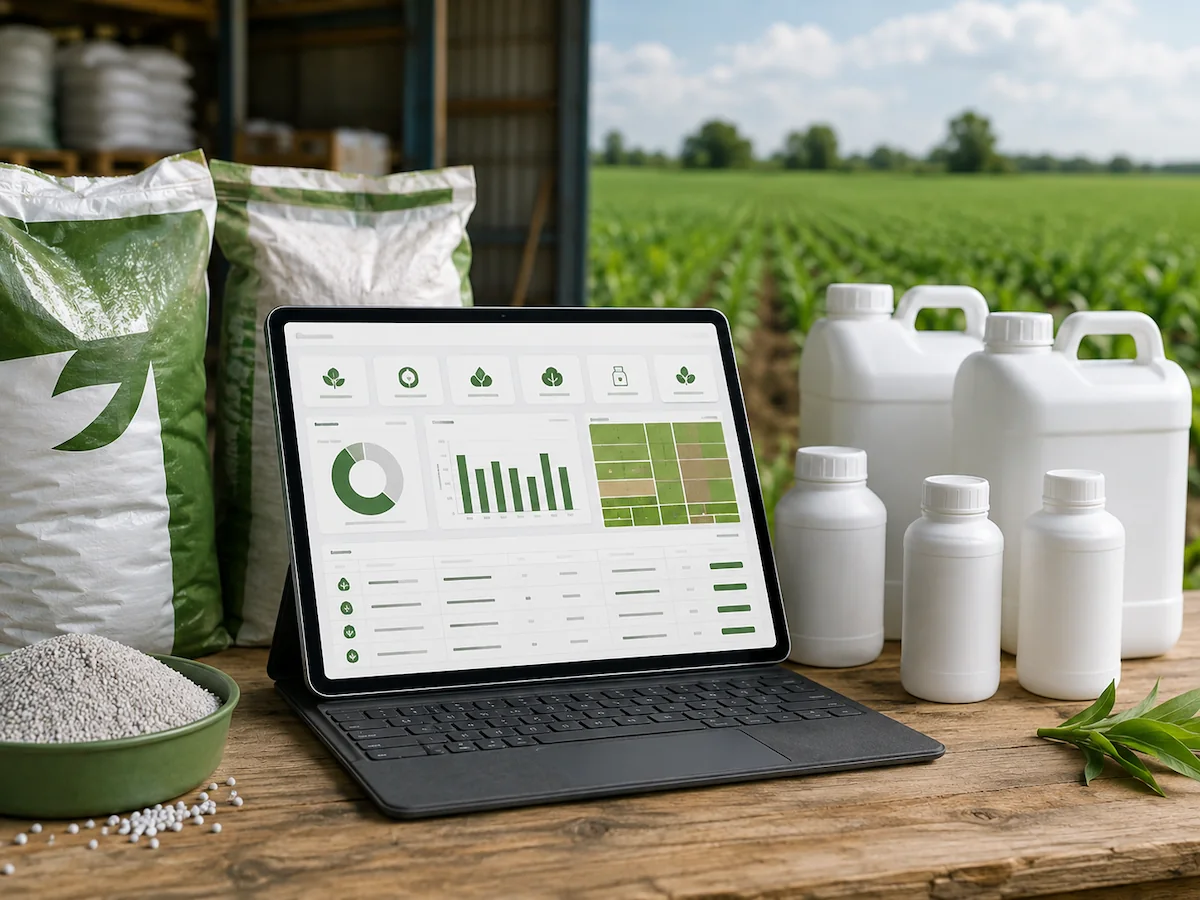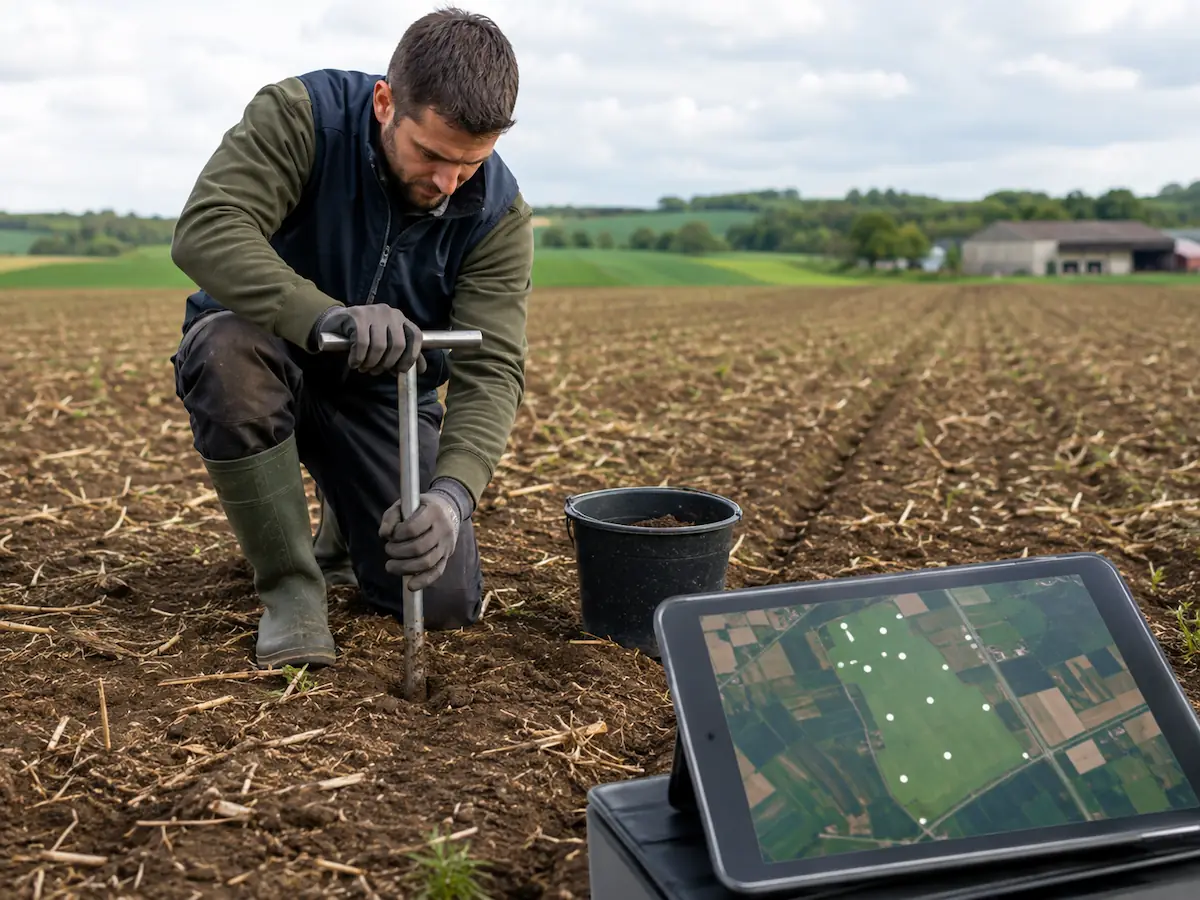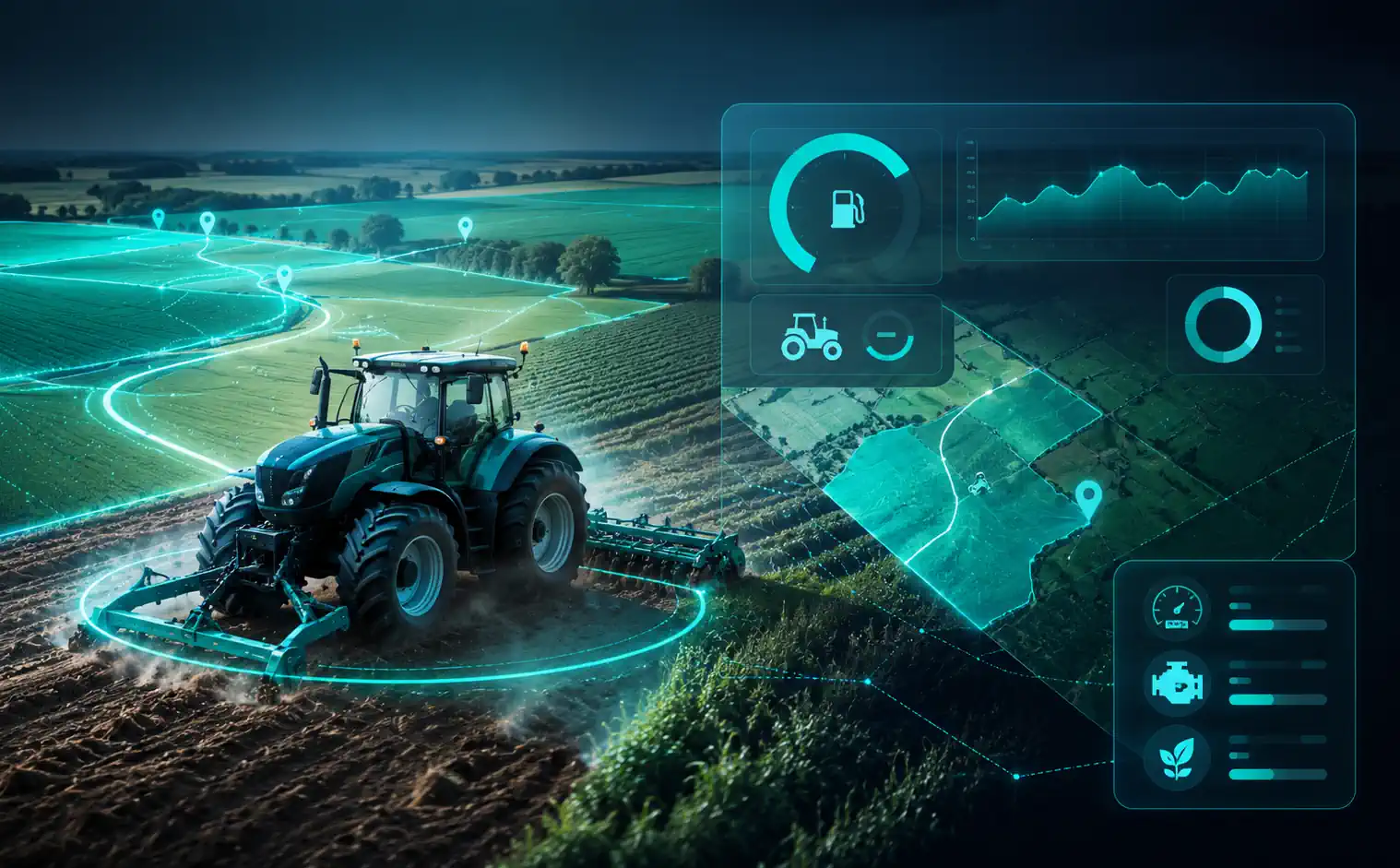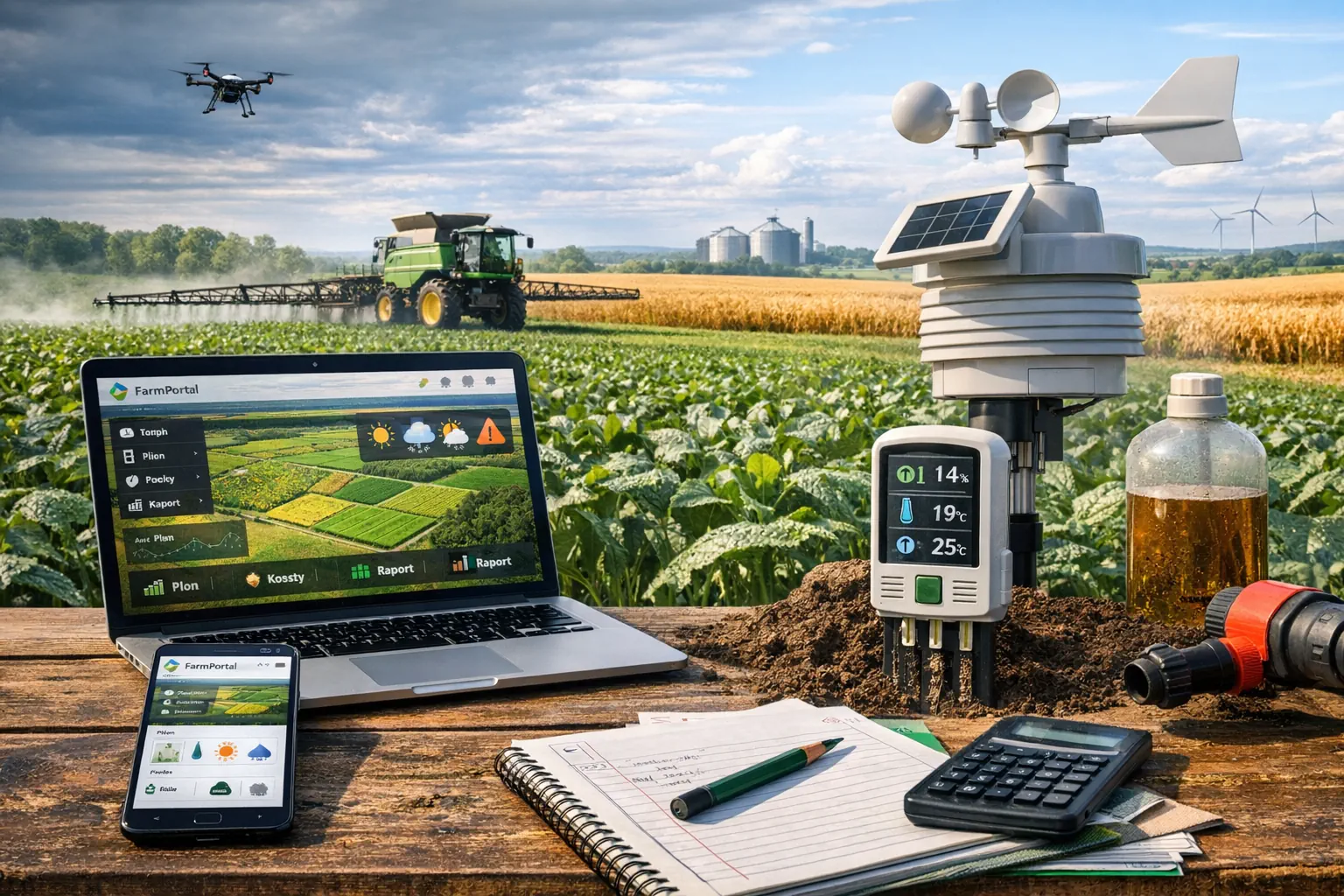
Farm Management System (FMS) is an IT system designed for managing agricultural farms. In English-language materials, FMS is commonly referred to as:
- a farm management system,
- farm record-keeping software,
- an agricultural application,
- a decision support system for agriculture,
- a digital platform for farm management.
In industry publications and online resources, the abbreviation FMS is the most commonly used term worldwide. For more digital agriculture terminology, see our Digital Agriculture Glossary 2026.
A Farm Management System (FMS) is an integrated IT solution that enables:
- planning agricultural production,
- recording and documenting field operations,
- monitoring crops and environmental conditions,
- controlling costs and efficiency,
- meeting formal and quality requirements,
- making better agronomic and economic decisions.
An FMS brings together field maps, weather data, treatment records, fertilization, crop protection, inventory, equipment, people, and production results in a single system. Choosing and implementing an FMS can be challenging – it helps to know the most common barriers to FMS implementation.
Why are farmers increasingly looking for FMS solutions (farm management applications)?
Farmers are increasingly adopting Farm Management System (FMS) solutions due to rising cost pressure, growing documentation requirements, and production risks related to weather and markets. FMS enables better planning, decision automation, and real control over costs, yields, and production quality. The use of farm management systems is primarily practical and operational, rather than purely “technological”. The key objectives include:
1. Better planning and work organization
- structured information about fields and crops,
- better use of weather windows,
- reduced delays and operational conflicts.
2. Production cost control
- assigning costs to fields and crops,
- analysis of fertilizer, crop protection products, and fuel use,
- profitability assessment.

3. Agronomic decision support
- selection of optimal timing for treatments,
- reduced risk of yield losses,
- use of weather and historical data.
4. Documentation and regulatory compliance
- automatic recording of field operations,
- documentation for inspections and certifications,
- preparation of data for audits and applications.
5. Risk management
- rapid response to frost and drought,
- monitoring disease and pest pressure,
- reduction of quality losses.
What functions should a good Farm Management System have?
A good FMS should be comprehensive, yet practical and intuitive. A reliable farm management and crop monitoring application should provide end-to-end farm management by combining records, production data, and decision-support tools in a single system. Key elements include field maps and crop history, treatment and input registers, integration of weather and satellite data, cost and yield analyses, alert systems, and mobile access for fieldwork.
When designing FarmPortal, we focused on ease of use, delivering all essential information about crops and the farm, and supporting agronomic decision-making.
1. Field and map management
- field and plot maps,
- registered and productive areas,
- crop history,
- integration with satellite data.
2. Planning and recording field operations
- sowing, fertilization, spraying, irrigation, harvesting,
- work schedules,
- records of completed operations,
- assignment of rates, products, and operators.
3. Weather data
- short- and long-term forecasts,
- weather history,
- weather alerts,
- integration with weather stations (physical and virtual).
4. Fertilization and crop protection support
- fertilizer calculations,
- nutrient balance,
- crop protection product records,
- compliance with labels and regulations.
5. Crop condition monitoring
- vegetation indices (e.g. NDVI),
- detection of stress and anomalies,
- comparison of fields and seasons.
6. Inventory management
- fertilizer, crop protection product, and seed stocks,
- expiry date control,
- linkage between inventory and field operations.
7. Analytics and reporting
- cost and profitability analysis,
- season-to-season comparisons,
- production and environmental reports.
8. Multi-device availability
- web application,
- mobile application (FarmPortal mobile is available on iOS and Android),
- use both in the field and in the office.
Automation and sensors – the next step in FMS
Modern Farm Management Systems (FMS) are increasingly integrated with automated data sources, significantly reducing the need for manual data entry and improving the quality of production management. Automation and sensor integration transform a farmer’s application from a simple record-keeping tool into a real-time decision-support system. Data from weather services, soil sensors, machinery, and satellites reduce manual input, minimize errors, and enable faster responses to crop stress and production risks. In practice, this means a shift from reporting the past to actively managing production.
Sensors and data sources
- weather stations (physical and virtual),
- soil moisture sensors,
- air temperature and humidity sensors,
- satellite data,
- agricultural machinery (ISOBUS, telemetry).
What does automation deliver?
- automatic alerts (e.g. frost, disease-favorable conditions),
- better planning of agronomic treatments,
- faster detection of crop stress,
- reduction of human error,
- tangible time savings.
Practical conclusion
In practice, this represents a transition from “recording what has happened” to actively managing what will happen, based on real-time data and forecasts. This is one of the foundations of Agriculture 5.0, where data, automation, and decision support serve not only to increase productivity, but also to reduce risk, costs, and environmental impact, while strengthening the farmer’s role as a knowledgeable farm manager.
How to choose a Farm Management System for your farm?
When selecting a farm management application, it is worth starting with an analysis of the farm’s needs—its size, crop structure, and decision-making processes—and defining the functions that will genuinely improve production efficiency. A good FMS should offer intuitive operation, integration of data (weather, satellite, machinery), analytical tools, mobile access, and scalability as the farm grows.
Small farms (up to approx. 30–50 ha)
Key priorities:
- ease of use,
- low entry barrier,
- basic operation records,
- weather information and alert systems.
Goal:
Orderly documentation and compliance without unnecessary complexity.
Medium-sized farms (50–200 ha)
Key priorities:
- field maps and crop history,
- cost calculation,
- fertilization and crop protection,
- mobile application,
- seasonal reports.
Goal:
Cost optimization and improved operational planning.
Large farms and producer groups
Key priorities:
- process automation,
- integration of sensors and machinery,
- team management,
- quality reporting,
- cooperation with buyers and contracts.
Goal:
Scalability, control, and standardization of production processes.
Orchard farming
Key functions:
- precise weather data and frost monitoring,
- phenology monitoring,
- crop protection and disease support,
- quality documentation,
- orchard block history.
Vegetable production
Key functions:
- production cycle planning,
- intensive fertilization and irrigation management,
- management of multiple harvests,
- cooperation with processors,
- production batch traceability.
Farm Management System vs notebook and Excel – a practical comparison
Notebook
Advantages:
- simple,
- inexpensive,
- intuitive.
Limitations:
- no multi-year analytical history,
- difficult information retrieval,
- no linkage between data and field maps,
- high error risk and no backups.
Excel
Advantages:
- more flexible than a notebook,
- basic analytical capabilities,
- low cost.
Limitations:
- manual data entry,
- no real-time weather or satellite data,
- difficulties with many fields and seasons,
- no automatic alerts or integrations.
Farm Management System (FMS)
Advantages:
- automatic data collection,
- linkage of operations to field maps,
- multi-year history,
- cost and yield analysis,
- decision support and alert systems,
- mobile access (web, iOS, Android).
Practical conclusion
Notebooks and Excel work well for small, simple farms.
At a larger scale, with intensive production or market cooperation, a Farm Management System pays off quickly through time savings, cost reduction, and lower operational risk.
FarmPortal – an FMS system for agricultural farms
FarmPortal is a Farm Management System that:
- enables recording of agronomic operations,
- provides weather forecasts and alerts,
- supports precision agriculture,
- operates as a web and mobile application,
- integrates physical and virtual weather stations, GPS trackers for harvesters and tractors, soil irrigation sensors, weighbridges, and feed mixers,
- offers cost calculation and production cost recording,
- enables management of farm resources such as employees, machinery, buildings, and warehouses,
- introduces a digital twin of crops, bringing users into Agriculture 5.0.
FAQ
Is a Farm Management System free?
Some functions may be available free of charge, such as in FarmPortal, but full FMS solutions are commercial systems.
Does an FMS work on a smartphone?
Yes – modern systems, including FarmPortal, offer mobile applications.
Is an FMS legally required?
No, but it significantly simplifies compliance with formal requirements. In the near future, under new regulations, recording the use of crop protection products in official systems will be mandatory, which FarmPortal will support.
Glossary
Precision agriculture – production management based on data.
Farm Management System (FMS) – an IT system supporting farm management.
NDVI – a vegetation index calculated from satellite data, indicating crop condition.
Treatment register – documentation of completed agronomic operations, required for inspections and certifications.
PPP (Plant Protection Products) – products used to protect crops against diseases, pests, and weeds.
Virtual weather station – a weather data source generated from meteorological models and satellite data.
Nutrient balance – a summary of nutrients supplied to and taken up by crops.
Contract farming – agricultural production carried out under a contract with a buyer (e.g. a processor).
Follow us!
See what we're doing and be inspired by positive changes.