1. Foundation: The Digital Farm
Agriculture 4.0
What is it?
Farm digitalization based on data from fields, machinery, and sensors.
What does it mean for farmers?
Fewer decisions based on intuition, more decisions based on data.
In FarmPortal:
- field activity records
- production planning
- cost reporting
- machine integration (ISOBUS, ISO-XML)
Agriculture 5.0
What is it?
The next stage – AI supports the farmer, but final decisions remain human.
In practice:
The system does not just say “spray” — it explains why.
In FarmPortal:
- treatment recommendations
- weather data + field history
- decision context (conditions, risk level)
FMS (Farm Management System)
What is it?
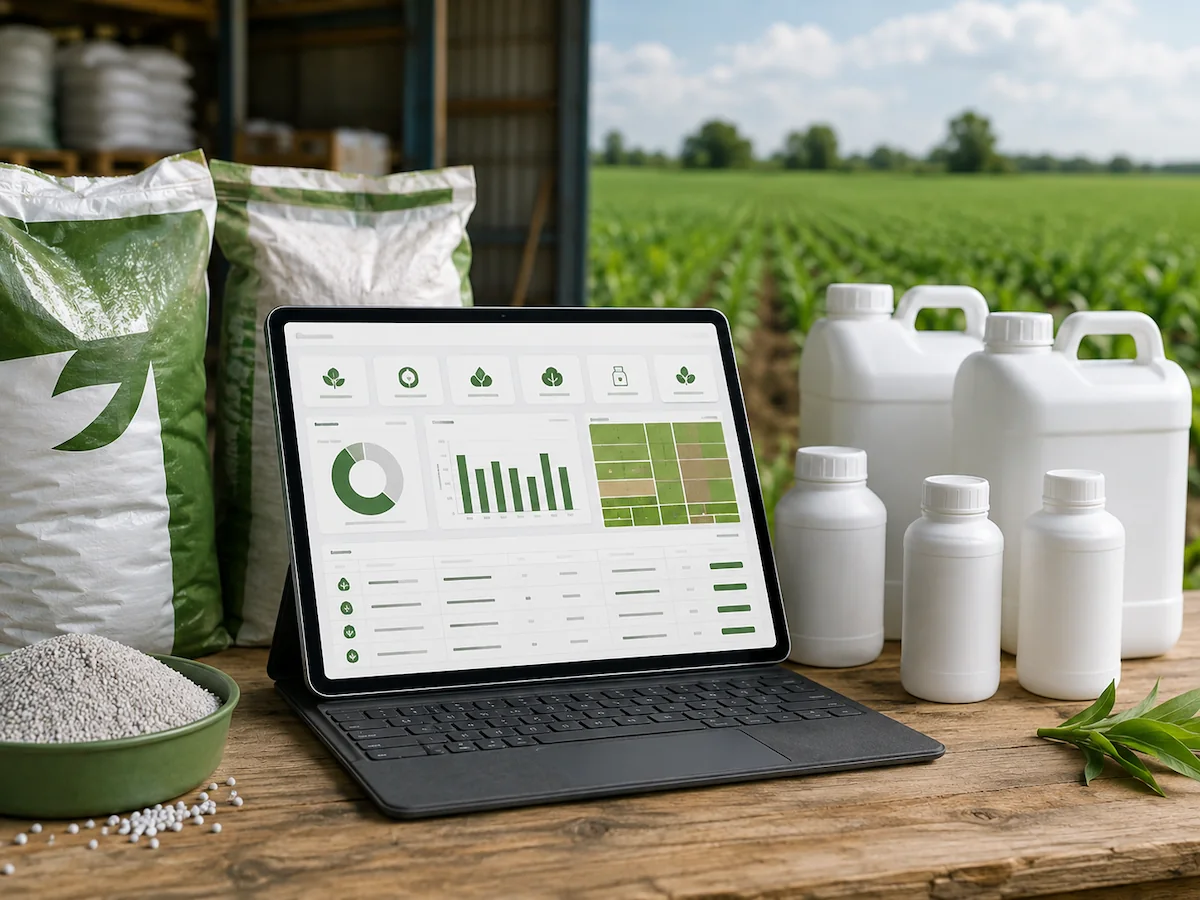
Farm management software – the digital operational “brain” of the farm.
Why is it critical?
- without FMS there is no precision
- no structured reporting
- no traceability
- no cost control
FarmPortal = FMS that integrates fields, machinery, and data in one environment.

2. Field and Machine Data
Machine Telemetry
What is it?
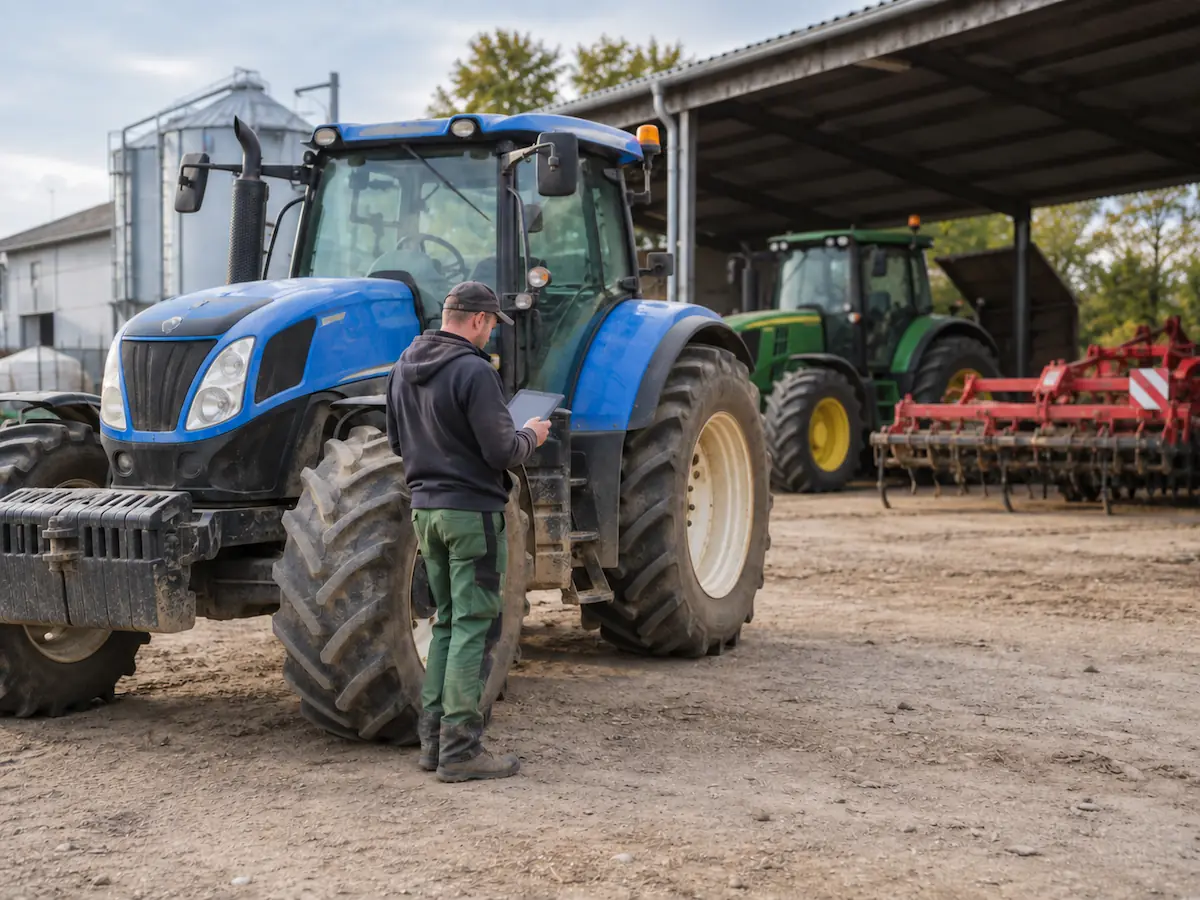
Data from tractors and implements: GPS, fuel use, speed, working time.
Benefits:
- fuel consumption control
- operator performance analysis
- service billing automation
In FarmPortal:
automatic logbooks and work history.
ISOBUS (ISO 11783)
What is it?
Communication standard between tractor and implement.
Why important?
Machines from different brands can operate within one system.
In FarmPortal:
- ISO-XML file import
- completed task reports
- task export to machine terminal
ISO-XML
What is it?
Data exchange format between machinery and FMS.
Workflow:
- Create task in system
- Export to machine
- Perform operation
- Import execution report
Shapefile (.shp)
What is it?
GIS format for field boundaries and variable rate maps.
In FarmPortal:
- VRA map import
- application map generation
VRA (Variable Rate Application)
What is it?
Applying fertilizers or crop protection products at variable rates.
Benefits:
- input savings
- yield stabilization
- reduced losses
Section Control
Automatic section shut-off in sprayers.
Result:
Up to 10–15% savings in crop protection products.
3. Maps, Satellites, and Sensors
EO (Earth Observation)
Satellite data on crop condition.
In FarmPortal:
biomass maps and time-series analysis.
NDVI
Vegetation vigor index.
Applications:
- identifying weak zones
- dividing fields into VRA zones
NDWI
Water stress index. Useful for irrigation planning.
GNSS / RTK
Precision guidance up to 2–3 cm.
Why essential?
Without accurate driving, true precision farming is impossible.
IoT (Field Sensors)
Weather stations, soil moisture probes, EC sensors.
In FarmPortal:
- environmental monitoring
- alerts
- support for fertilization and fungicide decisions
4. Cost Control and Efficiency
Agricultural KPIs
Key performance indicators:
- yield/ha
- cost/ha
- fuel use/ha
- nitrogen application/ha
- gross margin
In FarmPortal:
financial and production reports at field level.
Data Continuity
No gaps between: planning, execution, harvest, sales. Foundation of reliable analytics.
Interoperability
Ability to connect different machines and systems without manual data re-entry. FarmPortal operates on an open architecture model.
5. Traceability and Market Access
Traceability
Ability to link a batch to: specific field, treatment date, applied product, operator. Increasingly required by processors and retailers.
Field-Level Traceability
Tracking at the specific field or plot level.
Proof of Origin
A dataset confirming where a batch was produced.
GS1
Global standard for product and batch identification.
Digital Product Passport (DPP)
Digital identity of a product containing origin and carbon footprint data.
6. Regulations Affecting Farms
EUDR
Requires geolocation of plots and documented proof of origin.
CSRD
Large companies must report environmental data and request it from suppliers.
ESG
Environmental, Social, Governance criteria.
Data Act
Farmers’ right to access data generated by their machinery.
7. Sustainability and Carbon
Carbon Farming
Practices that increase carbon sequestration in soil.
MRV (Monitoring, Reporting, Verification)
System for measuring and verifying environmental outcomes.
Regenerative Agriculture
Rebuilding soil health and biological structure.
Greenwashing
Claiming sustainability actions without supporting data.
8. Artificial Intelligence on the Farm
Computer Vision
Identifying weeds and diseases using image analysis.
Spot Spraying
Targeted spraying instead of full-field application.
XAI (Explainable AI)
AI that explains its recommendations.
Human-in-the-Loop
Human approval of system decisions.
9. Commonly Confused Terms
Agriculture 4.0 ≠ Precision Agriculture
Precision is part of 4.0, but 4.0 also includes data, reporting, and integration.
Traceability ≠ Product Passport
Traceability tracks batches. DPP is the digital identity of a product.
Integration ≠ Interoperability
A single connection is not the same as systemic compatibility.
Carbon Farming ≠ Regenerative Agriculture
Carbon farming focuses on CO₂. Regenerative agriculture addresses the broader ecosystem.
Summary for Farmers
The digital farm of 2026 means:
- one single source of truth about the field
- machine data without manual re-entry
- real-time cost control
- readiness for processor and EU requirements
- step-by-step precision implementation
FarmPortal is the operational infrastructure on which precision, compliance, and automation can be built.
A Polish version of this glossary is also available.
Follow us!
See what we're doing and be inspired by positive changes.