Telemetry – The Foundation of Agriculture 5.0 and Real Cost Control
If Agriculture 5.0 – the future of farming means data security in FarmPortal and automated decision-making, then telemetry is its operational layer and, for many farms, the first step toward AgriTech and data-driven management.
In times of rising fuel and fertilizer prices in Poland, telemetry is no longer a technological gadget – it is becoming an economic survival tool.
- How can you reduce fuel consumption on your farm?
- Can tractor fuel monitoring detect losses?
- What does GPS tracking of agricultural machinery actually provide?
- How do you start farm work automation without replacing your machinery fleet?
What Is Telemetry in Agriculture and What Does It Include?
Agricultural telemetry refers to the remote measurement, transmission, and analysis of data from machines and devices operating in the field. It includes both GPS tracking of agricultural machinery and remote machine parameter reading via CAN-bus.
- agricultural machinery telemetry (tractors, combines, sprayers),
- tractor fuel monitoring,
- remote CAN-bus reading (working time, RPM, load),
- yield mapping,
- weather condition monitoring,
- soil moisture sensors,
- silo and storage monitoring.
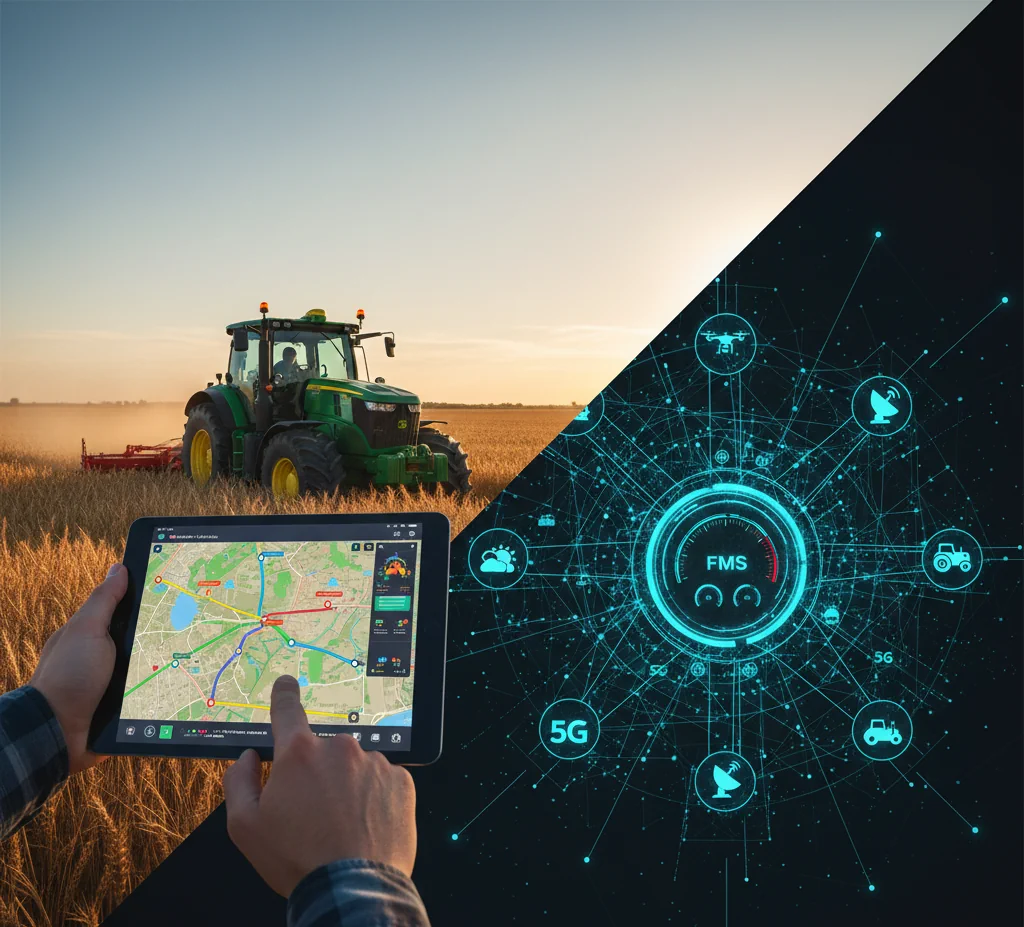
Telemetry is a data infrastructure that feeds a Farm Management System (FMS) and enables real farm work automation.
How Does Agricultural Machinery Telemetry Work?
1. Measurement Layer
- GPS – location and route tracking,
- CAN-bus – engine and machine performance parameters,
- fuel sensors,
- environmental sensors.
2. Data Transmission Layer
| Technology | Range | Operational Cost | Typical Use | Availability in Poland |
|---|---|---|---|---|
| GSM / LTE / 5G | wide | SIM subscription | mobile machinery, GPS | high |
| LoRaWAN | very wide | low | field sensors | medium; option to build own gateway |
| NB-IoT / LTE-M | medium–wide | low | silo monitoring | growing |
| Wi-Fi | local | low | storage facilities | high locally |
| Bluetooth | very short | low | local readout | widespread |
3. Analytics Layer
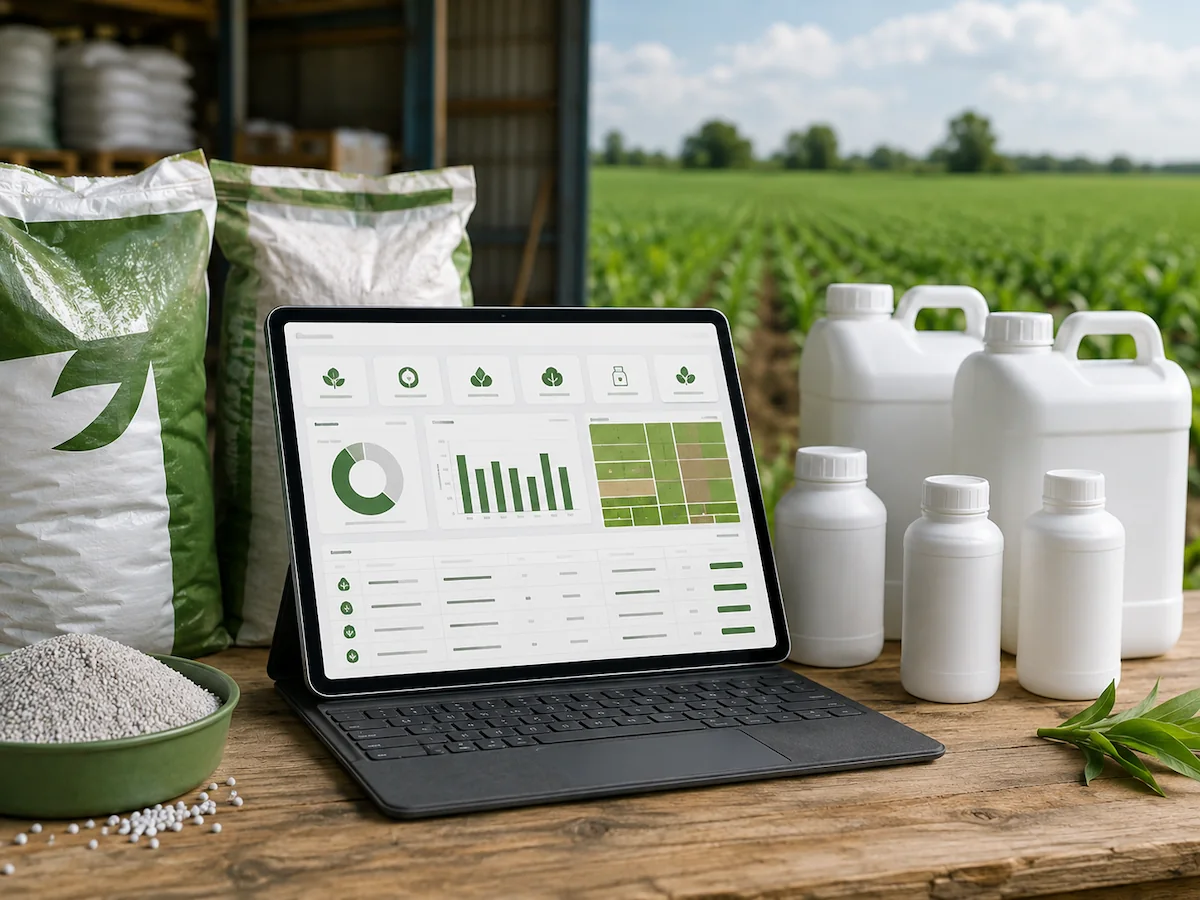
Data is sent to an FMS, where fuel analysis, working time reports, field operation documentation, and cost control per crop and field can be performed.
What Are the Benefits of Telemetry on a Farm? 5 Key Advantages
- Reduced fuel consumption – analysis of idle time and transport routes.
- Tractor fuel monitoring – alerts for sudden drops.
- GPS tracking of agricultural machinery – better operational control and service accounting.
- Automated operation records – compliance with Polish regulations.
- Farm work automation – KPI and reports without manual data entry.
Is Telemetry Profitable for a Small Farm?
Yes, especially under typical Polish conditions:
- fragmented land parcels,
- heterogeneous soil conditions,
- frequent transport between fields.
In such cases, even basic GPS tracking of agricultural machinery can significantly improve cost control.
Telemetry and Eco-Schemes & Precision Agriculture
Telemetry supports:
- documentation of field operations and application rates,
- data archiving for inspections,
- compliance with precision agriculture eco-schemes.
Telemetry and Agriculture 4.0 Funding (ARiMR)
Telemetry and FMS solutions align with:
- Agriculture 4.0 funding programs,
- farm modernization initiatives,
- digital transformation programs for farmers.
In practice, telemetry is often implemented as part of a broader digital transformation investment.
Case Study – 300 ha Farm in Lower Silesia
Farm (rapeseed, wheat) – 300 ha.
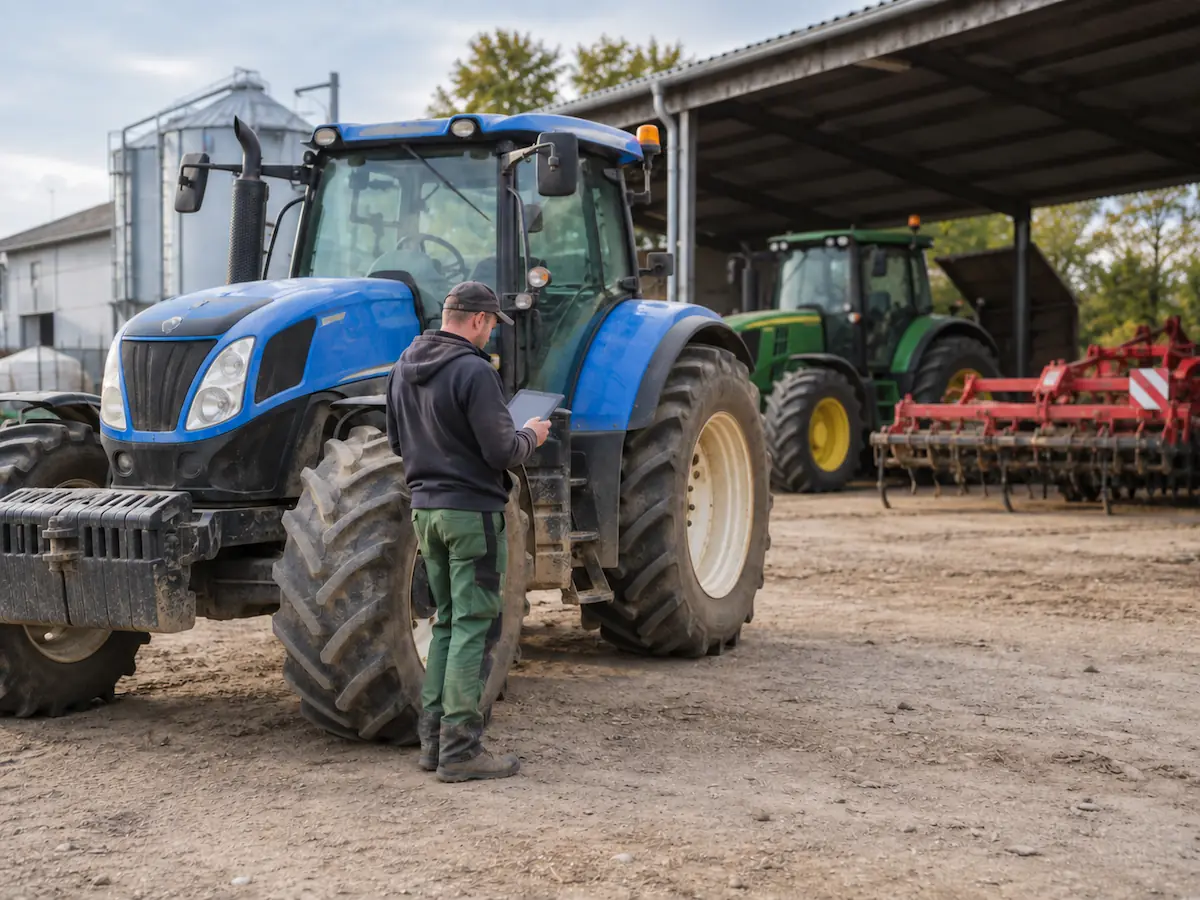
GPS + CAN-bus modules were installed in John Deere tractors along with fuel monitoring integrated into the FMS.
- 12% reduction in idle mileage,
- improved fuel cost control,
- automated operation documentation,
- improved logistics on fragmented fields.
How Much Does Telemetry Cost in Poland?
- 30–40 PLN / machine / month (GPS),
- 40–50 PLN / machine / month (CAN-bus + analytics + fuel monitoring).
FAQ
Can telemetry detect fuel theft?
Yes. The system reports sudden fuel level drops in real time.
Do I need a new tractor?
No. Older models can be retrofitted with CAN modules or GPS trackers.
Does telemetry help with operation records?
Yes. Route tracking and application data support documentation compliance.
Conclusions
Telemetry in Polish agriculture is a practical AgriTech solution combining GPS tracking of agricultural machinery, tractor fuel monitoring, and remote machine parameter reading into one unified data layer.
In the context of rising production costs and increasing reporting requirements, telemetry is becoming a standard in modern farming operations.
Follow us!
See what we're doing and be inspired by positive changes.