AGROSTRATEG (NCBR) – PLN 500 Million for Agricultural Innovation. How to Build R&D Projects with Real Implementation Potential?
The AGROSTRATEG program of the National Centre for Research and Development (NCBR) is one of the key funding mechanisms for research and development projects in the Polish agri-food sector. Funding is directed toward solutions that increase the efficiency of crop and livestock production, improve raw material quality, reduce environmental impact, and implement Agriculture 4.0 and Agriculture 5.0 technologies. For digital agriculture terminology (FMS, VRA, IoT, AgriTech), see our Digital Agriculture Glossary 2026.
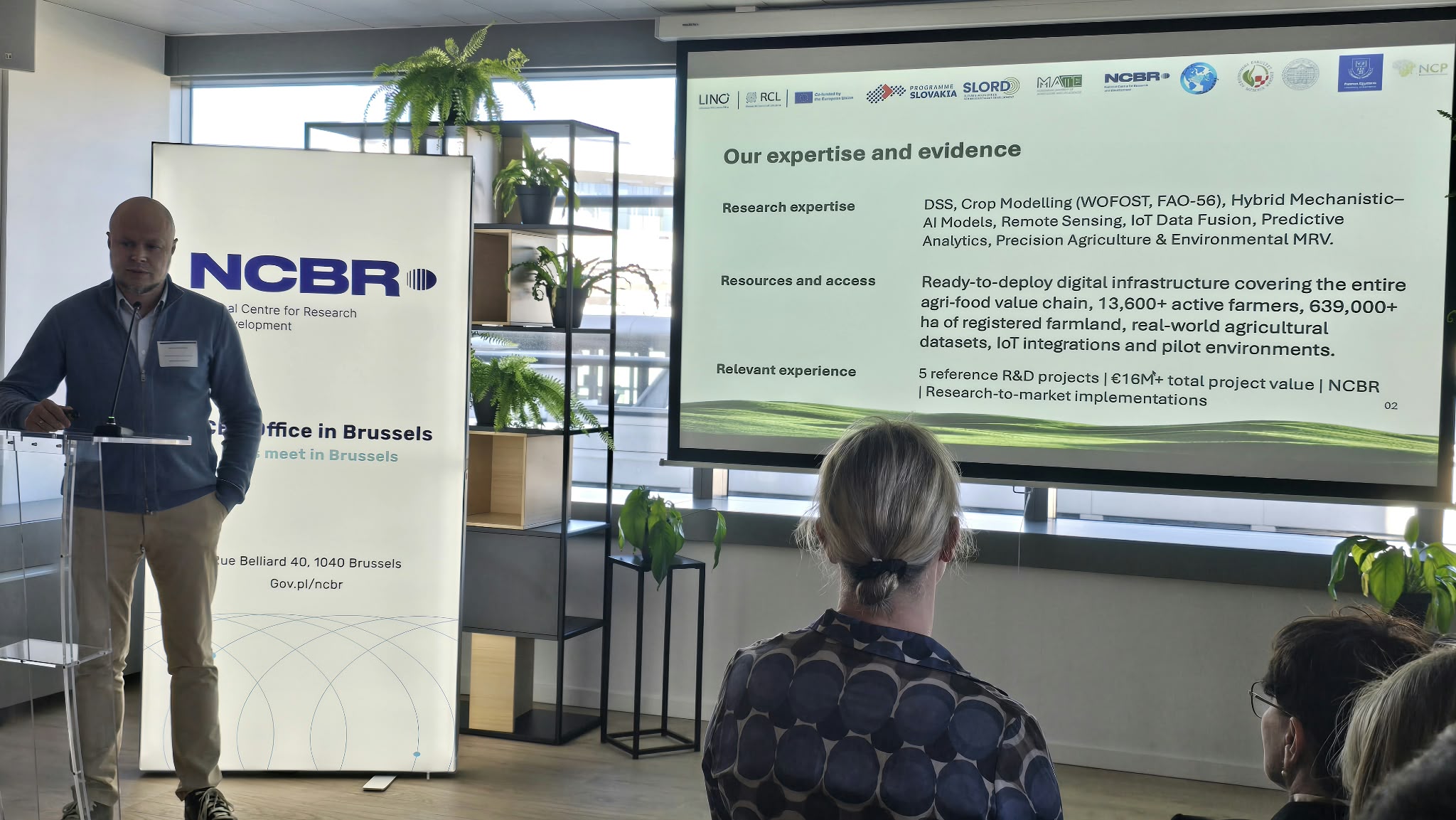
Agri Solutions regularly participates in R&D projects as a technology partner. We collaborate with research institutions, food processors, and technology manufacturers, building the digital infrastructure of projects and ensuring their market implementation after the funding phase through FarmPortal and FarmCloud.
AGROSTRATEG – What Is NCBR Looking For? Why Does the Digital Layer of a Project Truly Increase Its Value?
In expert practice, the highest-rated AGROSTRATEG projects are those that clearly define their implementation pathway (high TRL), integrate data from multiple sources, ensure interoperability and scalability, measure environmental impact (MRV, ESG), and apply AI, IoT, and remote sensing in a systemic manner.
The digital layer of a project is not an "IT add-on." It is a core component that enables real-time validation of research results, connects field, machinery, and satellite data, simplifies impact reporting, and shortens the path from research to commercialization. In agricultural R&D, competitive advantage is no longer built on a single algorithm, but on a robust data architecture and the ability to deploy solutions in real farming or processing environments.
If you would like to better understand the direction of transformation in modern agriculture and how digitalization enhances production resilience, see also: Agriculture 5.0 – The Future of Modern Agriculture (FarmPortal).
Four Thematic Areas of AGROSTRATEG (T1–T4)
| Area (T) | Scope | How the Digital Layer (FarmPortal / FarmCloud) Supports It |
|---|---|---|
| T1 – Sustainable Crop Production and Soil Fertility | Soil quality, fertilizer reduction, yield increase, new formulations | Crop digital twin, soil and satellite data analytics, precision fertilization VRA (ISO-XML) |
| T2 – Sustainable Livestock Production | Animal welfare, feed safety, loss reduction | Computer vision (weight and condition assessment), environmental monitoring, raw material traceability |
| T3 – Digital Agriculture | Software systems, Big Data, interoperability | IoT/IIoT integration, AI/ML, APIs, field and resource monitoring |
| T4 – Innovative Agricultural Techniques | Soilless systems, renewable energy, production optimization | Environmental parameter monitoring, water balance management, predictive systems |
Clear alignment with T1–T4 allows consortia to immediately demonstrate compliance with call documentation and helps project leaders select partners aligned with specific thematic areas.
Form and Intensity of Support in AGROSTRATEG
Funding is provided from NCBR targeted grants. Funding intensity depends on the applicant type and project category:
- Research organizations: up to 100% of eligible costs for basic research, industrial research, development work, and pre-implementation activities.
- Enterprises (state aid scheme):
- Industrial research: up to 80% (micro/small), 75% (medium), 65% (large enterprises);
- Development work: up to 60%, 50%, or 40% respectively;
- Pre-implementation work: under the de minimis aid scheme.
- Other entities capable of implementing project results: up to 100% of eligible costs for R&D and pre-implementation work.
Projects may last up to 48 months, with a possible extension to 60 months during implementation. Detailed terms and conditions are defined in each specific call documentation.
FarmCloud and FarmPortal as Infrastructure for R&D Projects (Agriculture 4.0)
FarmCloud serves as an integration and analytics layer, combining satellite and remote sensing data, mathematical-physical models, AI/ML algorithms, and IoT and machinery data. This enables the creation of a project's "digital backbone" and ensures that research outcomes can be safely transferred into operational production environments.
FarmPortal provides the operational environment: field management, precision fertilization (VRA), machinery integration, analytics, and interoperability — addressing the typical gap between research prototypes and real-world deployment.
Project Experience – Selected Examples
The examples below illustrate how research, data, and implementation are effectively combined in practice. According to Agri Solutions, the FoodPass, Agros Nova, and SAiND projects were implemented as R&D projects funded by NCBR.
FoodPass (NCBR) – Digital Supply Chain Monitoring
A digital monitoring system for the agri-food supply chain "from field to fork." It integrates contracting, delivery settlement, quality control, and ESG reporting, supporting traceability and product passportization in line with EU regulations.
Agros Nova (NCBR) – AI in Industrial Tomato Cultivation
A tomato cultivation management system based on a hybrid approach (mechanistic models + AI/ML), generating irrigation and fertigation recommendations and yield estimation based on satellite and sensor data.
SAiND (NCBR) – Data Integration and Predictive Analytics
A system integrating satellite, meteorological, and operational data to develop predictive models and support production decision-making, with a strong focus on scalability and practical application.
KOWR – Passportization and Digitalization
Solutions supporting batch traceability and administrative data integration, directly aligned with T2 and T3 priorities (traceability, interoperability, digital documentation).
AGROSTRATEG 2026 – High-Potential Directions
The highest development potential in agricultural and agri-food projects currently includes:
- Crop and livestock digital twins,
- Yield and quality prediction,
- Automated animal weight and condition estimation (computer vision),
- Water balance and drought management,
- Carbon farming and MRV systems,
- Precision fertilization VRA (ISO-XML),
- Interoperable Big Data and AI platforms such as FarmPortal and FarmCloud.
Summary
AGROSTRATEG is a program where competitive advantage is built by combining agronomic expertise with mature digital infrastructure. FarmCloud and FarmPortal enable data integration, research model validation, and smooth transition from R&D to commercial implementation in real production environments.
With extensive experience in agricultural R&D, computer vision, AI, IoT, and satellite analytics, Agri Solutions supports consortia as a technology partner in building scalable solutions for the Polish and European agri-food sector.
Building an AGROSTRATEG Consortium? Looking for a Technology Partner for Your R&D Project?
If you are preparing an NCBR (AGROSTRATEG) proposal and need support in agricultural digitalization, Agri Solutions can act as a technology partner, expert contributor, subcontractor, or consortium member.
We provide four key elements that accelerate project implementation:
- Data Integration: architecture connecting IoT sensors, machinery, satellite data, and enterprise systems (APIs), ensuring interoperability and scalability.
- AI/ML and Digital Twin: predictive models, yield and quality estimation, computer vision, and data-driven decision support systems.
- Commercialization: a ready-to-use platform for validation in real production environments and rapid market deployment after R&D.
- Software Development and AI Engineering: dedicated interdisciplinary teams (data science, agronomy, software engineering, IoT) with extensive experience in agricultural R&D and projects funded by NCBR.
The best time to start the conversation is at the concept stage. We support the design of the technological Work Package, AI/IoT architecture, and the implementation roadmap aligned with real farm and processing operations.
Contact: If you are building an AGROSTRATEG consortium and want to strengthen the digital layer of your project (AI, IoT, remote sensing, interoperability) — get in touch with the Agri Solutions team.
Follow us!
See what we're doing and be inspired by positive changes.