Maintaining agricultural machinery on the farm does not end with repairing equipment after a breakdown. A well-managed machinery fleet has asset records, inspection schedules, refuelling history, labour costs, technical documents and links to field operations.
A farm machinery fleet is a set of tractors, machines, implements, devices, vehicles and attachments that require technical records, service planning, cost control and documentation of their usage history.
In brief
Effective machinery fleet management is based on connecting technical, service, cost and field data in one system. This helps farmers identify machines that generate excessive costs more quickly, plan inspections more effectively and reduce the risk of downtime during critical agronomic windows.

- Machinery records should include technical data, ownership details, documents, mileage or running hours, engine hours and service history.
- Inspections should be planned according to the calendar, engine hours, hectares worked and the seasonality of field operations.
- Machinery costs should not be calculated only as fuel, but also as depreciation, servicing, parts, operator time, insurance and downtime.
- FarmPortal supports machinery, employee, field operation, cost, inventory and reporting records within a single FMS environment.
Why does maintaining agricultural machinery on the farm require a system?
Maintaining agricultural machinery on the farm requires a system because service, purchasing and organisational decisions depend on data scattered across operators, invoices, notes, terminals and the owner’s memory. Without a single register, it is difficult to assess whether a machine is genuinely working, generating costs or simply tying up capital.
In practice, the problem starts with small details: a missing oil change date, an incomplete sprayer serial number, a lost invoice for a spare part, unrecorded refuelling or work carried out without assigning the machine to a field. That is enough to make cost analysis incomplete.
Agricultural machinery should be treated as a production asset, not merely equipment stored on the farm. If a tractor, sprayer, fertiliser spreader, drill or combine harvester works on a specific field, with a specific operator and for a specific operation, its history should feed into production costs and farm documentation.
EU regulations on work equipment reinforce this direction. Directive 2009/104/EC concerns minimum health and safety requirements for the use of work equipment by workers, while Regulation (EU) 2023/1230 on machinery of 14 June 2023 replaces the Machinery Directive 2006/42/EC from 20 January 2027 in relation to placing machinery on the market and safety requirements. Directive 2009/104/EC in EUR-Lex and Regulation (EU) 2023/1230 in EUR-Lex show that documentation, instructions, maintenance and workplace safety are not secondary issues.
| Area | Traditional approach | Digital approach | Management effect |
|---|---|---|---|
| Machinery records | Notebook, Excel, documents in binders | Machine record with documents, parameters and history | Faster service and purchasing decisions |
| Inspections | Reminders based on the operator’s memory | Schedule based on dates, engine hours and season | Lower risk of downtime during agronomic windows |
| Costs | Fuel and invoices calculated in aggregate | Cost assigned to the machine, field, operation and operator | Better calculation of production cost per ha |
| Work history | Information scattered between employees | Connection between work, field, crop, equipment and documents | Greater control over machinery use |
What data should be included in machinery records?
Machinery records should include identification, technical, operational, financial and documentation data. The minimum dataset includes the machine name, type, make, model, serial number, year of manufacture, owner, place of use, meter reading, assigned documents and basic service history.
This is not about collecting data for the sake of reporting. The aim is to answer simple questions: which machine worked, where it worked, how much it cost, who operated it and whether it was ready for use on the day of the operation.
On a farm with multiple locations or production areas, records should also include the machine’s location, equipment group, operator assignment, fuel type, fuel consumption norm, inspection intervals and a list of compatible implements. For precision machines, this extends to terminals, GNSS RTK receivers, section controllers, application maps and data exchange formats such as ISOXML.
The most important rule is simple. One machine, one record.
- Identification data: make, model, type, serial number, year of manufacture and registration plate, if applicable.
- Technical data: power, working width, tank capacity, hydraulic requirements, hitch, drive type and terminal compatibility.
- Operational data: engine hours, mileage, hectares worked, refuelling, breakdowns, repairs and downtime.
- Financial data: purchase price, lease, depreciation, insurance, parts, service work, fuel and operator cost.
- Documents: invoices, manuals, inspections, policies, warranties, service reports, technical approvals and UDT documents where applicable.
How should inspections and servicing of the machinery fleet be planned?
Agricultural machinery inspections are best planned according to four signals: date, engine hours, area worked and seasonal risk. A tractor working daily with a front loader has a different service rhythm from a sprayer used intensively for only a few weeks of the year.
The service schedule should distinguish between daily, seasonal and workshop tasks. Daily checks include tyre condition, leaks, fluid levels, working components and operator safety. Seasonal inspections cover calibration, lubrication, replacement of filters, nozzles, bearings, belts and chains, as well as electronics checks.
The most expensive inspection is the one carried out too late. In season, the issue is not just the cost of parts, but the loss of a weather window, delayed field operations and pressure on operators, who may begin working faster, less accurately or outside optimal conditions.
A good inspection system should have statuses: planned, in progress, completed, deferred and cancelled. A deferred task must not disappear from the history, because it shows where the farm is taking on technical risk.
| KPI | Unit | How to measure | Why measure it |
|---|---|---|---|
| Machine operating cost | PLN/ha or PLN/h | Total fuel, servicing, parts, operator and depreciation divided by hectares or working hours | Comparison of own machinery costs with outsourced services |
| Machine utilisation | h/season or ha/season | Field operation history, engine hours, GPS data or operator report | Assessment of whether equipment is used frequently enough |
| Technical downtime | h/season | Breakdown reports and repair completion dates | Identification of machines that block fieldwork |
| Inspection timeliness | % of tasks completed on time | Comparison of planned and actual completion dates | Control of service discipline |
How should agricultural machinery costs be calculated?
The cost of an agricultural machine should be calculated as the full cost of ownership and use, not just fuel and parts. The calculation should include depreciation, financing, servicing, insurance, repairs, the operator, consumables, storage and downtime if it affects work organisation.
The two most useful levels of analysis are machine cost per hour and machine cost per hectare. Hourly cost works well for loaders, transport and general farm work. Cost per ha better describes drilling, spraying, fertilising, cultivation, mowing and harvesting.
On arable and horticultural farms, machinery costs should be allocated to the cost of a specific crop. Without this, it is difficult to assess whether wheat, maize, oilseed rape, strawberries or apples are actually achieving the planned profitability.
The calculation should be resistant to oversimplification. If a combine harvester works on several fields in one day, the cost of fuel and the operator should not be allocated only to one field, as this would distort the production result.
How should documents and usage history be organised?
Machinery documents should be stored against the specific equipment record, because an invoice, manual, insurance policy, repair report or fault photo has the greatest value when it is linked to usage history. A paper binder may still exist, but it should not be the only source of truth.
In practice, a digital machine history should answer five questions: when the equipment was purchased, who operated it, what work it performed, what costs it generated and what technical events occurred along the way. This helps when selling used machinery, handling warranty disputes, controlling costs and planning fleet replacement.
Photo documentation matters. A photo of a cracked guard, worn nozzle, damaged hydraulic hose or meter reading often explains more than a description written several days later.
On farms that employ staff, the usage history should include the operator. This is not about control for its own sake. It is about accountability, workplace safety and the ability to reconstruct the sequence of events.
How can GPS, ISOBUS and machine data be used?
Data from GPS, terminals and machines helps move from manual record-keeping to management based on actual fieldwork. In practice, this means recording passes, area covered, working time, location, operator and operation parameters.
ISOBUS is the market name for the ISO 11783 standard, which describes communication between a tractor, implement and terminal. AEF indicates that the aim of ISOBUS technology is to standardise communication and data transfer compatibility between machines and farm office software.
Full integration is not always needed from day one. A farm can start with manual records and simple machine assignment to field operations, then later add GPS trackers, ISOXML export, application maps, variable-rate fertiliser application, variable-rate spraying or automatic data retrieval from terminals.
The integrations that make the most sense are those that remove repetitive data entry. If an operation plan is created in the FMS, sent to the terminal and then returned after execution as work confirmation, the farm reduces errors and gains a more complete field history.
How does FarmPortal support machinery fleet management?
FarmPortal supports machinery fleet management by connecting machines with records of fields, crops, field operations, employees, costs, inventory and reports. As a result, a machine is not a separate line in a spreadsheet, but part of the production process.
The FarmPortal functions for farm management page describes, among other things, work and harvest records, field operation and cost records, employee, machinery and building management, inventory management, as well as reports and analytics. This is a natural place for equipment data.
In the farm management module in FarmPortal, fieldwork can be linked to crops, costs, growth stages, inputs, employees and machines. This structure makes it easier to analyse operation costs and control field history.
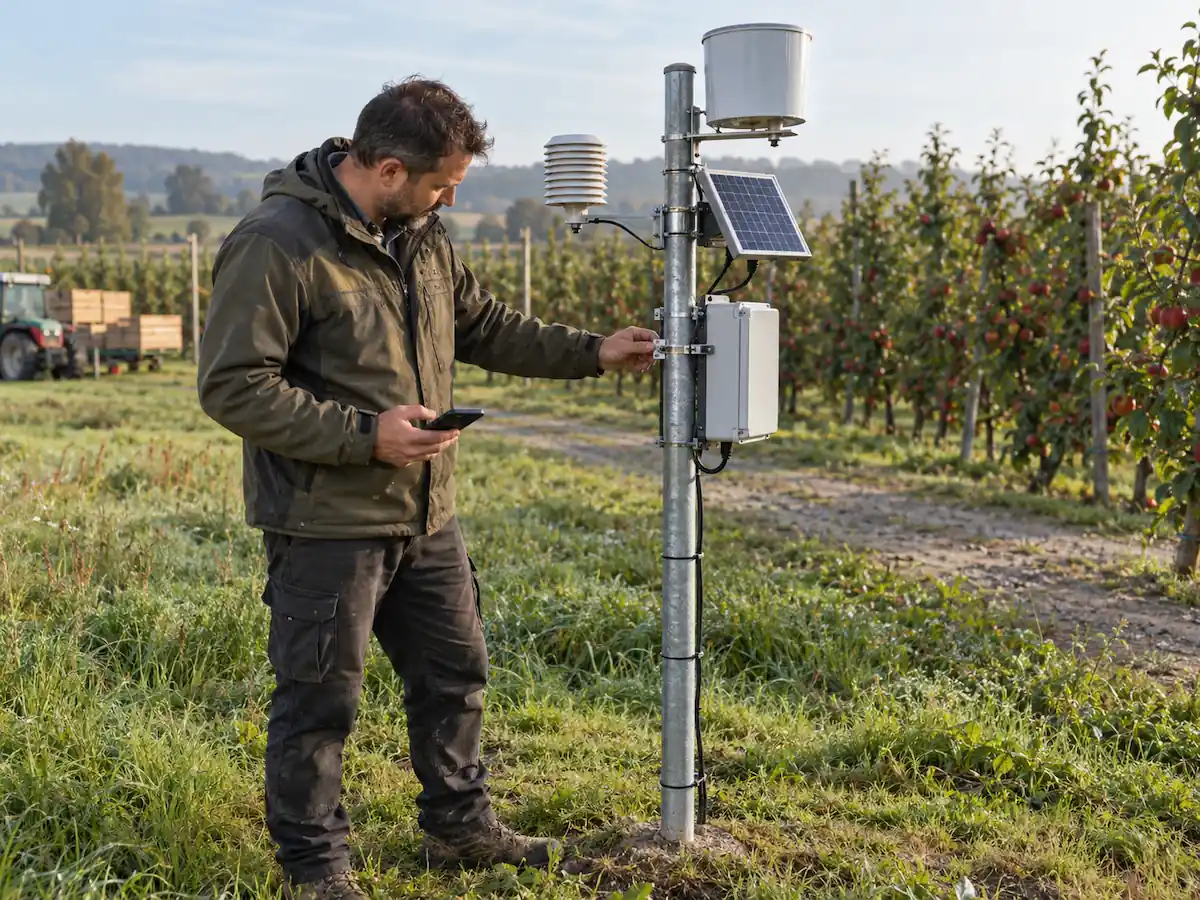
FarmPortal can also be part of the broader FarmCloud approach, in which data from the farm, machines, sensors, GPS, weather stations and external systems is collected in one data layer. For farms interested in precision agriculture, the processes described in the article on integrating agricultural guidance systems with FarmPortal are particularly relevant.
For the farmer, the most important result is operational: less time spent searching for information, fewer scattered notes and better data for conversations with advisers, service teams, accountants or institutions financing machinery purchases.
Who benefits most from digital machinery records?
Digital machinery records make the most sense where the number of machines, employees, fields or operations exceeds what can be managed “from memory”. The more operators, locations, crops and agronomic deadlines there are, the more valuable a single source of data becomes.
- Farmers with 100+ ha. Their main problem is machinery cost and seasonal time pressure. After reading this article, they should start with records for tractors, the sprayer, fertiliser spreader, drill and combine harvester.
- Fruit growers and vegetable producers. The history of treatments, spraying, labour and auxiliary equipment is especially important. They should collect data on operations, operators, rates, dates and machinery use in orchard blocks or plots.
- Agricultural advisers and advisory centres. Their motivation is better diagnosis of costs, technology and timeliness of work. They should recommend that clients collect data on machinery costs per ha and field operation history.
- Processors and producer groups. For them, traceability, raw material quality and confirmation of production history matter. Machine data can support delivery documentation, especially when combined with FoodPass and traceability data.
- Machinery manufacturers and dealers. Their decisions relate to servicing, after-sales support and data integration. It is worth developing scenarios in which the machine, farmer and FMS work on a shared usage history.
How to bring order to the machinery fleet step by step
Implementing machinery fleet records should begin with a simple equipment inventory, not full automation. The first step is to establish which machines are on the farm, what documents they have and which data is genuinely needed for decisions.
- Prepare a list of machines, implements, trailers, devices, terminals and attachments.
- Create records with the make, model, serial number, year of manufacture, location and owner.
- Add documents: invoices, policies, manuals, warranties, reports, photos and financing agreements.
- Define basic inspection intervals according to the manufacturer’s instructions, engine hours, hectares worked and seasonality.
- Link machines to field operations, fields, operators and costs.
- After one season, analyse cost in PLN/ha, utilisation in h/season and the number of breakdowns.
- Only then add GPS integrations, terminals, ISOXML, VRA and automatic reporting.
This sequence reduces chaos. The most common mistake is trying to implement integrations before basic machinery records have been put in order.
Case study: a 220 ha farm
A 220 ha farm in the Greater Poland Voivodeship grows wheat, oilseed rape and maize. Its machinery fleet includes 4 tractors, a 3,000 l sprayer, a fertiliser spreader, a drill, a cultivator combination, trailers and a combine harvester used jointly with a neighbouring farm.
The problem was fragmented data on fuel, servicing and machine work. The owner knew which machines were most heavily used, but did not have a single cost history per ha. After organising equipment records, documents, refuelling, inspections and assigning machines to operations, the farm began analysing tractor operating costs by crop.
In the first season, data was collected for 630 operations and general farm tasks, linked to fields, operators and machines. The main KPIs included cost in PLN/ha by crop, the number of technical downtimes, inspection timeliness and the number of service events per machine. The conclusion was to service the sprayer earlier before the crop protection season and shift some transport work to a less heavily used tractor.
Interpretation limitation: the results depend on the completeness of entries and operator discipline. If refuelling, an inspection or a task is not recorded, the cost analysis will be understated or allocated to the wrong field.
Which mistakes most often undermine machinery fleet records?
The most common mistakes come from a lack of consistency, not a lack of tools. Even a good FMS will not help if the farm does not decide who enters data, when it is updated and which information is mandatory.
- Creating one collective “tractors” item instead of a separate record for each machine.
- Missing serial numbers and documents assigned to specific equipment.
- Calculating fuel in aggregate without linking it to work, field and operator.
- No statuses for breakdowns and deferred inspections.
- Starting implementation from GPS integration without organising basic records first.
- Ignoring depreciation and operator cost when calculating machine cost.
FAQ
Does a small farm need digital machinery records?
A small farm does not always need an extensive system, but it should at least have basic records for machines, documents, inspections and costs. Digital records make sense particularly where the farm has several tractors, multiple operators, intensive field operations or plans to invest in equipment.
How often should a machine’s service history be updated?
The service history should ideally be updated immediately after an inspection, repair, part replacement or breakdown report. The entry should include the date, meter reading or engine hours, description of the work, cost, document and responsible person. Delayed entries usually lead to lost details.
Is it better to calculate machine cost per hour or per hectare?
Both indicators are needed. Cost per hour describes transport, loading and general farm work well, while cost per hectare better shows the profitability of field operations. In crop production, the most important thing is to assign the machine cost to the field, crop and specific operation.
Is GPS enough to manage a machinery fleet?
GPS helps record location, working time and passes, but it does not replace full machinery records. Good management also requires documents, inspections, costs, operators, repair history, links to fields and analysis of equipment use during the season.
What does ISOBUS and ISOXML integration give a farm?
ISOBUS and ISOXML integration makes it easier to exchange data between the machine, terminal and farm management system. In practice, it supports application maps, variable-rate application, confirmation of completed work and a reduction in manual data entry after fieldwork.
How does FarmPortal help control machinery costs?
FarmPortal connects machines with operations, fields, crops, employees and production costs. This means the cost of equipment work can be analysed not just as an invoice or refuelling event, but as part of the cost of a specific operation, crop and farm area.
Is machine data useful for a processor or producer group?
Yes, if it is linked to field history, operations, raw material quality and traceability. Machine data can support the documentation of work dates, completed operations and the production process. For a processor, the key issue is a coherent raw material history, not the machine pass record itself.
Glossary
FMS
Farm Management System, meaning software for managing a farm. In practice, it connects fields, crops, operations, costs, machines, employees, inventory and reports.
Machinery fleet
A set of machines, vehicles, implements, terminals and devices used on a farm. Its records help control technical condition, costs and equipment utilisation.
ISOBUS
The market name for the ISO 11783 standard for communication between tractor, machine and terminal. It is relevant when integrating equipment from different manufacturers.
ISOXML
A data exchange format used in precision agriculture, including for transferring tasks, application maps and execution data between an FMS and a terminal.
GNSS RTK
Satellite positioning technology with correction, used for precision machine guidance. It helps with repeatable passes and more accurate execution of field operations.
VRA
Variable Rate Application means varying the rate of fertiliser, seed or crop protection product based on maps, zones or field data.
Traceability
Product and production process identification. In agriculture, it means the ability to connect raw material with the field, operations, batch, documents and quality data.
Summary
Machinery fleet management begins with reliable records and only then moves on to automation, GPS, ISOBUS, ISOXML and advanced analytics. Without machine records, documents, inspections and costs, even the best machine data will be difficult to use.
The most practical next step is to list all machines, assign documents and connect equipment with field operations. FarmPortal brings order to this process because it links data on machines with fields, crops, employees, costs and farm reports.
On a farm that wants to develop precision agriculture, machinery records are the foundation. Only on that basis can variable-rate application, better cost allocation, traceability, terminal integrations and more reliable investment decisions be built.
Follow us!
See what we're doing and be inspired by positive changes.