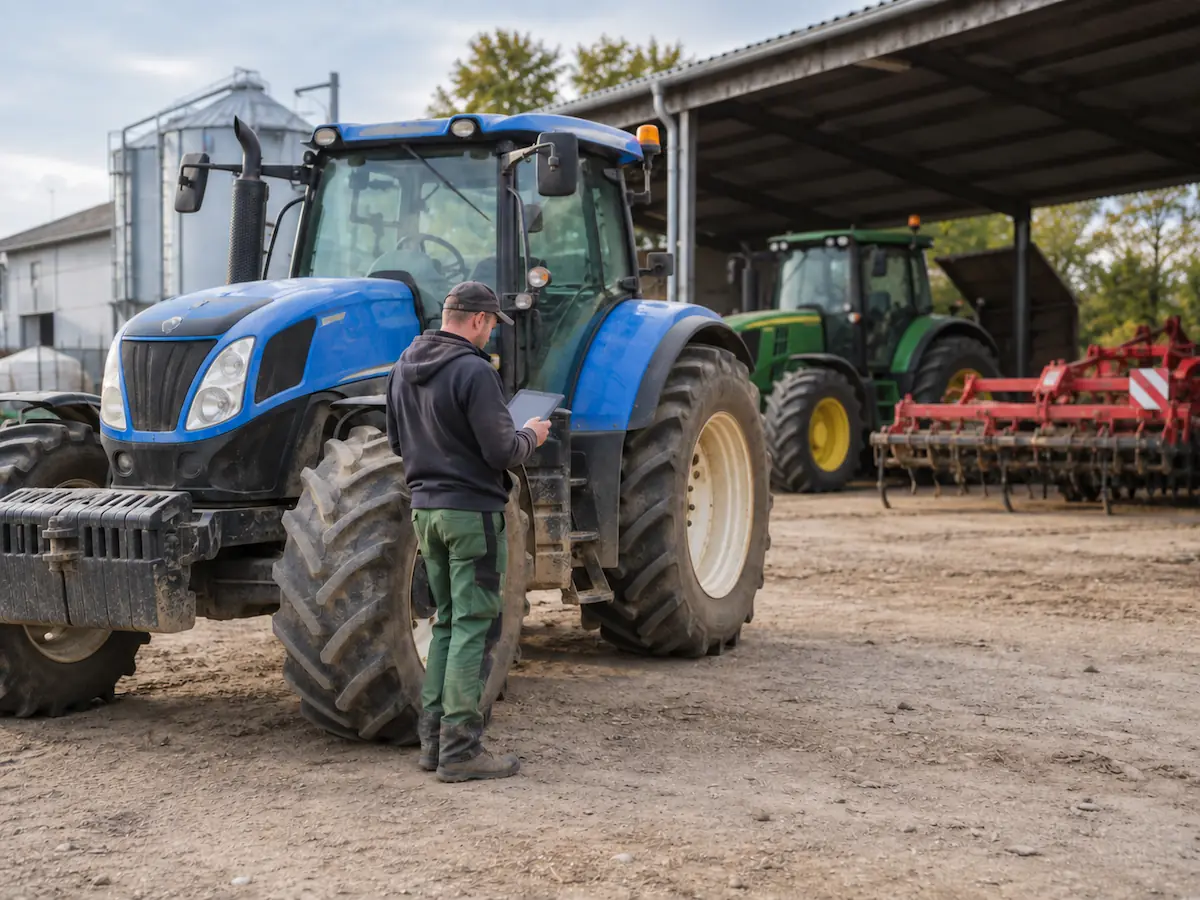
In practice, field scouting is not a one-off "walk through the field," but a planned, repeatable process of collecting information on crop condition, soil status, and environmental factors throughout the entire growing season. This process is what makes it possible to translate data, models, and recommendations into real-world conditions at a specific place and time.
Why field scouting is carried out
The primary objective of field scouting is to reduce decision-making uncertainty. Agriculture is one of the most variable sectors of the economy—weather fluctuations, disease and pest pressure, local soil conditions, and uneven crop development mean that even the best technology plan requires continuous verification. Field scouting enables ongoing assessment of whether crops are developing according to assumptions and allows deviations to be identified early, before they turn into real yield losses.
From a production economics perspective, field observations make it possible to better align treatments with the actual needs of crops. Instead of acting "preventively" or according to a rigid calendar, farmers and agronomists make decisions based on real threats, growth stages, and environmental conditions (see also planning spring field operations). Research conducted by scientific institutions and advisory bodies in Europe shows that regular field inspections can reduce the number of crop protection treatments and corrective fertilization applications by several to several dozen percent, without negatively affecting yields—and often with improvements in crop quality.
How farmers use field scouting
For farmers, field scouting is primarily an operational tool. It allows them to assess crop stand condition, growth dynamics, the effects of abiotic stress such as drought, frost, or excess water, as well as the effectiveness of previously applied treatments. Regular observations support decisions on the timing and justification of subsequent actions, such as top-dressing fertilization, fungicide applications, or growth regulation.
Systematic field inspections also help farmers better understand within-field variability and identify recurring issues more quickly, such as zones with weaker growth, chronic nutrient deficiencies, or areas particularly exposed to disease pressure. This knowledge, accumulated season after season, becomes one of the most valuable assets of the farm.
The role of field scouting in the work of advisors and agronomists
For advisors and agronomists, field scouting is the basis for reliable and responsible recommendations. Without direct assessment of the crop, even the best laboratory analyses or predictive models remain incomplete. Field inspections allow professionals to evaluate the actual condition of plants, confirm or rule out diseases, assess pest pressure, and tailor recommendations to local conditions.
When working with multiple farms, field observations also play a standardizing role. Consistent records, photos, location data, and weather context make it possible to compare situations across different fields, regions, or crop management strategies. This is particularly important in group advisory services, cooperation with producer organizations, and research and development projects.
Field scouting in relation to fertilization and crop protection products
One of the areas where field scouting has the greatest practical impact is fertilization and crop protection. Visible deficiency symptoms, growth disorders, or signs of phytotoxicity allow for rapid adjustment of soil and foliar fertilization strategies. Combined with soil analyses and weather data, field observations help prevent over-fertilization, nutrient losses, and unnecessary costs.
In crop protection, regular field scouting is the foundation of integrated pest management. It enables assessment of actual risk levels and identification of threshold exceedance, allowing treatments to be carried out at the optimal moment—or avoided altogether. Research clearly shows that decisions based on field inspections are more effective and more sustainable than actions taken purely on a preventive basis.
Documentation, requirements, and legal aspects
Field scouting is increasingly also a documentation tool. Farmers in the European Union are required to keep records of treatments, justify the use of crop protection products, and demonstrate compliance with the principles of integrated pest management. Observation records naturally complement this documentation and can serve as important evidence during inspections or audits.
For advisors, buying companies, and processors, well-documented field observations facilitate compliance with quality standards, certification schemes, and growing market expectations related to production transparency and environmental reporting.
Field scouting in field trials and research
In field research and trials, scouting is absolutely essential. It makes it possible not only to evaluate the effects of applied technologies, fertilizers, or crop protection products, but also to precisely describe the conditions under which those effects occurred. Regular and standardized observations enable comparison of trial variants, analysis of relationships, and the formulation of conclusions with scientific and practical value.
The archiving of observations together with location and weather context is becoming increasingly important, enabling multi-year analyses and the development of predictive models based on real field data.
How FarmPortal supports the field scouting process
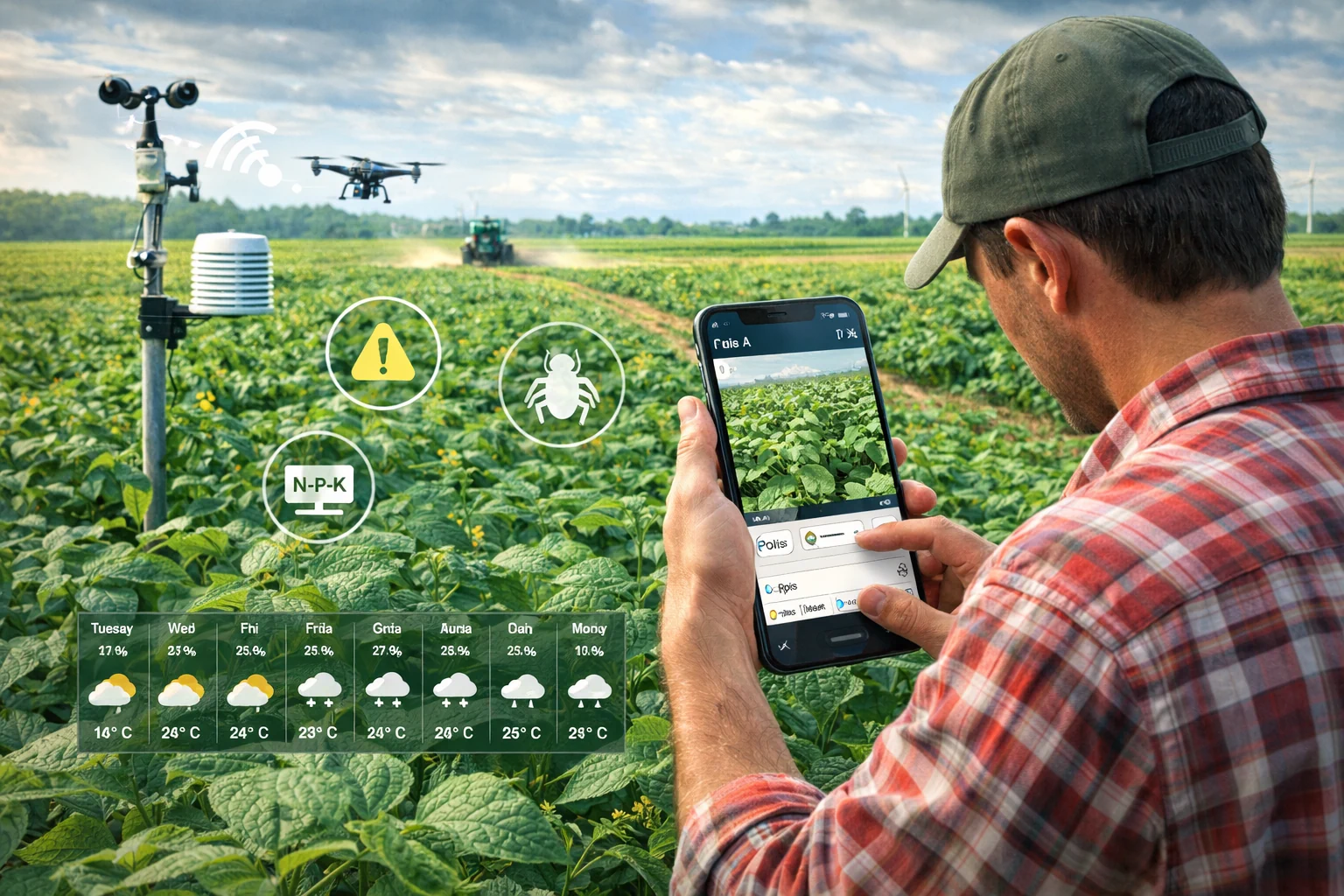
Modern Farm Management Systems (FMS) are moving field scouting from paper notebooks into a coherent digital environment. For digital farming terminology (FMS, precision agriculture, AgriTech), see our Digital Agriculture Glossary 2026. An example of such a solution is FarmPortal, which supports field scouting directly in a mobile application. During a field inspection, the user can take a photo in the crop, and the system automatically assigns it to the correct field and crop based on GPS location. Descriptions, identified issues, growth stages, or recommendations can be added to each observation.
In addition, FarmPortal automatically records weather data from the seven days preceding the observation, enabling better interpretation of observed phenomena and their underlying causes. Observations can also be shared with advisors via FoodPass, improving collaboration, shortening response times, and eliminating fragmented communication.
Summary
Field scouting is one of the most important processes in modern agriculture, integrating agronomic knowledge, field practice, and environmental data. It supports farmers, advisors, and agronomists in making informed decisions, optimizing fertilization and crop protection, meeting formal requirements, and conducting field research. When combined with digital tools such as FarmPortal, field scouting becomes a fully integrated element of data-driven agricultural production management.
Follow us!
See what we're doing and be inspired by positive changes.