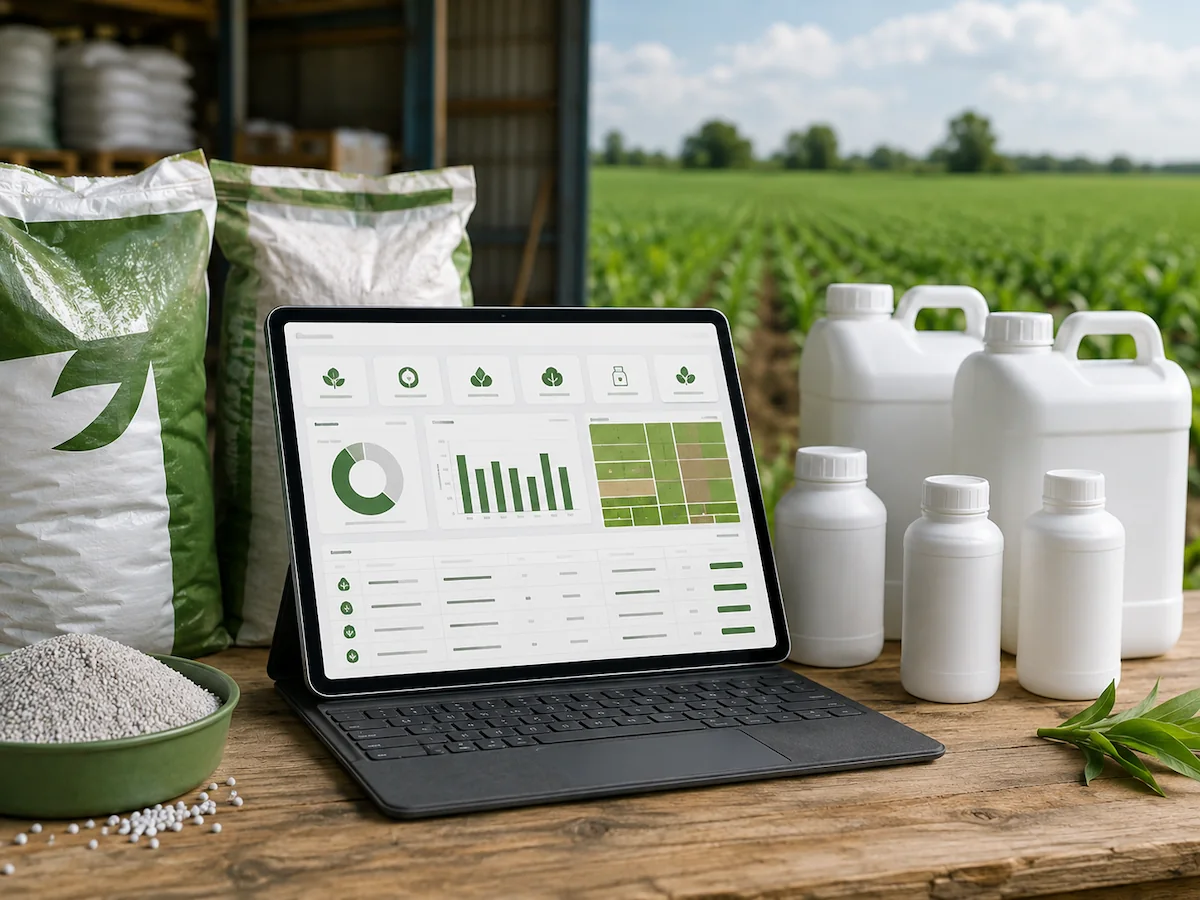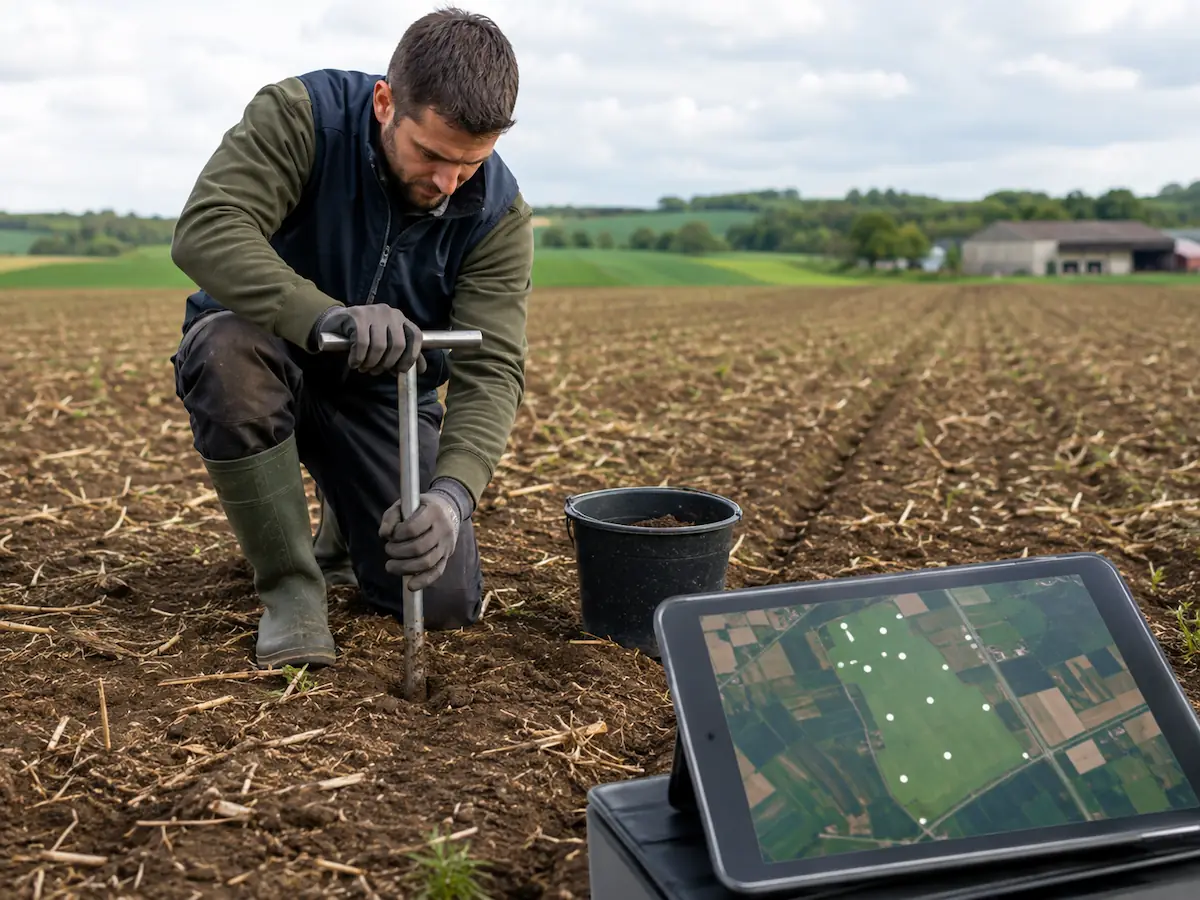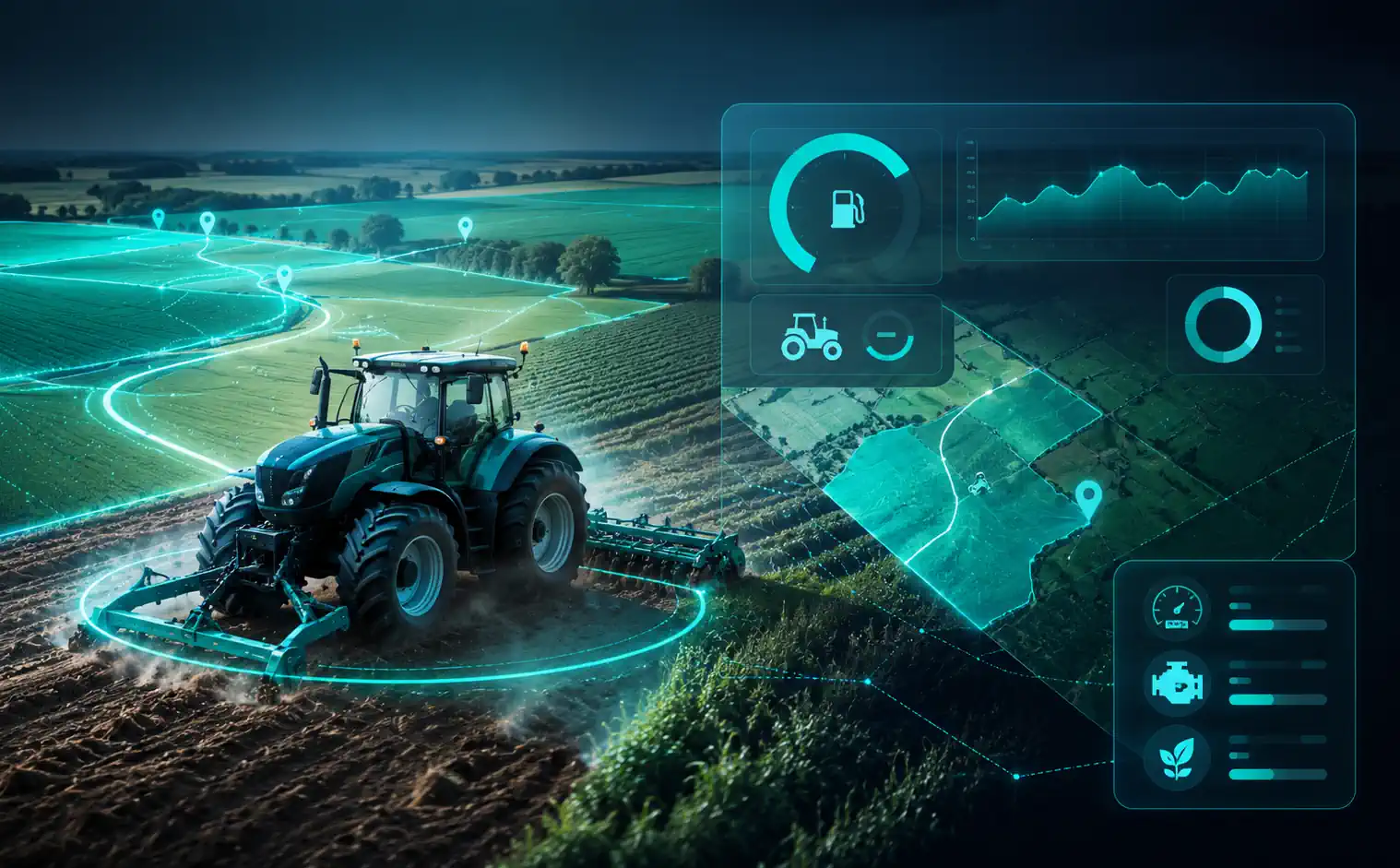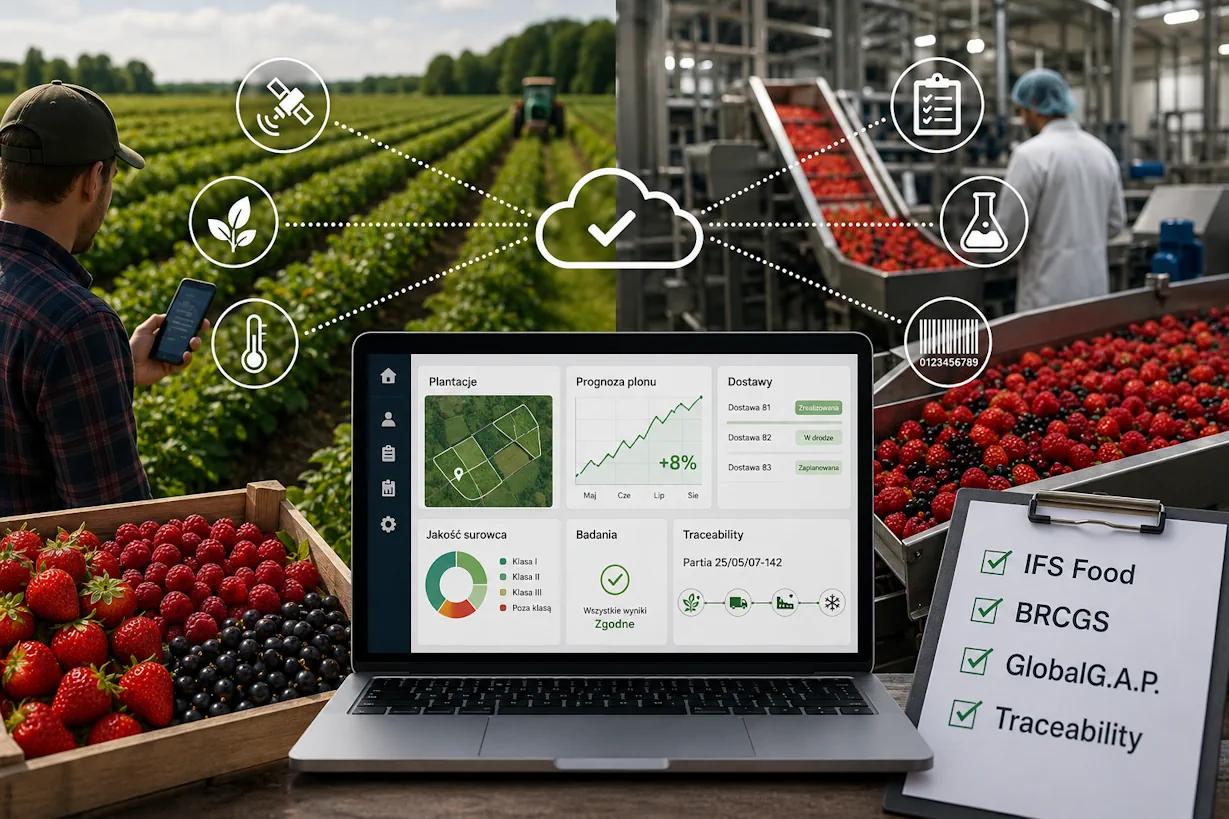
Read how fruit processors can organise their raw material base, traceability and collaboration with growers in one digital process.
Summary
Yields are becoming less predictable, retail chains are becoming more demanding during audits, and energy and labour costs have reached a point where the profitability of a single batch can determine overall profitability. This has been the everyday reality of Polish and European fruit processing companies for several seasons. This article describes eight specific needs that processing plants now bring to software providers and lists the questions worth asking before signing a contract with a system provider.
Who this article is for and which problems it addresses
This article is written with four roles in the fruit and vegetable value chain in mind. Each of them looks at the topic from a different perspective and faces a different pain point.
Fruit and vegetable growers
For a grower, two questions are essential: how much they will earn per hectare and how much documentation they need to prepare to achieve that result. A supplier portal reduces the second part. The Plant Protection Product Treatment Register reaches the procurement point in real time, delivery scheduling is handled without a phone call, and batch settlement is based on the same data that the grower entered themselves. This is not a revolution - rather, a very practical reduction of administrative workload.
Agricultural machinery manufacturers
Manufacturers of tractors, sprayers, soft fruit harvesters and sorting lines are looking for a sales argument that differentiates their machine from competing solutions. Increasingly, that argument is data: the flow of information from an ISOBUS terminal and machine sensors to the processor's platform. This confirms the quality of fieldwork and increases the value of the machine both for the grower and the raw material buyer.
Agronomists and agricultural advisors
An advisor managing several dozen clients needs a single view: field history, treatment plan and compliance status against the requirements of a specific processor. Without such a view, their working time is scattered across travel, phone calls and consolidating paper notebooks. With it, the advisor can shift towards planning and data-driven work.

Processing plant management
The raw material procurement director and the plant's management team ask three questions: do we have enough raw material for the season, is it of the right quality, and do we have the documents required for an audit? A system that does not answer these questions in real time remains a record-keeping tool, not an operational tool. This article structures what should be expected from such a system and which indicators should be monitored after implementation.
1. Raw material supply stability
Supply stability is now a central challenge for fruit processors. Even processing plants that for years managed with spot purchases have recently started looking for long-term contracting and their own grower base. The reason is simple: weather has become too unpredictable for the planning models of the previous decade.
The 2025 strawberry season was the latest clear lesson. Lower harvests in Poland affected almost all plants processing soft fruit, while contracts with retail chains still had to be fulfilled - often using imported frozen strawberries, including from Egypt. The price was higher, but the alternative was a contractual penalty.
There is no way back to isolated contracting in this situation. Contracting must be combined with in-season plantation monitoring and supply forecasting based on weather data, phenology and the history of each specific field. The most difficult layer is the latter, because it requires multi-year records that almost no grower had previously maintained.
The scale of variability in Polish fruit production is well documented in publications by Statistics Poland (GUS) and the National Support Centre for Agriculture (KOWR). In difficult seasons, soft fruit production can fall significantly below the multi-year average. The FRUIT LOGISTICA Trend Report 2026 places supply chain stability alongside automation and decarbonisation as one of the main investment priorities for European processors.
2. Traceability and batch origin control
Batch traceability is the ability to track the history of a batch in both directions: from the grower, field and variety through delivery, freezing, concentrate production and the final product. Regulation 178/2002 requires the minimum: one step back and one step forward. This minimum has long ceased to be sufficient. Standards such as IFS Food, BRCGS and GlobalG.A.P. require much more.
This becomes clear in every recall scenario. When a laboratory detects a residue of an active substance above the permitted threshold, the quality department has only a few hours to determine which field, which grower and which treatment the batch came from - and which subsequent batches of the final product may have been produced from it. Without a system that manages the batch structure, work that could be completed in one hour may take days. For the plant, this usually ends with a product withdrawal and a serious conversation with the buyer, most often a retail chain.
Three levels of traceability maturity
In industry practice, three levels of raw material traceability maturity can be observed. They differ in the scope of data collected and the speed of response in a crisis situation.
| Level | Scope | Recall response time | Retail access |
|---|---|---|---|
| Basic | Supplier, delivery date | more than one day | B2B wholesale only |
| Intermediate | Supplier, field, batch, tests | several hours | Most national retail chains |
| Advanced | Field, variety, treatments, transport, raw material parameters, product batch | less than one hour | European retail chains, premium private label |
3. Automation of quality control and classification
Quality automation in fruit processing has moved from being a technological curiosity to becoming part of standard equipment. Optical sorting, hyperspectral cameras and defect classification models on sorting lines are now present in plants that ten years ago would not have allowed any camera into the production hall other than a standard industrial camera. The FRUIT LOGISTICA Trend Report 2026 identifies AI and automation as technologies that will strongly reshape the fruit and vegetable value chain in the coming years.
The real breakthrough starts where automation meets field data. A sorting line that knows the variety, harvest date and treatment history of a specific batch classifies more accurately and faster than a line looking only at the image. Without plantation context, no camera can predict durability after freezing - and this parameter determines whether the batch is accepted by producers of yoghurts and desserts.
4. Cost pressure: energy, labour and cold storage
Energy, seasonal labour, cold storage and transport. These are four cost lines that have behaved so unpredictably over the last several seasons that many processors have had to rebuild the profitability calculation for each batch. Energy price spikes in 2022-2024 forced companies to use dynamic tariffs and install their own photovoltaics, but infrastructure alone delivered only partial savings. Real gains appear only when the production plan is built around hours with lower electricity prices.
Digitalisation will not change energy prices or labour costs. However, it can reduce the number of production hours in expensive tariff windows, calculate the cost of each batch more precisely and stop temperature drift in cold storage before it affects raw material quality. These are three different operational problems, but they are solved by the same set of data: delivery status, production schedule and infrastructure measurements.
5. Convenient, healthy and clean-label products
After the inflationary years of 2022-2024, when consumers shifted towards cheaper brands, the European processed fruit and vegetable market is recovering mainly in the segments of convenience and health. Frozen products, purees, concentrates, smoothie ingredients, yoghurts, desserts, baby food - and at the front of all this, clean-label products, meaning products with a limited ingredient list and no artificial additives.
Clean label is a message to the consumer, but behind the scenes it requires a complete history of the raw material: origin, list of treatments and the absence of specific active substances. Without a batch traceability system, the declaration on the packaging has no reliable basis during an audit.
6. ESG, waste and raw material utilisation efficiency
Sustainability is currently one of the main drivers of change in the European processed fruit and vegetable market. The European Commission, retail chains and B2B customers expect Scope 1, 2 and 3 emissions reporting as well as credible evidence of reducing raw material losses in the value chain.
Raw material outside the dessert-grade class, previously treated as waste, is now often used for concentrates, juices, fibre, polyphenol extracts and feed. The precondition for this change, however, is a system that knows how much out-of-class fruit is present in a given batch and where it should be directed to maximise its value.
For a plant that is starting to address supply chain decarbonisation (Scope 3), reliable field-level data becomes essential. This is where FoodPass and FarmPortal serve as a primary data layer from farms, including crop carbon footprint data.
7. Digital collaboration with growers
Communication with growers is an area where many processing plants still operate as they did twenty years ago. Phone calls, SMS, e-mail, paper intake protocols. Every procurement manager knows the result: fragmented data, no single version of the truth about the season and a significant personnel cost during the procurement peak.
A supplier portal handles four processes in one place: contracting (terms, volumes, prices, schedule), delivery scheduling (slot, quantity, vehicle), documents (Plant Protection Product Treatment Register, attestations, certificates) and two-way communication - from agronomic recommendations to yield forecasts. The grower sees a mobile application. The processor sees a raw material base management system - operational, not merely administrative.
The practice of digital contracting is discussed in more detail in a separate article on contracting in fruit processing.
8. Data for audits and certification
IFS Food, BRCGS, GlobalG.A.P., HACCP, residue testing, origin documentation and complaint handling. The list of prerequisites for selling to European retail chains has grown significantly in recent years. Preparing a plant for an IFS Food audit usually takes the quality team several weeks - and a large part of that time is spent not on substantive work, but on manually combining data from spreadsheets, e-mails, PDF scans and growers' notebooks.
A system that collects this data from the moment of contracting, throughout the season and up to intake and batch testing shortens this work more effectively than any single module would. After the first two seasons following implementation, audit preparation stops being a person-dependent project. It becomes an export.
Top 10 features of a raw material base management system for a fruit processing plant
Regardless of the software provider, a good system for fruit processing should support the areas listed below. This list is a starting point for a request for proposal, not a complete set of requirements.
- Long-term contracting with growers with pricing models, quality premiums and weather clauses.
- Delivery scheduling with planning of intake ramp slots and SMS notifications.
- Mapping of growers' fields with geolocation, soil classification and crop history.
- Plant Protection Product Treatment Register in a mobile version for growers, aligned with ARiMR requirements.
- Satellite and weather monitoring with NDVI, frost alerts and phenology forecasting.
- Yield and supply forecasting based on historical data, crop condition and weather.
- Batch traceability from field to final product with export of audit documentation.
- Laboratory integration and automatic matching of test results to batches.
- Management dashboard with raw material base indicators, batch margin and shortage risk signals.
- ERP integration with the processing plant's ERP and warehouse management systems.
Comparison of approaches: spreadsheets, ERP and a dedicated system
In market practice, three models of raw material base management can be found in fruit processing. They differ in implementation cost, mobility and the scale they can realistically support. The table structures the choice and is based on implementation projects we have worked with.
| Criterion | Spreadsheets | ERP extended with a procurement module | FarmPortal (dedicated system) |
|---|---|---|---|
| Implementation time | immediate | long (months) | short (weeks) |
| Mobility for growers | none | limited | full mobile application |
| Plant Protection Product Treatment Register | manual | none or form-based | yes, aligned with ARiMR |
| Satellite monitoring | none | none | NDVI, forecasts, alerts |
| Field-level traceability | difficult | partial | yes, audit-ready |
| Yield and supply forecasting | none | none | predictive models |
| IFS and BRC documentation | manual compilation | partial | one-click export |
| Scalability (number of suppliers) | low | medium | high |
| Annual maintenance cost | low | high | medium, SaaS model |
Implementation case study: medium-sized soft fruit processor
Context
A medium-sized processing plant in central Poland specialising in frozen strawberries, raspberries and blackcurrants. It works with around two hundred growers covering almost 2,000 hectares in three regions. Main customers: two discount retail chains in Poland, a yoghurt producer in Germany and a baby food producer in France. The permanent workforce consists of just under one hundred people, increasing several times during the peak season.
Situation before implementation
Raw material procurement is managed using spreadsheets and e-mail. The Plant Protection Product Treatment Register reaches the quality department as PDF scans, with delays measured in days. Delivery scheduling is handled by phone, and during the season peak, drivers wait at the ramp much longer than the plant plan would suggest. Preparation for the IFS Food audit requires many weeks of work by the quality team, mainly involving the manual consolidation of documents.
FarmPortal features implemented for suppliers and FoodPass for central supply chain management
In the deployment scenario, the following are launched: a supplier portal with a mobile application for growers, long-term contracting, time-slot delivery scheduling, NDVI satellite monitoring, yield forecasting, laboratory integration and an audit export package. Configuration and a pilot with a representative group of growers take several weeks before the production launch.
Effects after the first full season
The table below presents the direction and scale of changes most often observed in implementation projects. Specific values in an individual implementation may vary depending on the organisation's starting point and the pace of adoption among growers.
| Indicator | Initial state | After implementation | Direction of change |
|---|---|---|---|
| Waiting time at the intake ramp | long during the season peak | significantly shorter | decrease |
| Delay in delivering the Treatment Register | measured in days | same day | decrease |
| IFS Food audit preparation time | weeks | working days | decrease |
| Complaints regarding active substance residues | individual cases during the season | close to zero | decrease |
| Raw material loss at intake (class I) | present | reduced | decrease |
| Yield forecast accuracy | no forecast | single-digit percentage error | new capability |
| Grower engagement (logins, records) | no data | regular | new capability |
Conclusions
The strongest effect comes from combining delivery scheduling with plantation monitoring. When the processor can control the intake order so that the raw material with the best post-freezing durability arrives first, batch quality for the most demanding customers improves without additional investment in the line. The second point that repeatedly appears after implementation is the change in the relationship with growers - from transactional to partnership-based, built on shared data.
User statements
"On our farm, we have several dozen hectares of dessert and industrial strawberries and more than a dozen hectares of raspberries. Previously, once a week, one person would sit down and send the processor photos of spraying records, calibrations and confirmations. Now we enter everything once, from a phone, and the portal automatically forwards it to the processor. The most important thing is that the treatment documentation is ready for any inspection, and the intake point can see in real time when the pre-harvest interval ends. This affects the contract price and allows us to negotiate the terms for the next season more calmly."
"As an advisor, I support several dozen fruit farms in the region. Previously, I had a separate notebook for each farm and drove from field to field to check who had done what. Now, in one view, I can see where there is a high risk of apple scab, where the pre-harvest interval is ending and where a grower has not entered the last treatment. My work has shifted from reacting to the previous week towards planning the next one. What I gain most is the strength of the conversation with the grower - with facts in hand instead of impressions."
Implementation checklist for a raw material base management system in a processing plant
This list helps structure implementation preparations and can serve as the agenda for the first project team meeting.
Before implementation
- Inventory of the grower base with field numbers and crop areas.
- List of varieties, harvest schedules and contracted volumes from the last three seasons.
- Process map: contracting, delivery scheduling, intake, testing, settlement.
- Defined audit requirements (IFS, BRC, GlobalG.A.P., B2B customer).
- List of integrations: ERP, laboratory, WMS, financial system, ARiMR.
During implementation
- Pilot with a group of several dozen growers representative of the supplier base.
- Training in three paths: grower, advisor, procurement department.
- Traceability test on a closed batch, from field to final product.
- Validation of audit documentation export with the person responsible for the quality system.
After the first season
- Measurement of indicators: ramp service time, document delays, complaints, raw material losses.
- Update of yield forecasting models with data from the completed season.
- Review of contracting terms for the next season based on quality data.
How FarmPortal addresses the needs of fruit processing companies
FarmPortal is a digital platform that connects processors with growers in one environment. It does not replace the plant's ERP system - it provides the ERP with reliable field data that supports production, quality and contracting decisions.
Features relevant for fruit processing
The modules most frequently used by processing plants include: long-term contracting, field mapping, mobile Plant Protection Product Treatment Register, NDVI satellite monitoring, yield forecasting, delivery scheduling, laboratory integration and an audit export package for IFS Food and BRCGS. The full scope is described in the FarmPortal feature catalogue.
Benefits for each target group
The grower receives one tool instead of several communication channels. The agricultural machinery manufacturer receives ready-made integration with an ISOBUS terminal and a sales argument in the fruit-growing segment. The agricultural advisor receives a single view for multiple farms instead of a separate notebook for each. The management team receives a real-time dashboard of key raw material base indicators.
Related context
The topic of traceability in fruit and vegetable processing is discussed in a separate article on what traceability is, while the topic of the Plant Protection Product Treatment Register is described in the guide on preparing the register for ARiMR inspections.
How FoodPass supports supplier and contractor management
FoodPass adds a supply chain traceability layer on top of FarmPortal data - from the grower's field all the way to the final product batch. In practice, this means a single contractor register with contract status, contracted and delivered volumes, and a complete set of documents including attestations, certificates and residue test results. Each delivery is linked to a specific field and treatment history, so the quality department does not search for information in e-mails, but opens the batch card. As a result, supplier base management stops being an administrative task and becomes a data-driven decision: whom to contract again, whom to cover with additional monitoring, and with whom to end cooperation.
Questions and answers
What is the biggest risk for fruit processors in 2026?
Instability of raw material supply caused by frost, drought, pest pressure and yield fluctuations. Without contracting supported by plantation monitoring and supply forecasting, processors lose the ability to plan production, are forced to rely on more expensive imports and risk contractual penalties from retail chains.
Is traceability now a legal requirement or a competitive requirement?
Both. Regulation 178/2002 requires one step back and one step forward traceability, but standards such as IFS Food, BRCGS and GlobalG.A.P. go much further and require batches to be traced down to the level of the field, variety and treatments. Without this data, access to major retail chains and B2B customers may be blocked.
How can a processor secure raw material supply in a poor harvest season?
The most effective approach is usually a combination of several tools: long-term contracting with growers, in-season plantation condition monitoring, yield forecasting models based on weather and phenological data, regional diversification of production and earlier import decisions. An agricultural SRM system allows all of this to be managed from one place.
Why does a processor need a grower portal if it already uses e-mail and phone calls?
A supplier portal centralises contracting, delivery scheduling, documents such as the Plant Protection Product Treatment Register, attestations and origin certificates, laboratory test results, agronomic recommendations and communication. It reduces information fragmentation across spreadsheets, e-mails and phone calls, and during the procurement season it provides consistent documentation for IFS or BRC audits.
How much does it cost to implement a raw material base management system in a processing plant?
The cost depends on the number of growers, the number of hectares covered by monitoring, the scope of ERP integration and audit requirements. In a SaaS model, budgets start from several tens of thousands of Polish zlotys per year for a medium-sized processor and increase with the number of suppliers. The return on investment is usually visible in the first season, mainly through reduced raw material losses and shorter audit preparation time.
Can a small farm handle a supplier portal?
Yes, provided that the interface is designed for field conditions. FarmPortal works on mobile phones, allows growers to enter the Plant Protection Product Treatment Register by voice or with just a few clicks, and does not require the grower to understand ERP terminology. In practical implementations, small and medium-sized farms usually adapt within one season.
Which plantation data is most important for the quality department in a processing plant?
Variety, field location, crop protection history including active substances, doses, dates and pre-harvest intervals, fertilisation, harvest dates, humidity and temperature during transport, residue test results and raw material parameters at intake, such as Brix, acidity, size and defects. This data directly supports IFS Food, BRCGS documentation and B2B customer requirements.
Can agricultural machinery manufacturers benefit from the digitalisation of fruit processing?
Yes. Integrating ISOBUS terminals and machine sensors with the processor's system increases the value of the manufacturer's offer because it provides growers with data confirming the quality of machine operation: seeding uniformity, spraying accuracy and harvesting parameters. This is a strong sales argument, especially in the segment of soft fruit machinery and sorting equipment.
How can an agricultural advisor use a processor's platform in their work?
An advisor can manage treatment records for multiple clients in one place, view phenological forecasts, disease models and fertilisation recommendations aligned with the requirements of a specific processor. This reduces the time needed to serve each farm and helps document the quality of advisory services for both the grower and the raw material buyer.
How does FarmPortal differ from a typical ERP system for processing plants?
An ERP system manages what has already arrived at the plant gate. FarmPortal manages what is still growing in the field and the relationship with growers. It combines contracting planning, crop monitoring, batch-level traceability and audit documentation, and then transfers data to the ERP. It is a complementary system, not a competing one.
Glossary
- Traceability
- The ability to trace the history of a raw material batch in both directions - from the grower to the final product and from the product back to the grower - including crop parameters, treatments and transport.
- Contracting
- A form of agreement between a processor and a grower specifying volume, quality, delivery schedule and raw material price in advance of the harvest season. It may be seasonal or long-term.
- Delivery scheduling
- Advance notification by a grower or carrier of a planned raw material delivery within a specified time window. It allows the processor to plan ramp service and intake order.
- Plant Protection Product Treatment Register
- A mandatory record maintained by the grower, containing the type of treatment, plant protection product, dose, date and reason for application. Required during ARiMR inspections and quality audits.
- NDVI (Normalised Difference Vegetation Index)
- A crop condition index calculated from satellite images. Used to monitor crop development and detect plantation stress at an early stage.
- Pre-harvest interval
- The number of days that must pass between the last plant protection treatment and harvest. Shortening this period may result in exceeding permitted residue levels in the raw material.
- IFS Food standard
- An international food safety standard required by many European retail chains. It defines requirements for food production plants manufacturing private-label products.
- BRCGS standard
- A British food safety standard with global reach, operating alongside IFS Food and accepted by British, German and Dutch retail chains.
- GlobalG.A.P.
- A good agricultural practices standard certifying production methods at farm level. It is often required from growers by processors and retail chains.
- Clean label
- A market trend based on reducing the number of ingredients and eliminating artificial additives from the final product. It requires reliable raw material documentation.
- Scope 3
- The third scope of greenhouse gas emissions under the GHG Protocol methodology, covering indirect emissions in the value chain, including agricultural emissions from raw material suppliers.
Summary
Digitalisation of the raw material base in fruit processing is no longer a question of whether it is worth doing, but when and how to do it. The eight needs described here - from supply stability to audit data - are interconnected, which is why solving them separately usually does not work.
FarmPortal and the central FoodPass system are tools designed for the realities of Polish and European fruit and vegetable value chains.
Sources
- FRUIT LOGISTICA Trend Report 2026, Messe Berlin - overview of trends in the fruit and vegetable value chain in Europe. FRUIT LOGISTICA Trend Report.
- Eurostat - statistics on the production and trade of processed fruit and vegetables in the European Union. Eurostat databases.
- National Support Centre for Agriculture (KOWR) and Statistics Poland (GUS) - industry publications on soft fruit production and processing in Poland in 2020-2025.
Follow us!
See what we're doing and be inspired by positive changes.