Crop diseases in August – what should you check first?
In potatoes, assess the condition of the haulm, stems and tubers. In sugar beet, check whether lesions are spreading from older to younger leaves. A maize inspection should not stop at the leaf blades — the ears and stem bases must also be examined. In cereals still standing in the field, pay particular attention to the ears, glumes and grain.
- Compare symptoms with the weather over recent weeks, especially periods of rainfall, high temperatures and prolonged leaf wetness.
- Inspect not only the leaves, but also the stems, ears, cereal heads, tubers and other plant organs that directly affect crop quality.
- Record the location of each observation and return to the same place after a few days. Only a comparison over time will show whether the affected area is actually expanding.
Why do field crop diseases require a different approach in August?
By August, some crops are already approaching harvest, while others are still building yield. The question ‘Is the disease present?’ is therefore no longer enough. It is also necessary to assess whether the infection may reduce tuber storability, affect ear health, make plants more susceptible to lodging, lower sugar content or compromise the safety of stored produce.
An August field inspection should link current symptoms with the recent weather pattern and the crop’s history. A single photograph of the most severely affected plant does not show the scale of the problem or how quickly it is developing. A series of photographs taken at the same locations, accompanied by the date, field name, variety and details of previous treatments, is far more informative.
A lack of context is what most often makes photographs less useful. After a couple of weeks, it may be difficult to establish whether the same location was photographed, whether symptoms spread to younger leaves, or whether the change appeared before or after a treatment.

Which diseases appear earlier, and which intensify in August?
The time of infection and the appearance of clear symptoms do not always coincide or follow the same sequence. Infection may begin after earlier rainfall or prolonged leaf wetness, while necrosis, fungal growth, stem weakening or damage to yield-forming organs may not become clearly visible until late summer.
| Crop | What may begin developing earlier? | What should be checked particularly carefully in August? | Why does it matter? |
|---|---|---|---|
| Potato | Early blight and late blight. | Haulm, stems, tubers and the timing of the final pre-harvest protection treatment. | Infection may affect yield, skin set and the storage life of tubers. |
| Sugar beet | Initial outbreaks of Cercospora leaf spot and other leaf spot diseases. | Whether lesions are spreading to younger leaves and whether the plant is rebuilding its leaf canopy. | Severe infection may restrict root growth, reduce sugar content and impair processing quality. |
| Maize | Leaf spot diseases and infections developing after tissue damage. | Leaves, ears, kernels, husks and the base of the stem. | Grain quality, mycotoxin risk, lodging and harvesting efficiency may all be affected. |
| Cereals | Fusarium head blight and secondary colonisation of plant tissues. | Ears, glumes and grain before harvest and storage. | Symptoms may affect the market quality of the crop and the inspection requirements for individual batches. |
Source: editorial compilation based on IOR-PIB materials and methodologies for potatoes, sugar beet, maize and wheat. Links checked on 23 July 2026. The timing and significance of symptoms depend on the region, variety, growth stage and weather conditions.
Potato diseases in August
Early blight may begin to intensify as early as June. By August, it is easier to see how much healthy haulm remains and whether the lesions have also affected the stems. Tubers should not be overlooked, as towards the end of the season the focus is no longer only on yield volume, but also on preparing the crop for harvest and storage. Symptoms and conditions favouring disease development are described on the IOR-PIB potato publications page.
Sugar beet diseases in August
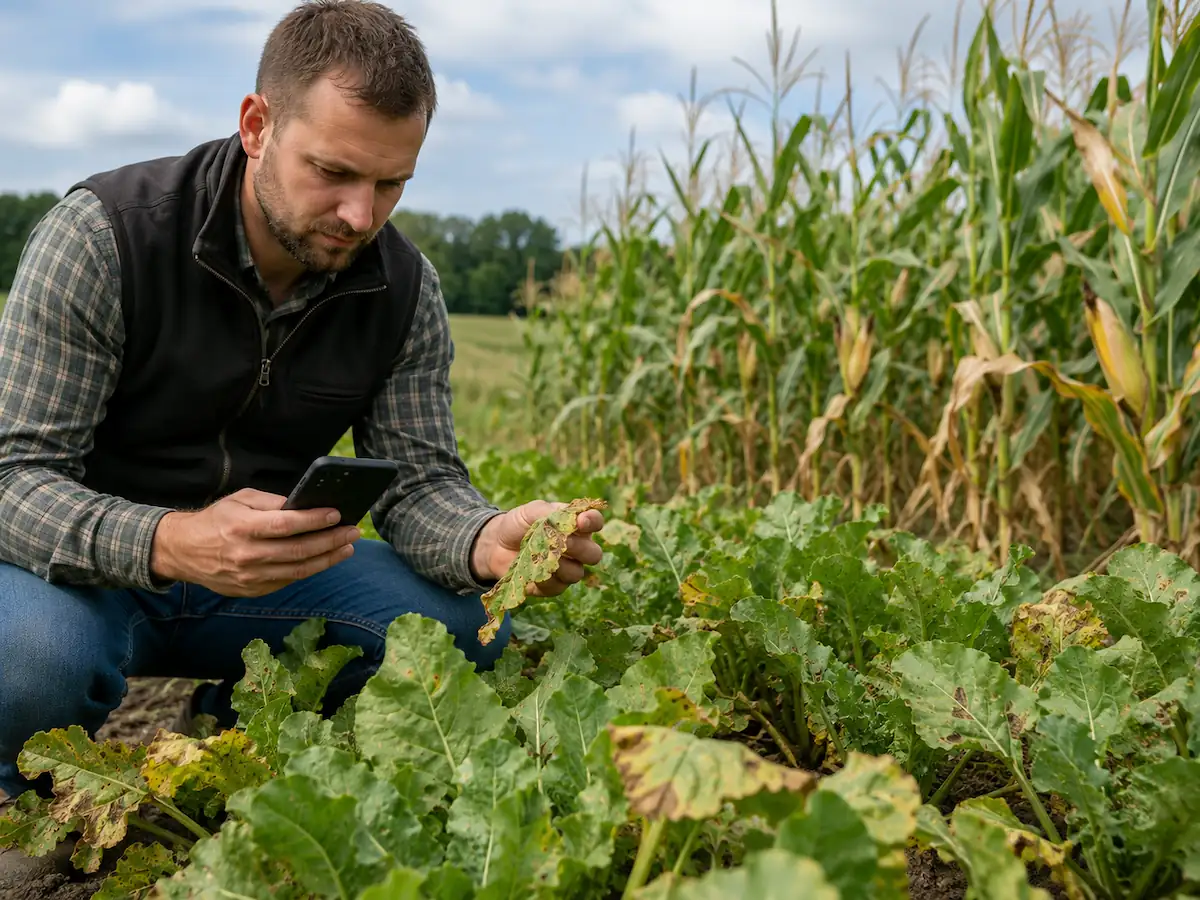
When assessing Cercospora leaf spot, consider not only the number of lesions but also their distribution. If symptoms spread from older to younger leaves and the foliage dies back before being rebuilt, the plant uses assimilates that could otherwise support root growth and sugar accumulation.
Maize diseases in August
Do not end the inspection with the leaves. Examine the ears, husks, kernels and stem bases. In cases of Fusarium infection, white or pink cotton-like fungal growth may appear on infected or dead tissue. Damage caused by the European corn borer or hail creates entry points through which pathogens can penetrate the tissue more easily. The appearance of an ear alone, however, is not sufficient to determine mycotoxin levels.
Diseases of cereals still standing in the field
Towards the end of the season, the condition of the ears and grain is particularly important. Pre-harvest inspection helps identify batches that may require closer examination before storage. A description of Fusarium head blight and symptoms affecting cereal ears is available on the IOR-PIB wheat publications page.
How should field inspections be carried out in August?
A useful inspection should answer four questions: where the problem occurs, whether it is spreading, which parts of the plant are affected, and whether the symptoms may influence harvesting or storage. To assess this reliably, return to the same or comparable observation points.
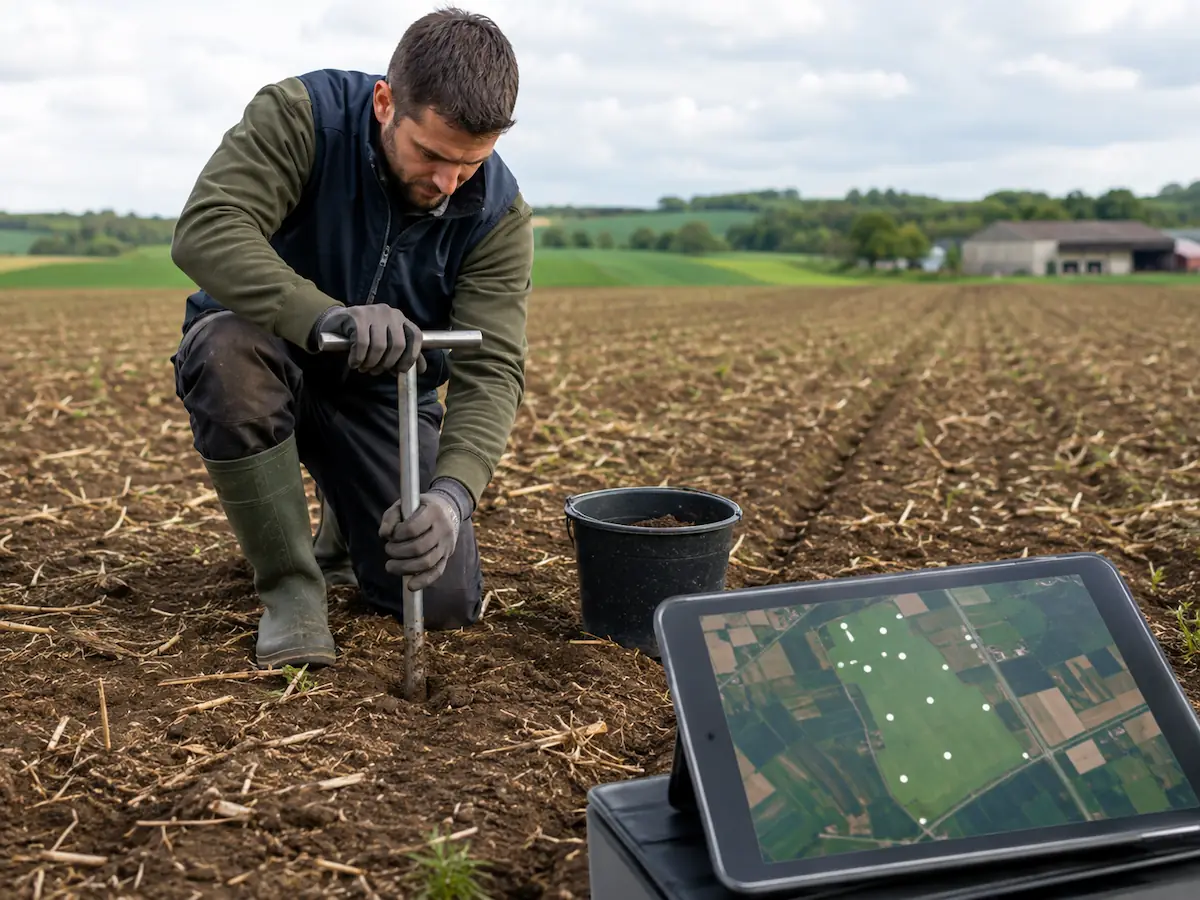
- Select observation points in the centre of the field, along its edges, in depressions and in areas where crop condition is visibly different.
- Inspect plants from the bottom upwards. In maize and cereals, remember to examine the yield-forming organs as well.
- For each observation, record the date, field, variety, growth stage, type and severity of symptoms, and the weather over the preceding days.
- Take one photograph of the wider crop area and another close-up of the affected tissue. Include a reference object to make it easier to assess the size of the lesion.
- Compare the observation with earlier photographs, treatment records and disease alerts.
How can a warning sign be distinguished from a diagnosis?
A lesion on a leaf is not in itself a disease diagnosis. Similar symptoms may be caused by nutrient deficiencies, drought, phytotoxicity, pest feeding or natural tissue ageing. A disease model does not confirm infection either — it identifies conditions conducive to infection and helps determine which field should be inspected first.
If the diagnosis may affect harvest timing, crop protection decisions or how the crop is handled, the field observation should be confirmed with an adviser or through diagnostic testing.
How does FarmPortal organise crop disease monitoring?
FarmPortal links each observation to a specific field, date, weather conditions and treatment history. As a result, a photograph does not remain an anonymous file on a phone, but becomes part of the field’s chronological record.
In the crop health and safety module, users have access to Asystent Upraw, disease models, alerts and data from weather stations. This information helps prioritise field inspections and compare risk levels between fields. It does not, however, replace direct crop inspection or a diagnosis made by a specialist.
The greatest value becomes apparent over successive inspections. Farmers can check when a symptom first appeared, what weather preceded it, what work was carried out in the field and whether the change is progressing in the same location.
Practical example: how can two inspections of the same field be compared?
During the first inspection, a farmer notices lesions on sugar beet leaves and takes several photographs. Instead of leaving them in the phone’s photo gallery, the farmer assigns them to the relevant field and records the date, weather, variety and locations where the photographs were taken.
During the next inspection, the farmer returns to the same points and checks whether symptoms have appeared on younger leaves, whether they cover a larger area and whether they are also present beyond the initial outbreak. This comparison does not yet provide a diagnosis, but it shows the rate of change and helps identify the areas that should be examined by an adviser.
What requires further verification?
Editorial status as at 23 July 2026: the symptom descriptions were compared with IOR-PIB materials available on that date. Before final publication, the article should be reviewed by an agronomist or adviser familiar with the current plant health situation in the region.
- Disease calendars vary according to the region, variety, crop rotation, growth stage and weather.
- A disease alert indicates the risk of infection but does not confirm the presence of the pathogen on the plant.
- Satellite monitoring may identify an anomaly in crop condition, but it cannot determine its cause with certainty.
- Every treatment must comply with the product’s current label, authorised uses, dose, application timing and pre-harvest interval. Mycotoxin risk requires a separate assessment and cannot be determined solely from the appearance of the ear or grain.
Frequently asked questions
Which field crop diseases are most important in August?
In August, particular attention should be paid to Cercospora leaf spot in sugar beet, potato late blight and early blight, maize leaf spot diseases, and Fusarium ear and stem rots. In cereals still standing in the field, symptoms on the ears, stems and grain should also be assessed. The relevant disease spectrum depends on the region, variety, growth stage and weather conditions.
Must a disease visible in August have appeared in August?
No. Some infections begin in June or July, while clear symptoms emerge only later. This applies, among others, to potato early blight, maize leaf spot diseases and some Fusarium infections. An August assessment should therefore be considered alongside earlier rainfall, temperature, leaf wetness and treatment history.
How often should fields be inspected in August?
The frequency depends on the level of risk. During warm and humid weather, high-value fields or fields with a history of disease problems may need to be checked every few days. Inspections should cover several representative locations, including field edges and depressions, with the date, location and photographs of symptoms recorded each time.
Does a disease model replace visual diagnosis?
No. A disease model estimates the risk of infection based on weather data and pathogen biology. It does not confirm that a disease is present on the plant. An alert should trigger a field inspection and, where symptoms are inconclusive, consultation with an adviser or laboratory diagnostics.
Glossary
- Disease model
- An algorithm that estimates infection risk based on weather conditions, pathogen biology and crop data. It indicates when inspection is advisable but does not confirm a diagnosis.
- Field inspection
- A systematic examination of plants at representative points in a field, combined with an assessment of symptom severity and distribution.
- Leaf wetness
- The length of time water remains on the leaf surface after rainfall or dew. For many pathogens, this is more important than total rainfall alone.
- Disease incubation period
- The period between infection of the plant and the appearance of visible symptoms. It explains why symptoms seen in August may result from an infection that occurred in July.
Summary
In August, it is not only the symptom itself that matters, but also its history. Potato early blight, Cercospora leaf spot in sugar beet, maize leaf spots and Fusarium diseases should be assessed in the context of weather conditions, previous treatments and changes observed during successive field inspections.
Instead of taking a single photograph, select fixed observation points in the field and document them in a consistent way. Recording the date, location, plant organ, symptom severity and a comparison photograph makes it easier to determine whether the problem is progressing and whether specialist advice is required.
Follow us!
See what we're doing and be inspired by positive changes.