Agri Solutions and Rootsey have begun working together to integrate Rootsey sprayer computers and controllers with FarmPortal, the farm management application. The initial focus is on sprayers: creating a variable-rate application map in the software, sending the task to a compatible Rootsey controller and using data from the machine to document the spraying operation. The solution is aimed both at farms looking to upgrade existing equipment and at sprayer manufacturers seeking to equip new machines with digital technology.
The partnership brings together electronics developed by Rootsey since 2010 and FarmPortal, the Polish farm management platform built by Agri Solutions. This is not simply another app displaying a tractor’s location. The aim is to connect what a farmer plans in the field with what the machine actually does.
At a glance: what does the FarmPortal–Rootsey partnership mean?
- For farmers: a sprayer controller and farm management app can form a single workflow, from the application map to the field record. Available functions depend on the configuration.
- For owners of older sprayers: compatible machines can be retrofitted with rate control, GPS and selected precision spraying functions without buying a new sprayer.
- For machinery manufacturers (OEMs): a shared foundation of electronics, software and data services that can be adapted to their own machinery ranges.
- Progress as at 22 October 2026: integration assessed on 26 machines, 352 hours of field testing, seven solutions tested and 211 variable-rate spraying maps produced during integration work.
- Next stage: the first integrated products are scheduled to go on sale in early November 2026, with further deployments and OEM packages planned for 2027.
Why should a sprayer controller connect to a farm management system?
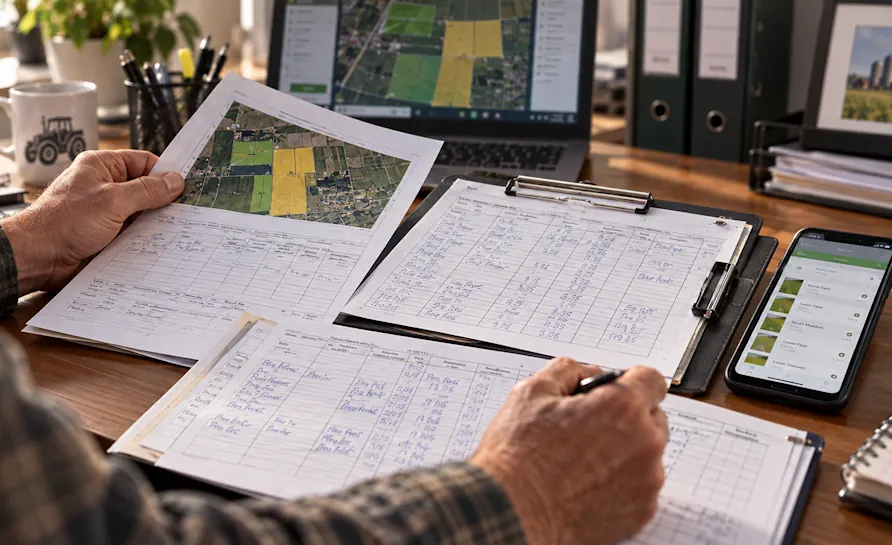
Farmers often have to work with several separate tools. Field boundaries sit in one app, spraying operations are planned in another, and application rates and boom sections are set on the sprayer controller. Back from the field, the operator then records where, when and with what product the spraying was carried out. Add an agronomist or contractor to the process, and the same information may pass between several people.
The FarmPortal–Rootsey integration is intended to cut out this duplication. A task is prepared in the farm management system, the controller carries it out within its technical capabilities, and execution data can be fed back into the digital field record. This is particularly useful where a sprayer supports section control and variable-rate application (VRA) and records its operating parameters.

Intended data flow: field and crop → spraying plan → application map → Rootsey controller → spraying operation → as-applied data → digital spraying records in FarmPortal.
Not every controller can supply a complete dataset. The parameters recorded, synchronisation method and degree of automation depend on the controller model, software version, modem and sensors. Each equipment package will therefore need a clearly defined list of supported functions.
Initial field trials: 26 machines, 352 hours and 211 VRA maps
The partnership has already moved beyond discussions about system architecture. According to the partners’ figures as at 22 October 2026, integration work covered 26 machines and 352 hours of field trials. Seven solutions were tested and 211 variable-rate spraying maps were prepared as part of the work. The trial maps typically contained two to five zones.
These figures indicate the scale of the pilot work; they do not mean that every sprayer on the market has been tested. Further measurements will be just as important, including communication reliability, data-recording accuracy, application-rate accuracy and the time required to install the system on different machine families.
“FarmPortal users already record around 3,000–4,000 field operations each week. We want more of that information to be captured while the machine is working, rather than only after the operator returns from the field. Integrating Rootsey controllers is another step towards that goal.” Julian Ćmikiewicz, President of Agri Solutions
“Farmers should not have to replace a perfectly serviceable sprayer simply to use application maps and digital records. By connecting Quartmann controllers with FarmPortal, we are developing a solution for compatible new and retrofitted machines.” Paweł Rutka, President of Rootsey
Rootsey electronics connected to FarmPortal
One of the foundations of the partnership is the Quartmann family of sprayer controllers. The GP-05, GP-07 and GP-13 models are designed for 5-, 7- and 13-section configurations, respectively. Rootsey develops controllers, actuator modules, sensors and GPS/RTK guidance solutions, while Agri Solutions provides the software and data layer through FarmPortal.
For example, the Quartmann GP-07 adjusts the application rate according to travel speed measured via GPS or an inductive sensor and supports up to seven liquid-control sections. The controller can work with agricultural guidance equipment and automatic section-control components. The appropriate equipment and compatibility with the hydraulic and spray-liquid systems must be assessed for each sprayer.
A key aspect of the integration: in a selected configuration, the Quartmann GP-07 with a telemetry modem can carry out variable-rate spraying using a map from FarmPortal without a separate guidance terminal. This does not mean that the system works without GPS positioning, or that every controller offers the same functionality. It can, however, reduce the number of devices needed in the cab where the equipment is configured accordingly.
Agricultural guidance, GPS/RTK, ISOBUS and CAN bus — what do they do?
Agricultural guidance systems help operators follow the correct tramlines and passes. With compatible equipment and under suitable conditions, GPS/RTK can provide more precise positioning. CAN bus and ISOBUS (ISO 11783) enable devices to exchange data and messages. Where controllers and terminals support the relevant functions, these technologies also help control machinery and document field operations.
Rootsey and Agri Solutions are developing the integration to transfer application maps and information about machine movements, speed, area covered and application rates. Later stages include testing TC-BAS, TC-GEO and TC-SC functions. This is not a claim that every model already supports all these functions or holds AEF/ISOBUS certification.
For more on preparing application maps and controlling rates, see our article VRA — variable-rate fertiliser and pesticide application, step by step.
Variable-rate spraying: from a FarmPortal map to the machine controller
Variable-rate spraying is not the same as automatic section shut-off. Section control helps prevent spraying the same areas twice, particularly on headlands and in awkward field corners. VRA (Variable Rate Application) adjusts the application rate between zones defined on a map, in line with agronomic requirements and the product’s conditions of use.
In FarmPortal, application maps can be prepared using satellite imagery, vegetation indices, cropping history and field observations, among other inputs. Once the zones have been checked and rates selected in accordance with the product label, the map can become a task for a compatible sprayer. The Rootsey controller is intended to handle the execution of that task.
A typical workflow would be:
- The farmer or agronomist selects a field and assesses its variability in FarmPortal.
- They prepare an application map, for example with two to five zones, and approve the spraying parameters.
- The map is transferred to a compatible Rootsey controller using the method supported by that integration.
- The operator carries out the spraying operation, with the controller managing the available rate and section functions.
- Supported execution data can then be linked to the relevant field and operation in FarmPortal.
There are two practical benefits. First, farmers can exercise closer control over pesticide use and avoid overlaps. Second, it becomes easier to compare the planned application with the work actually completed and to calculate costs. Actual savings depend on field shape, pest and disease pressure, calibration, map quality and the number of applications. Our guide to variable-rate spraying and fertiliser application explains the distinction in more detail.
14,000 users and 639,000 hectares — the FarmPortal platform behind the integration
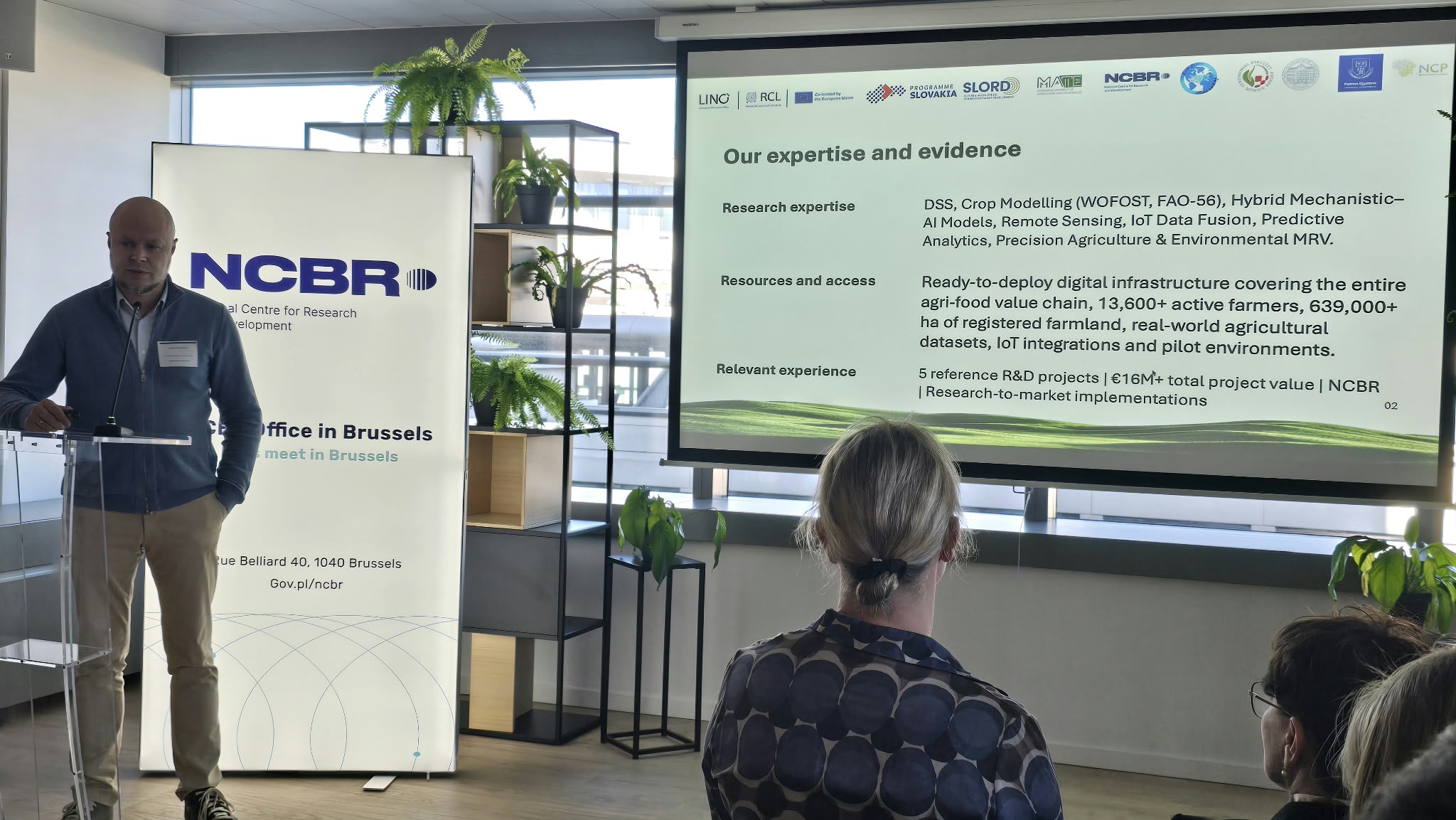
FarmPortal is not being built from scratch for this partnership. According to Agri Solutions data as at 22 October 2026, the platform had more than 14,000 users managing over 639,000 hectares of fields. Users record around 3,000–4,000 field operations a week.
Digital record-keeping is also growing. Users generated 10,682 reports in 2024 and 42,303 in 2025. They created 1,533 variable-rate spraying maps in 2025, compared with more than 3,100 by mid-October 2026. These figures reflect activity across FarmPortal, not sales of Rootsey equipment. The separately reported 211 maps relate specifically to the joint integration work.
The figures show why connecting machinery matters. As the number of operations and application maps grows, so does the value of avoiding the manual transfer of data between farm software and machine controllers.
Digital pesticide application records: less paperwork after spraying
For many farms, what happens after spraying could prove just as useful as the spraying itself. FarmPortal already supports digital field records and pesticide application logs, including a product database linked to the Polish Ministry of Agriculture and Rural Development (MRiRW) register, records of application rates and reasons for treatment, and exports to PDF and CSV.
Integration with Rootsey controllers is intended to enable more automatic or semi-automatic entry of completed operations into these records. In supported configurations, dates, travel tracks, treated areas or application-rate data could be imported instead of entered again by hand. Farmers will still need to check their records, including product names, reasons for treatment, label compliance, correct rates and all information required by law.
In Poland, the existing rules for documenting pesticide applications remain in force during 2026. From 1 January 2027, new requirements are due to apply to the format and scope of electronic records under Commission Implementing Regulation (EU) 2023/564, as amended by 2025/2203. Poland’s plant health and seed inspection authority, PIORiN, has also published guidance on the change. It makes sense to organise records ahead of the new requirements rather than on the day they take effect.
Explore the feature: digital pesticide application records in FarmPortal.
Who stands to benefit from FarmPortal and Rootsey?
| User | Practical benefit | What determines the outcome? |
|---|---|---|
| Farmer with their own sprayer | One workflow covering the application map, spraying and field record; potentially fewer overlaps and less manual data entry | Controller, sensor and hydraulic compatibility, and availability of data transfer |
| Fruit or vegetable grower | More accurate pesticide records and the potential to introduce zone-based spraying | Machine type, pesticide conditions of use and calibration |
| Owner of an older machine | Retrofit rather than buy a new sprayer; option to replace a suitable existing controller | Machine condition, equipment selection and installation costs |
| Machinery manufacturer (OEM) | Rootsey electronics and the FarmPortal digital platform as factory-fitted equipment | Integration design, APIs, software versions and licensing terms |
| Dealer or service provider | Installation, configuration and support for digital technology as an additional service | Training, documentation and availability of compatible equipment packages |
| Agricultural contractor | Data to support billing for passes, area covered and spraying operations | Scope of telemetry data collected and the billing model |
Upgrading a sprayer without replacing the whole machine
According to the 2020 Agricultural Census conducted by Statistics Poland (GUS), Polish farms had 462,354 field sprayers and 51,842 orchard sprayers — 514,196 machines in total. These are historical figures, not a count of sprayers suitable for Rootsey retrofits. They do, however, illustrate why upgrades to existing equipment matter alongside sales of new machinery.
For the owner of a used sprayer, the sensible first step is to assess the existing controller, number of sections, valves, sensors, hydraulics and electrical installation. Only then can a suitable controller, GPS equipment, any necessary guidance terminal, modem and FarmPortal connection be specified. Compatibility should not be assumed on the basis of the machine brand alone.
An alternative to Bravo controllers: Rootsey Quartmann sprayer controllers integrated with FarmPortal may also offer an alternative to certain older Bravo controllers. When upgrading an existing sprayer, this provides an option to replace the controller and add digital functions such as VRA maps and spraying records. Replacing a particular Bravo model requires checks of the wiring, sensors, valves and supported functions; there is no universal drop-in replacement.
An OEM system: a sprayer supplied with its own app
The partnership also has a manufacturing dimension. Bury Maszyny Rolnicze has been identified in the joint plan as the first OEM implementation partner. The proposed model would allow selected new machines to be delivered with Rootsey electronics and FarmPortal features designed as a single package. The machine models and the date of series production availability have not yet been confirmed for public announcement.
For a sprayer designer or manufacturer, this kind of OEM system could reduce the need to build an entirely new application in-house. Hardware, telemetry, field management, digital records and servicing can be developed around a shared architecture. Planned next steps include API documentation, white-label options, a service portal and the option to deploy the platform within the manufacturer’s own infrastructure, subject to technical and licensing arrangements.
Location, servicing and operating data can also feed into machine monitoring in FarmPortal. Connecting a controller to an application does not, however, automatically make every CAN/ISOBUS parameter available on every machine.
What comes next? The plan for 2027
During the first quarter of 2027, the partners aim to finalise the production-ready integration of Quartmann controllers with FarmPortal, including the exchange of VRA maps, as-applied data and digital records. They then plan to develop retrofit and OEM packages, followed in the second half of the year by work on fertiliser spreader integration and prototype support for seed drills.
The target for the end of 2027 is 180–200 commercially integrated machines and at least two active OEM projects. The plan also includes a first overseas pilot in Spain. These are development targets, not installations already completed or guaranteed sales.
Frequently asked questions
Does FarmPortal work with Rootsey sprayer controllers?
Agri Solutions and Rootsey are developing an integration between Quartmann controllers and FarmPortal. Selected operating scenarios have already been tested, with the first integrated products announced for early November 2026. Available functions must be confirmed for the particular controller and software version.
Does the Quartmann GP-07 need a separate guidance terminal for variable-rate spraying?
Not always. With the GP-07, a telemetry modem and FarmPortal in a supported configuration, map-based VRA can be carried out without an additional, separate guidance terminal. Other configurations may need one. Suitable positioning data are still required.
Can an older sprayer be upgraded?
Yes, provided the machine is technically compatible with the selected Rootsey package. Before purchasing, the number of sections, electrical system, valves, sensors and required functions must be checked. Not every model can be retrofitted.
Can Rootsey Quartmann controllers replace Bravo controllers?
Yes. In suitably specified configurations, Rootsey Quartmann controllers can be an alternative to certain Bravo models, particularly when upgrading older sprayers. FarmPortal integration can add variable-rate spraying maps and digital application records. Compatibility with the specific model and any necessary modifications to the installation must be confirmed before replacement.
Will FarmPortal automatically complete the full pesticide application record after spraying?
FarmPortal already supports digital spraying records. The joint integration is intended to make it possible to populate these records automatically or semi-automatically using machine data. Full automation depends on the available information, and the records must still be checked for accuracy and completeness.
Is the FarmPortal app free?
The basic version of FarmPortal is free, with no limit on hectares or users. Some specialist functions, including certain telemetry services, data transfer and map processing, may be charged separately. Controller, installation and any guidance equipment costs should also be agreed before deployment.
Can a sprayer manufacturer use FarmPortal as its own OEM system?
That is one of the partnership’s aims. The partners are developing OEM packages that could include API integrations, telemetry, documentation and branding options. Final functionality and white-label terms are subject to individual agreement.
From sprayer controller to digital field record
Good electronics can improve a sprayer’s performance, but connecting them to farm data is what makes it possible to bring the whole operation together. The FarmPortal–Rootsey partnership aims to make map preparation, sprayer control, operational analysis and pesticide records parts of one workflow, rather than four separate tasks.
Farmers interested in upgrading a sprayer can start by creating a free FarmPortal account and checking their existing controller model. Machinery manufacturers, dealers and integrators can contact the FarmPortal team to discuss OEM partnerships, CAN/ISOBUS integration or retrofitting an existing machine.
Sources and methodology: user, map, report and trial figures are based on Agri Solutions operational data and the partners’ joint briefing (as at 22 October 2026). Sprayer figures come from the 2020 Agricultural Census by Statistics Poland (GUS). Regulatory information is based on PIORiN guidance and EU Regulations 2023/564 and 2025/2203. Trial figures do not establish universal compatibility or guarantee cost savings.
Follow us!
See what we're doing and be inspired by positive changes.