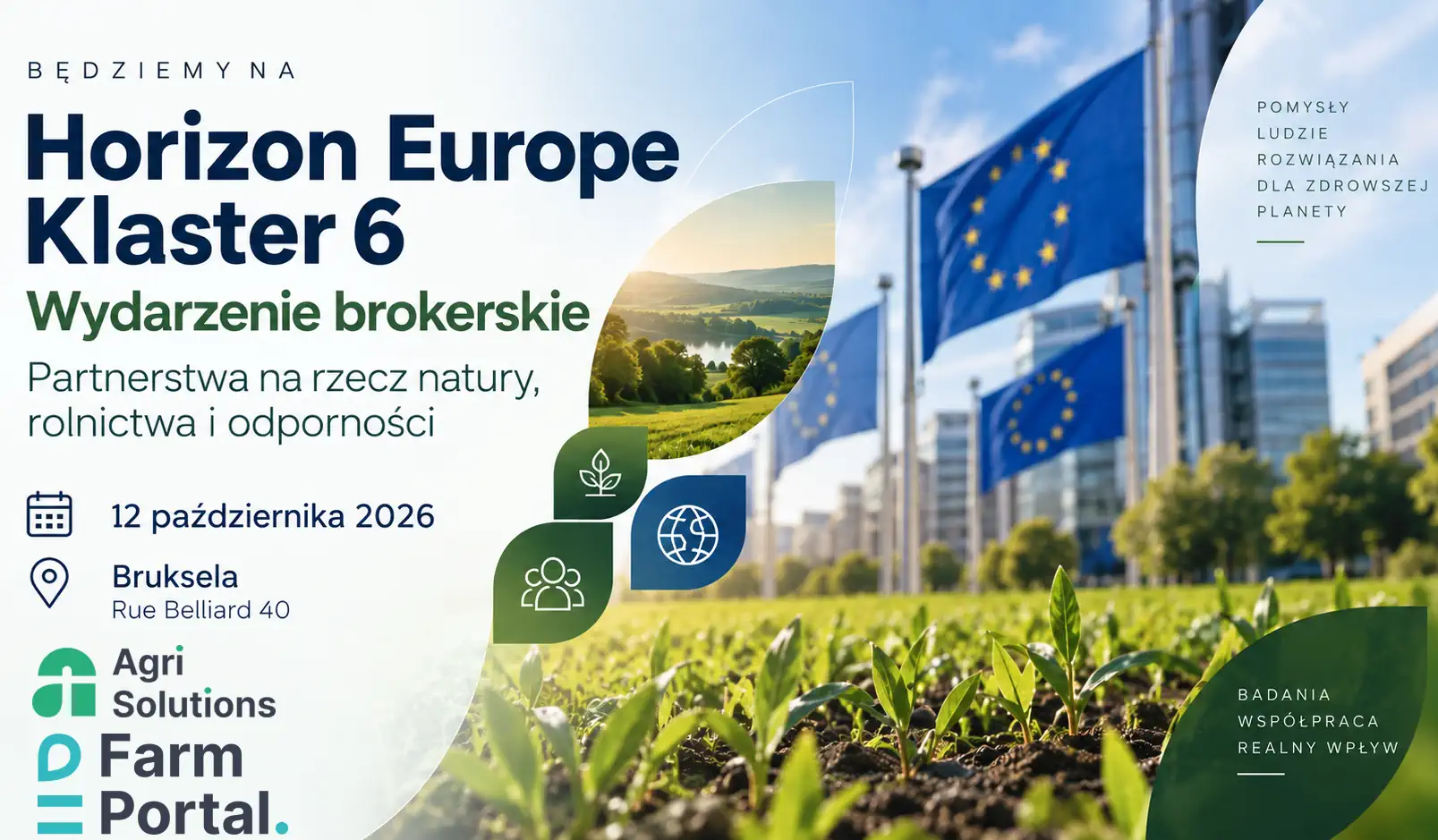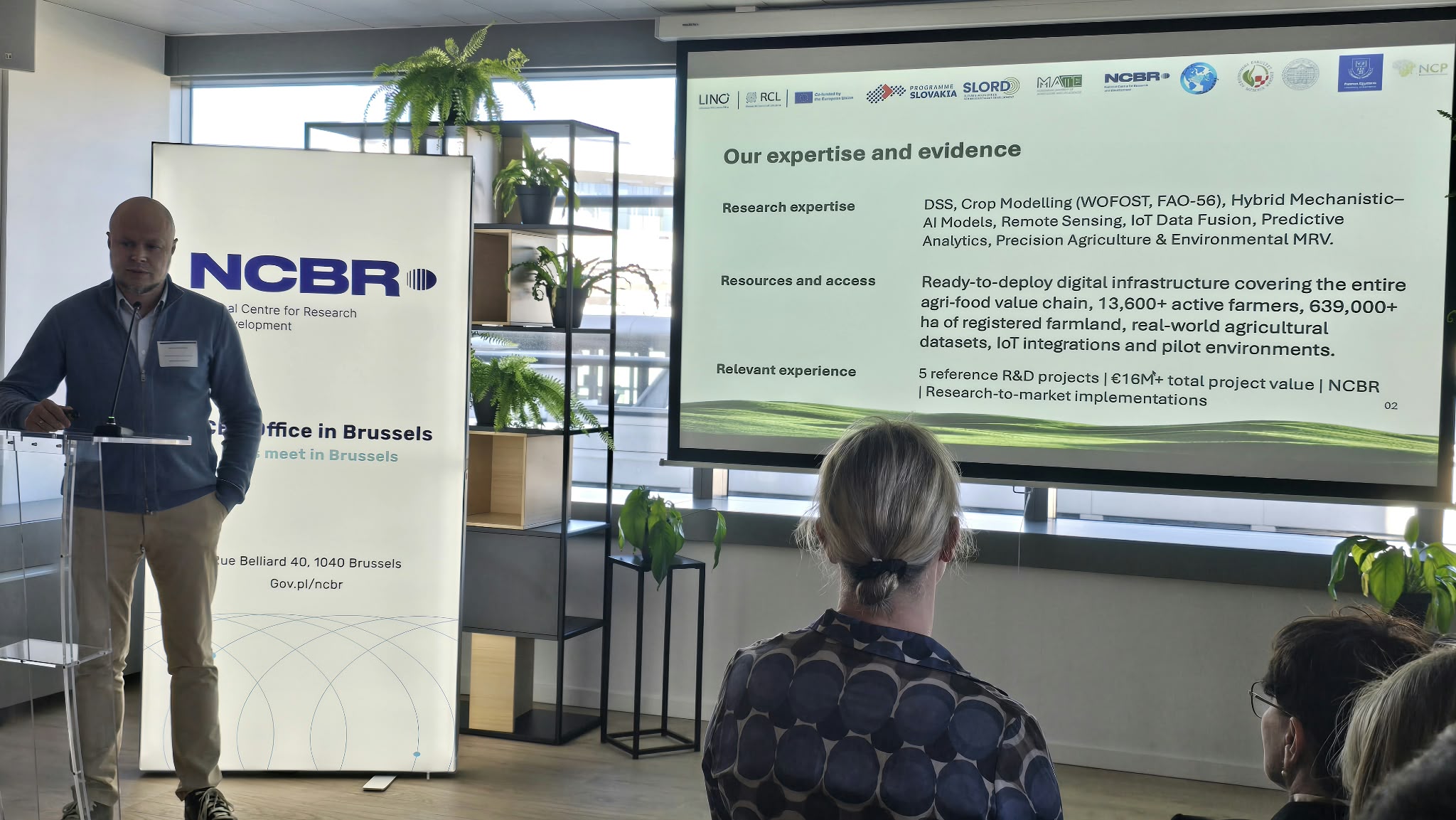
On 12 October 2026, Agri Solutions Sp. z o.o. attended the Horizon Europe Cluster 6 Brokerage Event, “Partnering for Nature, Agriculture and Resilience”, at the NCBR Office in Brussels. Hosted by Poland’s National Centre for Research and Development, the meeting explored research partnerships. Cluster 6 is the European Union’s research and innovation programme area covering food, agriculture and the environment. For farms, its relevance lies in turning research into tools that work in everyday production.
Horizon Europe Cluster 6: innovation for agriculture and food production
Horizon Europe Cluster 6 addresses agriculture, food systems, biodiversity, water, natural resources and circular systems. Digitalisation can help connect these areas through better information about production and resource use.
Digital agriculture means using digital records, measurements and analysis to organise farming and support decisions. Our announcement of the Brussels visit introduced the meeting; this article explores its practical context. Attendance does not mean new funding has been awarded or a specific Horizon Europe project has started.
What can agricultural research and development mean for farmers?
Agricultural R&D combines investigating a problem, developing a solution and testing it. Potential results include better estimates of crop water needs, disease-risk models, yield forecasting and improved nutrient planning. These applications need validation for specific crops and conditions.
FarmPortal already provides farm management software for fields, crops, operations and production costs. Existing tools also cover precision fertilisation and, with suitable equipment and integrations, weather data and machinery monitoring. These capabilities should not be confused with every experimental AI model discussed in research.
Agricultural IoT, AI and satellite data on the farm
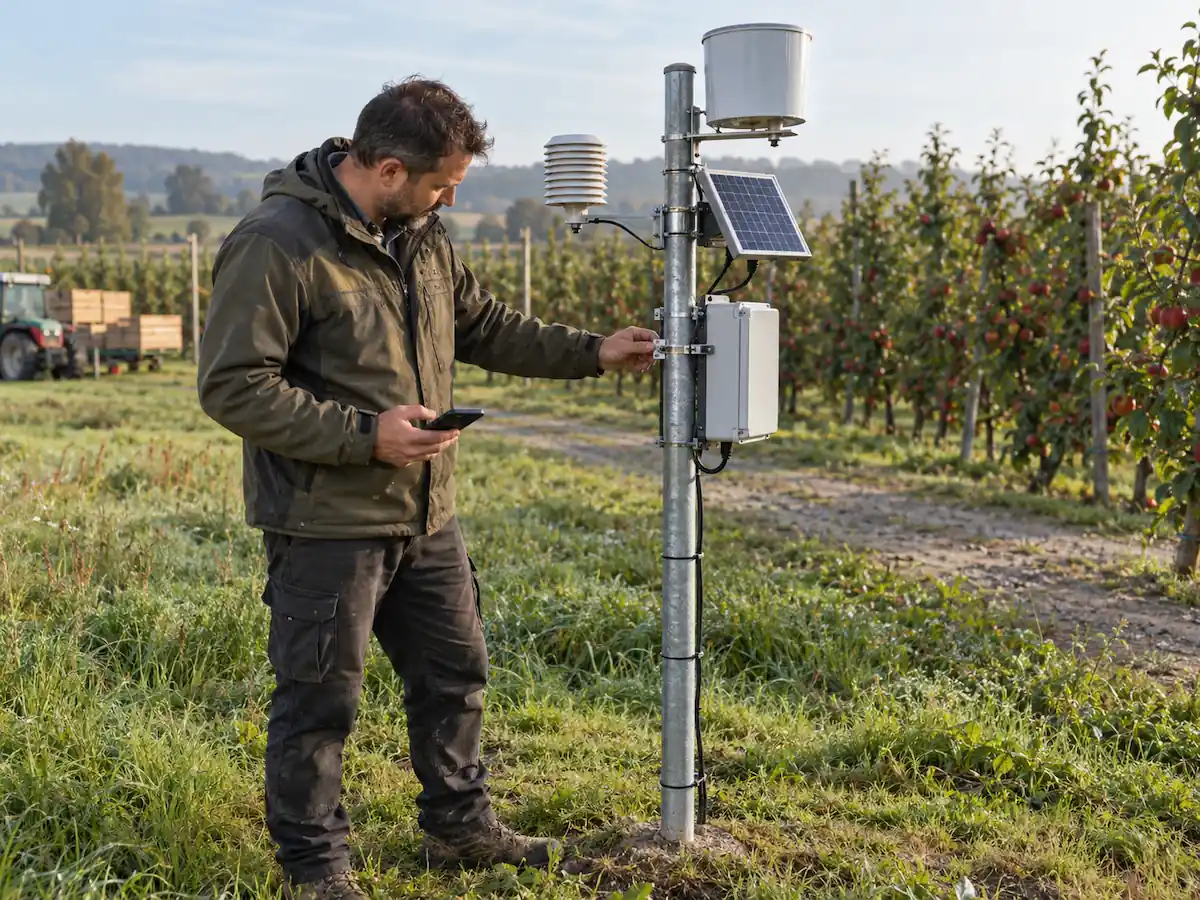
Agricultural IoT consists of connected devices transmitting measurements such as soil moisture, temperature and rainfall. Agricultural sensors and weather stations describe conditions at their installation points. Satellite imagery adds a spatial view of crop variation, which still needs interpretation and field checks.
A decision support system, or DSS, turns data and models into information useful for choosing an action. AI can help identify relationships between weather, soil and crop responses. A result might flag an area for inspection; it does not automatically establish that a particular disease is present.
Agri Solutions presented expertise in WOFOST crop modelling, FAO-56, hybrid mechanistic–AI models, remote sensing and IoT data integration. Connecting field measurements with machinery monitoring can also help assess when work was completed. Reliable measurements and consistent units are essential.
From farm to fork: connecting the food value chain
Farm to Fork considers food production and distribution as connected stages: field → farm → harvest → storage → processor → distributor → customer. Shared batch identifiers link origin, harvest and quality records, helping growers and processors exchange information and track resource use.
Agri Solutions develops FarmPortal and FarmCloud, digital infrastructure for the agri-food value chain. Their roles are distinct:
- FarmPortal supports farm and production management.
- FoodPass supports producer relationships, deliveries, quality and product traceability.
- AgroSell supports commercial communication, customer relationship management (CRM) and cooperation with agricultural input distributors.
Connecting these products requires agreed integrations, permissions and access rules. FoodPass and AgroSell are not automatically included in a standard FarmPortal licence.
From research to implementation: why commercialisation matters
A prototype becomes useful when it works during ordinary farm operations. Models need validation against production data from different seasons and farms, followed by integration with existing software. Farmers and processors should assess usability alongside accuracy. FarmCloud’s infrastructure, users and established distribution channels can support adoption, without guaranteeing savings or commercial success.
Agri Solutions develops European research partnerships
The Brussels discussions explored potential partnerships and shared experience. In its event report on LinkedIn, Agri Solutions presented 13,600+ active farmers, 639,000+ hectares of registered farmland and five reference R&D projects with a combined value exceeding €16 million. These are figures reported for that presentation. Total project value is neither company revenue nor funding received by Agri Solutions alone.
Areas of interest include precision agriculture, AI-powered DSS, water and nutrient management, IoT, biodiversity, traceability and resilient food systems. Agricultural environmental MRV means monitoring, reporting and verification of environmental data.
How can farmers help develop new technologies?
Farms can define requirements, host pilots and join agricultural Living Labs: settings where participants develop and test solutions under real conditions. Data should be shared with consent and on agreed terms. Responsibilities, support, access to results and exit arrangements need to be clear before testing starts.
Participation does not give every farm automatic access to Horizon Europe funding. Organising one practical process is a useful starting point, as our guide to starting farm digitalisation explains. Agri Solutions welcomes discussions with farms, producer groups, researchers and agri-food businesses.
Questions about digital agriculture and Horizon Europe
What is Horizon Europe Cluster 6?
Cluster 6 is part of the European Union’s Horizon Europe research and innovation programme. It covers food, bioeconomy, natural resources, agriculture and the environment. It supports knowledge and solutions addressing challenges in these areas. Attending a brokerage event helps participants find partners; it does not itself award funding or launch a project.
How can farmers benefit from agricultural R&D?
Research can reach farms as validated tools, advisory models or improved working methods. Farmers can also join pilots and help define practical requirements. Benefits depend on validation quality, farm conditions and access to a particular solution. Participation terms and the use of farm data should be agreed before testing begins.
How do IoT and AI support farm management?
IoT supplies measurements from sensors and equipment, while AI can help analyse relationships and highlight situations needing attention. Combining weather, soil moisture and crop observations can support planning. Analysis still requires reliable data, a validated model and interpretation for the field concerned; it does not replace an agronomist’s assessment.
How do FarmPortal and FarmCloud support farm-to-fork working?
FarmPortal organises farm and production records, while FarmCloud connects solutions for different agri-food stakeholders. FoodPass supports deliveries, quality and traceability; AgroSell supports commercial cooperation. Data exchange needs suitable integrations and permissions. These products are not all included in the standard FarmPortal licence, and their use requires an agreed scope.
Would you like to test new technology on your farm, or find a partner for an agricultural R&D project? Contact Agri Solutions to explore cooperation through FarmPortal and FarmCloud.
Follow us!
See what we're doing and be inspired by positive changes.